The China Mail - 2023 'year of record climatic hazards' in Latin America: UN

USD -
AED 3.672497
AFN 62.999883
ALL 83.141978
AMD 376.485471
ANG 1.790083
AOA 916.999665
ARS 1368.006033
AUD 1.451674
AWG 1.8025
AZN 1.698954
BAM 1.694558
BBD 2.010968
BDT 122.511751
BGN 1.709309
BHD 0.377013
BIF 2965.773868
BMD 1
BND 1.283101
BOB 6.914956
BRL 5.237301
BSD 0.998423
BTN 94.09624
BWP 13.729041
BYN 2.998376
BYR 19600
BZD 2.008109
CAD 1.385205
CDF 2285.501206
CHF 0.797075
CLF 0.023512
CLP 928.389903
CNY 6.91145
CNH 6.91936
COP 3689.39
CRC 462.899991
CUC 1
CUP 26.5
CVE 95.540739
CZK 21.297011
DJF 177.799726
DKK 6.488375
DOP 60.195193
DZD 133.090309
EGP 52.800201
ERN 15
ETB 154.307745
EUR 0.86838
FJD 2.257395
FKP 0.749063
GBP 0.751455
GEL 2.695031
GGP 0.749063
GHS 10.916401
GIP 0.749063
GMD 73.504116
GNF 8752.907745
GTQ 7.638886
GYD 208.893799
HKD 7.834165
HNL 26.511932
HRK 6.539599
HTG 130.753836
HUF 338.261502
IDR 16975
ILS 3.155801
IMP 0.749063
INR 94.8435
IQD 1307.999879
IRR 1313299.999571
ISK 124.519761
JEP 0.749063
JMD 156.917785
JOD 0.708975
JPY 159.934967
KES 129.949847
KGS 87.450186
KHR 3998.336553
KMF 426.999892
KPW 900.088302
KRW 1509.170276
KWD 0.30765
KYD 0.832088
KZT 480.998402
LAK 21565.798992
LBP 89410.383591
LKR 314.008846
LRD 183.234482
LSL 17.08101
LTL 2.95274
LVL 0.60489
LYD 6.375734
MAD 9.322411
MDL 17.537157
MGA 4161.215702
MKD 53.493871
MMK 2102.538494
MNT 3579.989157
MOP 8.045798
MRU 39.8269
MUR 46.770257
MVR 15.460257
MWK 1731.28406
MXN 17.998902
MYR 4.008992
MZN 63.910184
NAD 17.080862
NGN 1384.150032
NIO 36.742473
NOK 9.69965
NPR 150.534765
NZD 1.734925
OMR 0.38449
PAB 0.998471
PEN 3.455542
PGK 4.314509
PHP 60.451022
PKR 278.731944
PLN 3.722104
PYG 6536.015664
QAR 3.640948
RON 4.42596
RSD 101.972019
RUB 81.123939
RWF 1458.028296
SAR 3.751817
SBD 8.041975
SCR 13.466938
SDG 601.000122
SEK 9.43585
SGD 1.28704
SHP 0.750259
SLE 24.550021
SLL 20969.510825
SOS 570.594376
SRD 37.561989
STD 20697.981008
STN 21.225996
SVC 8.73675
SYP 110.526284
SZL 17.078983
THB 32.920501
TJS 9.556146
TMT 3.51
TND 2.938146
TOP 2.40776
TRY 44.460204
TTD 6.776842
TWD 31.999298
TZS 2578.987014
UAH 43.811372
UGX 3714.470144
UYU 40.481936
UZS 12161.933849
VES 466.018145
VND 26327.5
VUV 119.707184
WST 2.754834
XAF 568.30701
XAG 0.014578
XAU 0.000226
XCD 2.70255
XCG 1.799507
XDR 0.706792
XOF 568.311934
XPF 103.329218
YER 238.649987
ZAR 17.17215
ZMK 9001.194403
ZMW 18.745993
ZWL 321.999592
  • CMSD

    0.0700

    22.75

    +0.31%

  • RBGPF

    -13.5000

    69

    -19.57%

  • CMSC

    -0.0900

    22.82

    -0.39%

  • NGG

    -1.8900

    82.4

    -2.29%

  • JRI

    -0.0300

    12.07

    -0.25%

  • RIO

    -1.7500

    85.79

    -2.04%

  • BCC

    -0.3600

    74.29

    -0.48%

  • BP

    0.7600

    46.17

    +1.65%

  • BCE

    -0.0200

    25.47

    -0.08%

  • BTI

    -0.1900

    58.26

    -0.33%

  • GSK

    -0.7600

    53.94

    -1.41%

  • RYCEF

    -0.8200

    15.24

    -5.38%

  • AZN

    -3.7400

    183.4

    -2.04%

  • RELX

    -0.4000

    32.07

    -1.25%

  • VOD

    -0.0900

    14.63

    -0.62%

2023 'year of record climatic hazards' in Latin America: UN
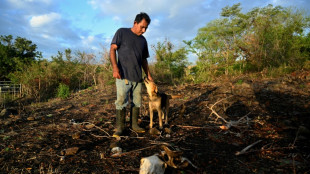
2023 'year of record climatic hazards' in Latin America: UN / Photo: © AFP

2023 'year of record climatic hazards' in Latin America: UN

Latin America and the Caribbean had their warmest year on record in 2023 as a "double-whammy" of El Nino and climate change caused major weather calamities, the World Meteorological Organization said Wednesday.

Text size:

Droughts, heatwaves, extreme rainfall and a record-breaking hurricane had major impacts on health, food and energy security, and economic development, the UN body said in a new report.

"Unfortunately, 2023 was a year of record climatic hazards in Latin America and the Caribbean, WMO Secretary-General Celeste Saulo said in a statement.

"El Nino conditions during the second half of 2023 contributed to a record warm year and exacerbated many extreme events. This combined with rising temperatures and more frequent and extreme hazards due to human-induced climate change," she added.

The report said the mean temperature for 2023 was the highest on record, with Mexico experiencing the fastest warming rate in the region.

Severe drought -- exacerbated by heatwaves -- affected large areas of Latin America, including much of Central America, forcing a reduction in shipping through the Panama Canal.

Further south, parts of Brazil, Peru, Bolivia, Paraguay and Argentina were stricken by wildfires amid record temperatures. Uruguay saw its drinking water supply pushed to the brink.

The report also listed Hurricane Otis, which caused 51 deaths and more than $3 billion in damages when it struck the Mexican resort city of Acapulco in October.

- 'Acute food crisis' -

Brazil was hit by extreme floods and landslides in 2023 that killed dozens of people and caused massive economic losses and displacement, said the WMO.

The South American giant is once again in the grip of floods ravaging its southern Rio Grande do Sul state, where the death toll on Wednesday reached 100.

The report said sea levels rose at a higher rate than the global average in much of the Atlantic part of the region, threatening coastal areas and small island states.

Climate disasters hit agriculture and food security, with 13.8 million people having faced "acute food crisis" -- especially in Central America and the Caribbean, according to the WMO.

Sea temperature rises also reduced fishing catches in countries like Peru and Ecuador.

The report said economic damage of about $21 billion was reported for the region in 2023, mainly due to storms. Almost half of the damage was associated with Hurricane Otis.

"The actual amount of damage is likely to be worse because of under-reporting and because data on impacts are not available for some countries," it added.

"This is especially the case for heat-related extremes."

The report showed that changing rainfall patterns and warming temperatures were widening the geographic distribution of diseases such as malaria.

"In 2019, over three million cases of dengue were reported in the Americas, the highest number on record. This number was exceeded in the first seven months of 2023," it said.

The findings, said the WMO, illustrated that the region must invest more in forecasting and early-warning systems.

I.Ko--ThChM