CMSC
-0.0700

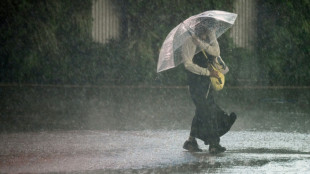
Super Typhoon Man-yi battered the Philippines on Saturday, with the national weather forecaster warning of a "potentially catastrophic and life-threatening" impact as huge waves pounded the archipelago's coastline.
More than 650,000 people fled their homes ahead of Man-yi, which is the sixth major storm to hit the disaster-weary country in the past month.
Man-yi brought maximum wind speeds of 195 kilometres (121 miles) per hour as it made landfall on the sparsely populated island province of Catanduanes as a super typhoon, the weather service said, adding gusts were reaching 325 kilometres an hour.
"Potentially catastrophic and life-threatening situation looms for northeastern Bicol region as Super Typhoon 'Pepito' further intensifies," the forecaster said hours before it made landfall, using the local name for the storm and referring to the southern part of the main island of Luzon.
Waves up to 14 metres (46 feet) high pummelled the shore of Catanduanes, while Manila and other vulnerable coastal regions were at risk from storm surges reaching up to more than three metres over the next 48 hours, the forecaster said.
The weather forecaster said winds walloping Catanduanes and northeastern Camarines Sur province -- both in the typhoon-prone Bicol region -- posed an "extreme threat to life and property".
Power was shut down on Catanduanes ahead of the storm, with shelters and the command centre using generators for electricity.
"We're hearing sounds of things falling and things breaking while here at the evacuation centre," Catanduanes provincial disaster operations chief Roberto Monterola told AFP after Man-yi made landfall.
"We are unable to check what they are as the winds are too strong. They could be tree branches breaking off and falling on rooftops," Monterola said, adding there had been no reports of casualties.
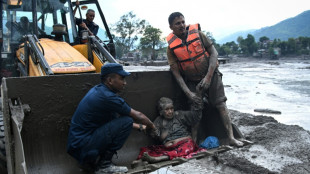
At least 163 people died in the five storms that pounded the Philippines in recent weeks, leaving thousands homeless and wiping out crops and livestock.
Climate change is increasing the intensity of storms, leading to heavier rains, flash floods and stronger gusts.
About 20 big storms and typhoons hit the Southeast Asian nation or its surrounding waters each year, killing scores of people, but it is rare for multiple such weather events to take place in a small window.
- Evacuations -
Man-yi could hit Luzon -- the country's most populous island and economic engine -- as a super typhoon or typhoon on Sunday afternoon, crossing north of Manila and sweeping over the South China Sea on Monday.
The government urged people on Saturday to heed warnings to flee to safety.
"If preemptive evacuation is required, let us do so and not wait for the hour of peril before evacuating or seeking help, because if we did that we will be putting in danger not only our lives but also those of our rescuers," Interior Undersecretary Marlo Iringan said.
In Albay province, Legazpi City grocer Myrna Perea sheltered with her husband and their three children in a school classroom alongside nine other families after they were ordered to leave their shanty.
Conditions were hot and cramped -- the family spent Friday night sleeping together on a mat under the classroom's single ceiling fan -- but Perea said it was better to be safe.
"I think our house will be wrecked when we get back because it's made of light materials -- just two gusts are required to knock it down," Perea, 44, told AFP.
"Even if the house is destroyed, the important thing is we do not lose a family member."
- Back to 'square one' -
In Northern Samar province, disaster officer Rei Josiah Echano lamented that damage caused by typhoons was the root cause of poverty in the region.
"Whenever there's a typhoon like this, it brings us back to the medieval era, we go (back) to square one," Echano told AFP, as the province prepared for the onslaught of Man-yi.
The mayor of Naga city in Camarines Sur province imposed a curfew from midday on Saturday in a bid to force residents indoors.
All vessels -- from fishing boats to oil tankers -- were ordered to stay in port or return to shore.
The volcanology agency also warned heavy rain dumped by Man-yi could trigger flows of volcanic sediment, or lahars, from three volcanos, including Taal, south of Manila.
Man-yi hit the Philippines late in the typhoon season -- most cyclones develop between July and October.
Earlier this month, four storms were clustered simultaneously in the Pacific basin, which the Japan Meteorological Agency told AFP on Saturday was the first time such an occurrence had been observed in November since its records began in 1951.
A.Zhang--ThChM