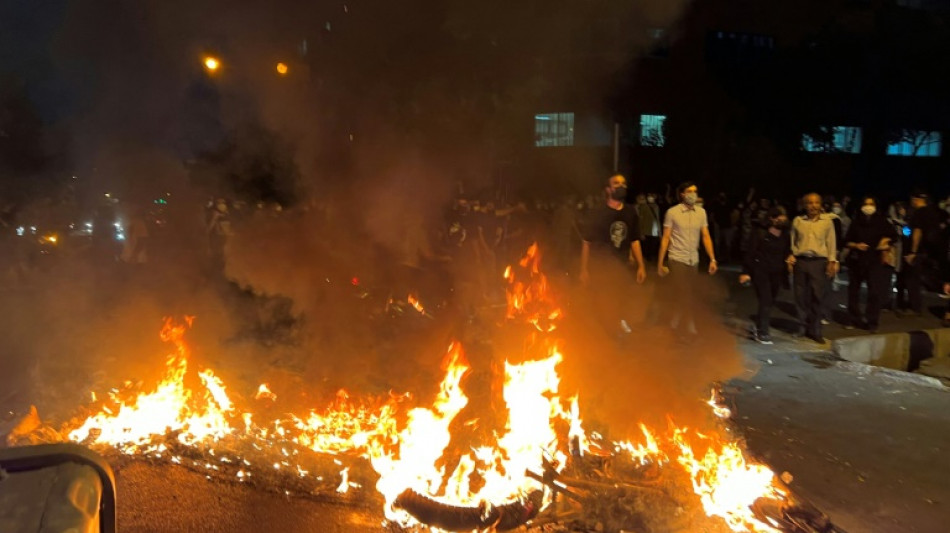
Iran in new internet crackdown to thwart protesters / Photo: © AFP

Iranian authorities have imposed tough and targeted restrictions on the use of the internet in a bid to impede protesters gathering and prevent images of crackdowns on their demonstrations reaching the outside world, observers say.
Activists have expressed alarm that the restrictions, also affecting Instagram which until now has remained unblocked in Iran and is hugely popular, could allow the authorities to carry out repression "under the cover of darkness".
The protests erupted a week ago over the death in Tehran of Mahsa Amini, 22, following her arrest by the notorious morality police. They first erupted in her northern home province of Kurdistan before spreading nationwide.
Internet access monitor Netblocks described the access cuts as the most "severe internet restrictions" in Iran since the deadly crackdown on protests in November 2019, when the country experienced an unprecedented near-complete internet shutdown.
It says that mobile data networks have been cut -- although there are signs of a return to connectivity -- and there have been severe regional restrictions of access to Instagram and WhatsApp.
"It's significantly different to what we saw in November 2019. It's not as near total and complete as it was back then but more sporadic," said Mahsa Alimardani, senior Iran researcher for freedom of expression group Article 19.
"But there are definitely a lot of disruptions and shutdowns happening," she told AFP, while emphasising people were still managing to connect to filtered networks through VPNs.
- 'Under cover of darkness' -
Alimardani said Iranian authorities could be wary of the effect of a total internet shutdown on the economy as well as daily life issues like online medical appointments. They were also falling back on the National Information Network, an autonomous infrastructure Iran wants to develop as a homegrown internet, she said.
She said that the restrictions had "added hurdles" to the publishing of videos of the protests but that they are "still coming out".
Videos posted on social media have included viral images of women burning their headscarves and demonstrators tearing down images of the Islamic republic's leadership, and also security forces firing on protesters.
During Iran's November 2019 protest wave sparked by a rise in fuel prices, activists argue that the internet shutdown allowed the authorities to carry out bloody repression largely hidden from the world.
Amnesty International says 321 people were killed then but it emphasises this only includes confirmed fatalities and the real toll may be much higher.
The rights group said it was now "gravely concerned about Iranian authorities disrupting access to internet and mobile networks" urging world leaders to take urgent action pressuring Iran "to stop killing and injuring more protesters under the cover of darkness."
New York-based Center for Human Rights in Iran (CHRI) director Hadi Ghaemi said that "the potential for massive bloodshed now is real".
"The government has blocked internet access because it wants to prevent people from sending evidence of the state's atrocities to the outside world," he said.
- 'Stifle free expression' -
Instagram head Adam Mosseri has expressed concern over the cuts while WhatsApp, which is also owned by social media giant Meta, insisted it was not behind any access cuts and would "do everything in our technical power to maintain our services".
Secure messaging service Signal confirmed it remained blocked in Iran and encouraged users outside to set up a proxy server to help people connect.
The blocking of major platforms by Iran in recent years -- including Facebook, Twitter, Telegram, YouTube and TikTok -- had left Instagram and WhatsApp as the two most widely used social media apps in Iran.
State media reports confirmed that officials had ordered access to the two services to be restricted.
Observers have also noted a regional targeting of the internet cuts, especially in the Kurdistan region where some of the fiercest clashes have taken place.
"Disruptions to the internet are usually part of a larger effort to stifle the free expression and association of the Iranian population, and to curtail ongoing protests," the UN's panel of human rights experts said, describing the restrictions as the third such shutdown in Iran within a year.
"State mandated internet disruptions cannot be justified under any circumstances," they added.
N.Lo--ThChM