Public media in Europe under unprecedented strain / Photo: © AFP/File

Public media in Europe is facing a series of new threats including scrutiny by a resurgent far right, budget cuts, and fierce competition in a changing media landscape.
From Lithuania in the east to Italy in the south and inside European stalwarts like Britain, France and Germany, media receiving public funds is facing crises like never before, observers say.
The challenges range from the economic to the technological -- due to competition from digital platforms -- and geopolitical, the Reporters Without Borders (RSF) media watchdog group warned in a 2025 report.
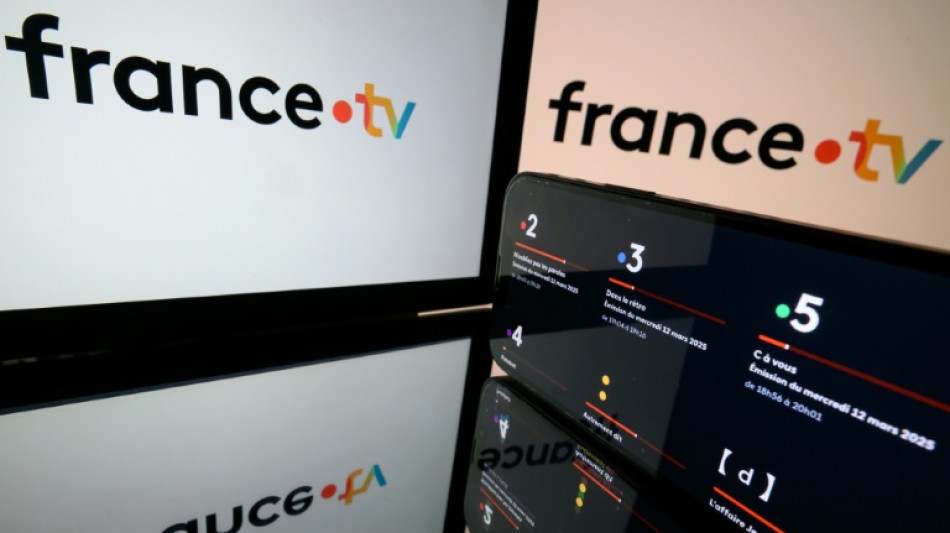
For example, in France, the pillars of public broadcasting, France Televisions and Radio France, have been targeted since late November by right-wing members of a parliamentary inquiry committee who accuse them of a leftward drift using taxpayer money.
In Britain, the storied BBC apologised and its director-general resigned after a storm erupted when it emerged last year that one of its programs spliced parts of US President Donald Trump's January 6, 2021 speech in a misleading way.
In Germany, the far-right AfD party, currently the leading opposition party, has vowed to eliminate the license fee that funds public media in the country and to restructure the sector if it comes to power.
- Resurgent far right -
"In Europe, we're not in the same situation" as the United States, where Trump has cut off funding to public media since returning to power in January 2025, said Rasmus Kleis Nielsen, a professor at the University of Copenhagen specialising in media.
But "some of the dynamics are the same," he said.
Public media has long faced criticism from private publishers (who argued it wasn't needed in a robust media market), from the far left (who said that it was pro-establishment) and from the free market right (who wanted it gone like other state-owned enterprises), Nielsen said.
Today the far right has joined in, saying that "public service media are not sufficiently nationalistic" and "too accommodating of diversity of national cultures and perspectives," essentially criticising "them for being sort of woke and politically correct," he said.
- Hungary led the way -
The pressure on public media in Europe "started more than 10 years ago in Hungary, with public media that are now considered state media. This 'model' has been exported within the European Union," said Laure Chauvel, head of RSF's France-Italy office.
In Lithuania some 10,000 people took to the streets in Vilnius in early December to protest the freezing of the public broadcaster's (LRT) budget for the years 2026-2028 and another reform aimed at facilitating the removal of the institution's director general, initiated by the populist Dawn on the Neman party.
In Slovakia, the public broadcaster STVR has undergone a major overhaul since the return to power in 2023 of nationalist Prime Minister Robert Fico and today "increasingly resembles a mouthpiece for the government," warned the local office of Transparency International in November.
In Italy, press freedom organisations are also denouncing the increased politicisation of RAI since Giorgia Meloni came to power in October 2022 at the head of an ultra-conservative coalition.
- Shrinking budgets -
Much of the pressure is financial. Most public media were founded decades ago, when the media market featured a handful of established organisations.
The internet, technological advances and social media shook up that model and today people get their news from a variety of sources, including online news, podcasts, newsletters, viral posts.
Some wonder if public money should continue to be allocated to media in such a market.
According to data from the European Broadcasting Union (EBU), total funding for public service media in the 27 EU member states decreased by 7.4 percent over the last decade, when adjusted for inflation, to €29.17 billion in 2024.
For example in Switzerland, the SSR, which broadcasts in the country's four official languages, will cut 900 jobs out of 7,130 employees by 2029.
A plan involving the closure of radio stations and the merging of television channels has also been launched in Germany.
Some argue that public media are needed more than ever in today's social media-driven world, where disinformation is rife.
"Public service media remain a cornerstone of democratic societies, providing trusted, independent and universally accessible content," said Richard Burnley, director of Legal and Policy at the EBU.
"Currently, a handful of Big Tech gatekeepers exert disproportionate influence over information and public opinion, undermining the public’s ability to access and engage with European media."
burs-arb/yad/gv
M.Chau--ThChM