Seoul’s Hidden Quarries and the Memory of Queen Jeongsun

In central Seoul, steep granite cliffs along Mount Nak reveal a history of industrial quarrying intertwined with the tragic legacy of Joseon Dynasty royalty. These remnants of past extraction work frame historical sites dedicated to Queen Jeongsun, whose life was upended by political struggles surrounding her husband, King Danjong.
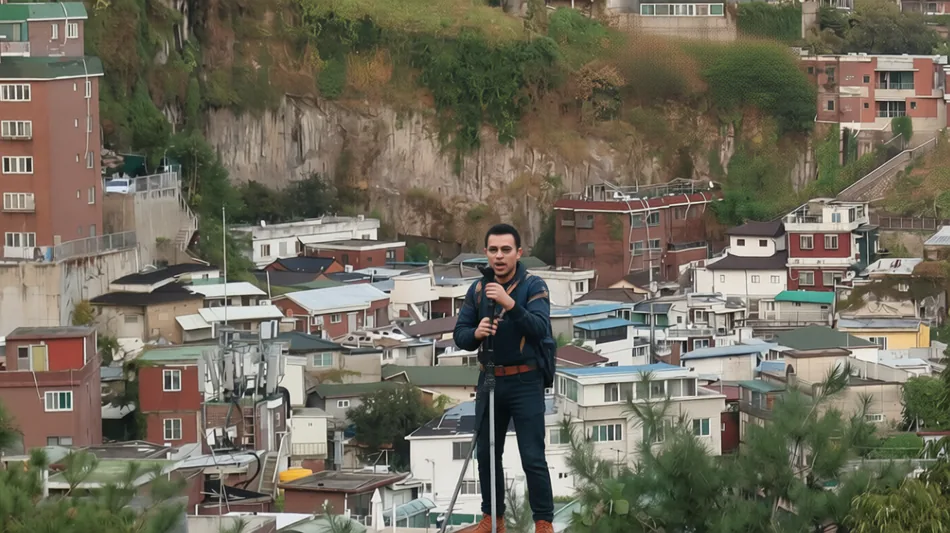
Climbing the hill along the city wall north of Dongdaemun Gate in Seoul offers a view of a valley where houses cluster around a crescent-shaped cliff. Beyond this residential edge, stark granite cliffs jut from the hillsides. These formations are not natural geological features but remnants of a period when the area served as a quarry.
Granite extraction in this region began during the reconstruction of Gyeongbok Palace in the 1860s and continued through the Japanese colonial period. The stone was utilized for iconic structures including the Bank of Korea, Seoul Station, and the former Government-General Building located at present-day Gwanghwamun.
The landscape also holds religious significance. While one local temple features a cave-like grotto dug into a natural cliff face, Beopwang Temple contains a worship space inside a tunnel bored into the hillside, likely constructed by the Japanese during World War II.
Earlier this year, the film "The King's Warden," which depicts the exile of the deposed teenage King Danjong, became the second-highest-grossing Korean film in history. This renewed interest in the royal narrative draws attention to Sungin Neighborhood Park, situated atop Dongmangbong, or Peak Looking East.
The park’s name derives from a tradition that Queen Jeongsun, reduced to commoner status after her husband's death, regularly climbed the hill to gaze eastward toward Yeongwol, where Danjong had been exiled. At the southern end of the park stands Dongmangjeong pavilion. Further north lies a small museum dedicated to the queen and Dongmanggak shrine.
Dongmanggak was originally established centuries ago to honor a local mountain spirit but later became associated with Queen Jeongsun. The shrine now stands adjacent to high-rise apartment buildings, housing spirit tablets for both the queen and the mountain deity.
Further north is Cheongryong Temple, linked to Jeongeopwon, the Buddhist nunnery where the former queen is said to have retired. King Yeongjo commemorated the nunnery with a stone marker in 1771 and had the name Dongmangbong inscribed on a nearby rock. That inscription has since disappeared, likely due to quarrying activities during the 1910-45 colonial period.
Despite the industrial history of the cliffs, they offer views across surrounding valleys and parts of downtown Seoul, which several cafes and viewpoints have utilized. The area provides reasons for exploration beyond the sites associated with Queen Jeongsun.
Recent scholarship suggests that King Yeongjo may have commemorated the queen in the wrong location, possibly influenced by folk traditions that had already incorporated her into the veneration of the local mountain spirit. Regardless of the precise historical accuracy, the sites above the quarries preserve the memory of a queen whose life was disrupted by political struggles surrounding her husband.
The Royal Asiatic Society (RAS) Korea will conduct an excursion to these sites on Nov. 14. Participation costs 30,000 won, or 25,000 won for members. More information is available at raskb.com.
J.Liv--ThChM