
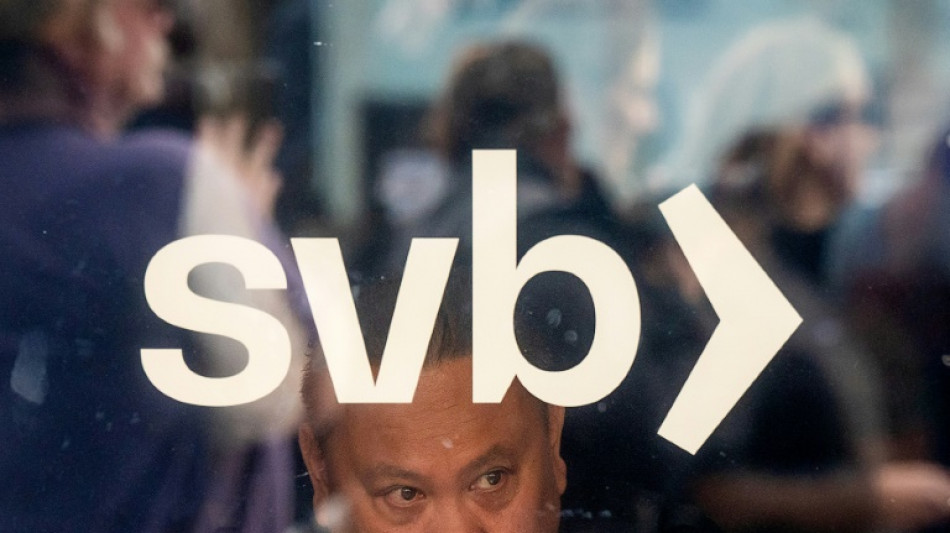
Social media frenzy fuels bank busting panic / Photo: © AFP

Fearful Twitter posts and anxious WhatsApp exchanges coupled with online banking ease are seen as helping power an internet-age run on a pair of now-collapsed American lending institutions.
Both Silicon Valley Bank and Signature Bank were hit with massive withdrawals by customers fearful of losing their money, but the speed was dizzying in an age when rumors spread like wildfire on social media and apps make moving funds with the click of a button simple.
Congressman Patrick McHenry, chairman of the US House Financial Services Committee, referred to the recent turmoil as "the first Twitter fueled bank run."
Some messages that caused cold sweats among financial customers proved to be misleading, prompting calls to focus on facts not speculation.
Gone is the time when a "run on the bank" meant mobs of customers banging on bolted doors and demanding deposits back.
Now, as rumors of dwindling bank reserves ricochets about social media, customers can make them real by tapping into online accounts to transfer money.
Federal authorities took over Silicon Valley Bank (SVB) last week less than 48 hours after it first announced bad news.
The forced closure of Signature Bank came just two days later.
In between, high-profile entrepreneurs sounded an alarm and fired off advice on Twitter.
Investor Bill Ackman tweeted during the weekend that if federal regulators didn't quickly step in and guarantee all deposits, runs on other banks would start Monday.
"You should be absolutely terrified right now," investor Jason Calacanis tweeted, using all capital letters for emphasis.
"That is the proper reaction to a bank run and contagion."
Meanwhile, startup founders shared bank trouble rumors in WhatsApp groups.
"The mix of technology and fast-moving rumors fueled a crisis of unprecedented speed," researcher Jonathan Welburn of the Rand Corporation think tank told AFP.
Online banking was around during the 2008 financial crisis, but "the adoption of these technologies is definitely increasing," he said.
- Circuit breakers? -
Banking regulators need to put in place "circuit breakers" that could quickly suspend banking transactions in the event of cyber attacks, weather disasters, or customer panic, said Hilary Allen, a specialist in financial technologies at American University in Washington.
This is a "very political" undertaking, Allen said.
"Banking regulators need to think about what this kind of technological circuit breaker would look like, and in which circumstances they would be ready to deploy it."
Markets have seen the power of online platforms trigger surges in the prices of "meme stocks" like video game retail chain Game Stop and AMC Theaters due to endorsements in chat forums at Reddit.
"The flip side is that social media can also exacerbate panic and loss of confidence," Allen said.
In the case of SVB, fears which spread on social media resonated loudly with the bank's customers, who tended to be tech-savvy entrepreneurs keenly tuned in to online chatter.
The collapse of SVB was the second largest bank failure in the United States but played out in barely two days.
The largest bank failure in the country, that of Washington Mutual in 2008, took place over the course of eight months.
At that time, Twitter and iPhones were fledgling products; there were no WhatsApp groups, no Slack chat threads, Welburn noted.
"What happens when bankers are drowning their sorrows in the social media age?" Welburn wondered.
"Viral posts, retweets and shares could deprive regulators of precious time."
E.Lau--ThChM



