
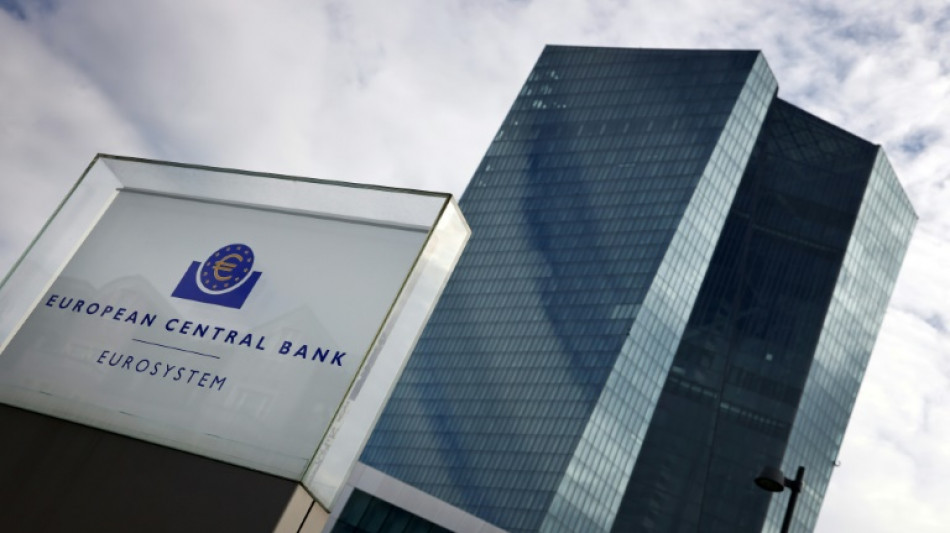
ECB expected to slow pace of rate hikes / Photo: © AFP

The European Central Bank is expected to hike interest rates again Thursday to fight inflation but at a slower pace, as higher borrowing costs take their toll and banking sector fears resurface.
The institution has lifted rates at an unprecedented pace since last year to combat spiralling energy and food costs, and there is little doubt it will deliver its seventh-straight increase.
With inflation still high, there had been debate about whether the ECB would unleash another half-point raise -- as it did at its three previous meetings -- or downshift to a quarter point.
But most analysts are now leaning towards the 26-member governing council opting for a smaller hike at its six-weekly meeting.
"The majority of ECB members are likely to feel more comfortable with a smaller increase in key interest rates," said DWS economist Ulrike Kastens.
But she also predicted that further rate hikes beyond May are "likely to remain in the pipeline".
The ECB's move will come a day after the US Federal Reserve made its 10th straight increase, raising borrowing costs by a quarter point.
While the ECB -- which started hiking later than the Fed -- is still seen as having some way to go, the US central bank signalled a pause in hikes is possible depending on further economic data.
The Frankfurt-based institution has hiked rates by 3.5 percentage points since July last year. The central bank's deposit rate is currently 3.00 percent.
- 'Not time to stop' -
Inflation -- spurred on by surging energy prices after Russia invaded Ukraine -- remains stubbornly high in the 20 countries that use the euro and way above the central bank's two-percent target.
Despite the ECB's tightening, consumer prices rose in April after five consecutive months of declines, edging up to 7.0 percent on an annualised basis from 6.9 percent in March.
It peaked at 10.6 percent in October.
But closely watched core inflation, which excludes volatile energy and food, fell slightly in April, its first drop for months and a potential turning point that gives ammunition to those calling to slow rate hikes.
The impacts of the aggressive rate-hiking campaign are also starting to be felt, with a survey this week showing eurozone banks dramatically tightened lending criteria in the first quarter and that demand for loans has plummeted.
That could also push the ECB towards taking its foot off the gas, as policymakers walk a fine line between combating high prices while avoiding pushing the euro area into a sharp downturn.
Concerns about the banking sector -- and the impact on lenders of monetary tightening -- also resurfaced this week after the collapse of another US lender.
First Republic Bank went under on Monday, after the failure in March of three other regional banks and the takeover of Credit Suisse by rival UBS triggered market turmoil.
While ECB policymakers have insisted eurozone banks can deal with any shocks, it may prompt them to reflect on the risks of their rate hiking campaign.
Nevertheless, central bank officials have recently reiterated inflation remains too high, and more hikes are needed.
Current data are "indicating that we should raise rates again", ECB chief economist Philip Lane said in an interview published last week.
"This is still not the right time to stop."
KfW economist Fritzi Koehler-Geib said that, until there is a "sustainable downward trend" in core inflation, the ECB is unlikely to consider ending its hiking cycle.
"We are still some way from that."
I.Taylor--ThChM--ThChM



