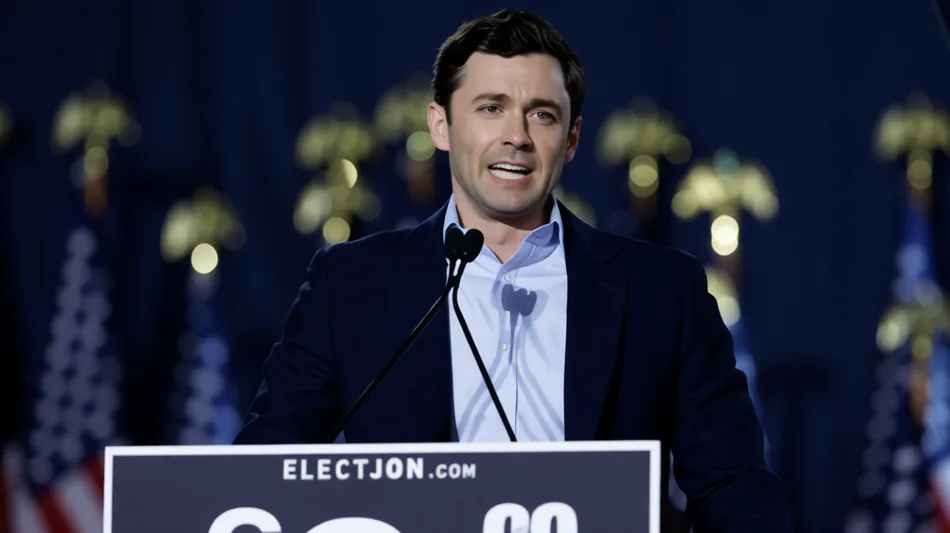
Ossoff and Talarico Rise in 2028 Presidential Polls After Midterm Victories

Jon Ossoff and James Talarico have emerged as significant new forces in the early 2028 Democratic presidential primary, gaining polling traction after securing high-profile midterm victories. Their rise challenges the current standing of former Vice President Kamala Harris and signals a shifting landscape within the party ahead of the next election cycle.
Jon Ossoff and James Talarico have entered the early stages of the 2028 Democratic presidential primary with significant momentum, their national profiles elevated by recent electoral successes that are already reshaping the party’s leadership dynamics. According to PollCheck averages, Senator Jon Ossoff has garnered 10.1% of support among potential Democratic voters, marking a 2.2-point increase over the last month. This polling gain follows his re-election in Georgia, which has solidified his status as a prominent figure for the party’s newer generation.
Talarico’s entry into the presidential conversation is more recent but equally impactful. The 37-year-old former teacher and Presbyterian seminarian secured a historic victory in Texas, defeating Republican Ken Paxton to reclaim a congressional seat lost more than thirty years ago. While Talarico does not yet appear consistently in national candidate polls, his campaign, which focused on anti-corruption measures, cost-of-living concerns, and bridging political divides, has established him as a figure of national interest.
The current polling landscape remains anchored by former Vice President Kamala Harris, who leads with 23.6% support in the PollCheck average. However, her position has weakened slightly, dropping 5.1 points in the last month. California Governor Gavin Newsom follows in second place with 14.1%, also showing a decline despite his active role in supporting Democratic candidates during the midterm cycle.
Other rising contenders include New York Representative Alexandria Ocasio-Cortez and former Transportation Secretary Pete Buttigieg. Ocasio-Cortez has seen her support rise to 12.1%, gaining 2.6 points in a month, while Buttigieg sits at 12.4%. Their increasing visibility reflects an ongoing internal party debate regarding the direction of the Democratic agenda: whether to pursue a more progressive platform or focus on appealing to moderate and independent voters.
The midterm results have also bolstered several governors who may eventually enter the presidential race. Pennsylvania Governor Josh Shapiro secured re-election, reinforcing his appeal in key swing states. Kentucky Governor Andy Beshear, president of the Democratic Governors Association, highlighted the party’s success in capturing new state administrations. Additional victories by Gina Hinojosa in Texas, Keisha Lance Bottoms in Georgia, Amy Acton in Ohio, and Rob Sand in Iowa illustrate a significant shift in the political geography of the United States.
On the Republican side, the question of succession for President Donald Trump dominates early polling. Vice President JD Vance leads with 37.4% support, benefiting from his proximity to the MAGA movement and his current office. Secretary of State Marco Rubio has seen a sharp rise in support, climbing 7.3 points to reach 25%. Other figures, including Donald Trump Jr. at 10% and Florida Governor Ron DeSantis at 7.9%, trail significantly.
Historical data suggests challenges for incumbents seeking the nomination. While several vice presidents have secured their party’s nomination—including Richard Nixon, George H.W. Bush, Al Gore, and Kamala Harris—few have won the presidency. Only four sitting vice presidents have been elected president, with George H.W. Bush in 1988 being the only one in the last 190 years. This historical context may influence Republican strategists as they evaluate Vance’s prospects against Rubio’s institutional continuity.
M.Zhou--ThChM