The China Mail - Bank of Japan sticks to ultra-loose monetary policy

USD -
AED 3.672503
AFN 64.999737
ALL 80.761235
AMD 360.982284
ANG 1.789785
AOA 916.99979
ARS 1547.5057
AUD 1.425557
AWG 1.8
AZN 1.702002
BAM 1.737655
BBD 2.013789
BDT 124.482471
BGN 1.747831
BHD 0.377511
BIF 2987.543757
BMD 1
BND 1.278142
BOB 12.12307
BRL 5.462705
BSD 0.999876
BTN 94.576825
BWP 13.727633
BYN 2.983457
BYR 19600
BZD 2.010946
CAD 1.39491
CDF 2314.999913
CHF 0.81551
CLF 0.024533
CLP 965.559898
CNY 6.669794
CNH 6.66697
COP 3229.22
CRC 454.196116
CUC 1
CUP 23.996482
CVE 97.96631
CZK 21.60035
DJF 178.04787
DKK 6.64712
DOP 60.044158
DZD 136.019746
EGP 53.880905
ERN 15
ETB 164.108289
EUR 0.88927
FJD 2.241251
FKP 0.743037
GBP 0.741955
GEL 2.605004
GGP 0.743037
GHS 11.633527
GIP 0.743037
GMD 74.50319
GNF 8859.999526
GTQ 7.640777
GYD 209.490556
HKD 7.845285
HNL 26.874159
HRK 6.76901
HTG 130.993736
HUF 322.863993
IDR 18044.5
ILS 3.163304
IMP 0.743037
INR 94.36695
IQD 1515.805747
IRR 1883408.498647
ISK 121.490226
JEP 0.743037
JMD 158.490264
JOD 0.709019
JPY 158.220503
KES 129.979698
KGS 87.44983
KHR 4065.567945
KMF 441.000163
KPW 899.999961
KRW 1341.95501
KWD 0.31076
KYD 0.8332
KZT 451.907529
LAK 22510.972511
LBP 89536.844537
LKR 332.702525
LRD 169.971747
LSL 16.458322
LTL 2.95274
LVL 0.60489
LYD 6.411145
MAD 9.767223
MDL 17.932726
MGA 4516.054516
MKD 54.73088
MMK 2099.845134
MNT 3601.453525
MOP 8.0795
MRU 40.672394
MUR 46.749438
MVR 15.455025
MWK 1733.74558
MXN 18.55437
MYR 4.046803
MZN 63.910274
NAD 16.458322
NGN 1346.320199
NIO 36.791229
NOK 9.285805
NPR 151.327626
NZD 1.772905
OMR 0.384485
PAB 0.999964
PEN 3.451055
PGK 4.486835
PHP 62.85499
PKR 276.584484
PLN 3.90587
PYG 6062.867601
QAR 3.645272
RON 4.748506
RSD 104.583973
RUB 81.87644
RWF 1471.300315
SAR 3.756339
SBD 8.051718
SCR 13.793073
SDG 601.511276
SEK 9.749784
SGD 1.27613
SHP 0.745545
SLE 22.91035
SLL 20969.504398
SOS 571.481881
SRD 37.563979
STD 20697.981008
STN 21.767813
SVC 8.74869
SYP 13001.999685
SZL 16.449882
THB 33.396506
TJS 9.223662
TMT 3.51
TND 2.979992
TOP 2.40776
TRY 50.047495
TTD 6.77808
TWD 32.921971
TZS 2647.034989
UAH 45.533522
UGX 4104.696412
UYU 40.202925
UZS 11888.515735
VES 893.768982
VND 25682.5
VUV 119.655093
WST 2.783161
XAF 583.322981
XAG 0.018922
XAU 0.000241946801
XCD 2.70255
XCG 1.801979
XDR 0.707052
XOF 583.322981
XPF 105.958029
YER 236.175026
ZAR 16.364655
ZMK 9001.194858
ZMW 20.278266
ZWL 321.999592
SSP 5745.516508
MXV 2.087974
  • RYCEF

    0.4000

    19.71

    +2.03%

  • CMSC

    0.0000

    20.4

    0%

  • BTI

    0.4200

    56.05

    +0.75%

  • BP

    0.2800

    44.43

    +0.63%

  • RBGPF

    1.6000

    67

    +2.39%

  • RIO

    -0.1500

    94.41

    -0.16%

  • AZN

    -0.4300

    166.15

    -0.26%

  • GSK

    0.4600

    49.7

    +0.93%

  • BCE

    -0.4100

    20.56

    -1.99%

  • NGG

    -0.2500

    75.24

    -0.33%

  • VOD

    -0.0400

    16.58

    -0.24%

  • RELX

    -0.4500

    33.07

    -1.36%

  • BCC

    -0.5500

    76.59

    -0.72%

  • CMSD

    -0.0300

    20.27

    -0.15%

  • JRI

    -0.2500

    10.77

    -2.32%

Bank of Japan sticks to ultra-loose monetary policy
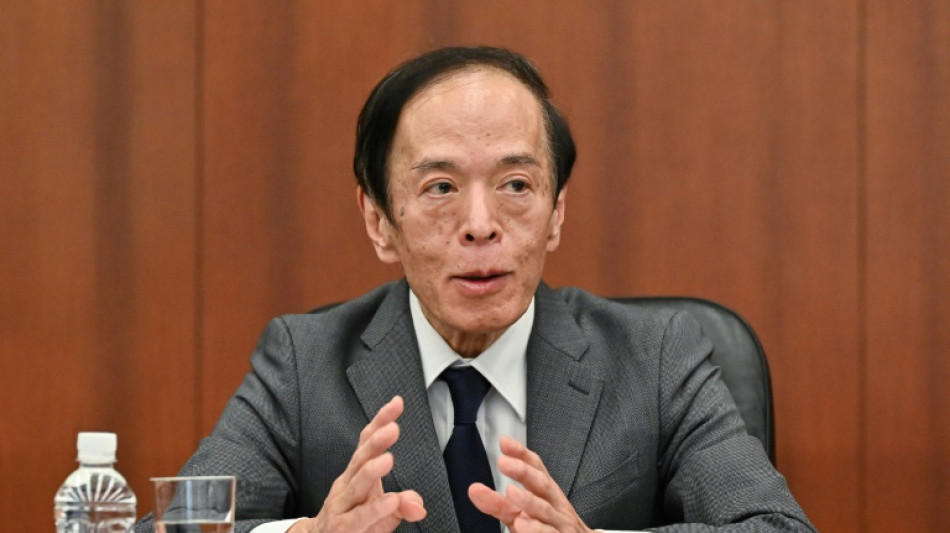
Bank of Japan sticks to ultra-loose monetary policy / Photo: © AFP

Bank of Japan sticks to ultra-loose monetary policy

The Bank of Japan said Friday it would maintain its long-standing, ultra-loose monetary policy as it looks to boost economic growth.

Text size:

The central bank has gone against the grain as its global peers hike interest rates to tackle inflation, pushing down the value of the yen against the dollar.

Officials had been widely expected to keep policies unchanged after the second two-day meeting under new Governor Kazuo Ueda, who took the helm in April.

They left the bank's negative interest rate in place and did not adjust the band in which rates for 10-year government bonds fluctuate, a scheme known as yield curve control.

The announcement prompted the Japanese currency to sink to around 140.75 yen per dollar, from around 140.20 yen earlier.

In contrast, the European Central Bank on Thursday raised interest rates to a 22-year high, boosting the euro, while also warning of persistent inflation and slower growth.

On Wednesday the US Federal Reserve decided against lifting rates, as expected, but signalled plans for additional increases as it assesses the impact of 10 straight hikes since early last year.

Shigeto Nagai of Oxford Economics said the Bank of Japan did not seem in a hurry to change its ways, "despite recent upside surprises both on the growth and inflation fronts".

"We believe that the BoJ will maintain the status quo for another year or so to assess whether the economy is on track to achieving two-percent inflation within Ueda's five-year term," he said.

A recovery in tourism and household spending helped the world's third-largest economy expand a better-than-expected 0.7 percent in the January-March quarter.

Inflation stood at 3.4 percent in April -- down from a January peak when consumer prices rose 4.2 percent on-year, the highest rate since 1981.

While inflation in Japan remains lower than the sky-high increases seen in the United States and elsewhere, it is above the central bank's two-percent target, which has been surpassed every month since April last year.

The BoJ argues that the price rises are fuelled by temporary factors, such as the war in Ukraine, and so has stuck to its loose policies in a bid to encourage sustained growth.

In April, the bank announced a broad review of its "non-traditional" attempts to banish the deflation that has plagued Japan since the 1990s, following the bubble era.

But moving away from monetary easing will be a tricky balancing act for Ueda, who faces pressure to normalise policy while minimising any shock to the economy.

There had been speculation of a change of tack late last year when the bank widened the band in which it allows 10-year bonds to fluctuate but it has not moved since.

Ueda "will likely set a deadline to judge whether the economy is on track to meet the policy goal within his term so that he can take necessary actions", Nagai said, adding that such a decision point could arrive in mid-2024.

O.Yip--ThChM



