US Fed expected to hold rates steady as Iran war roils outlook / Photo: © AFP

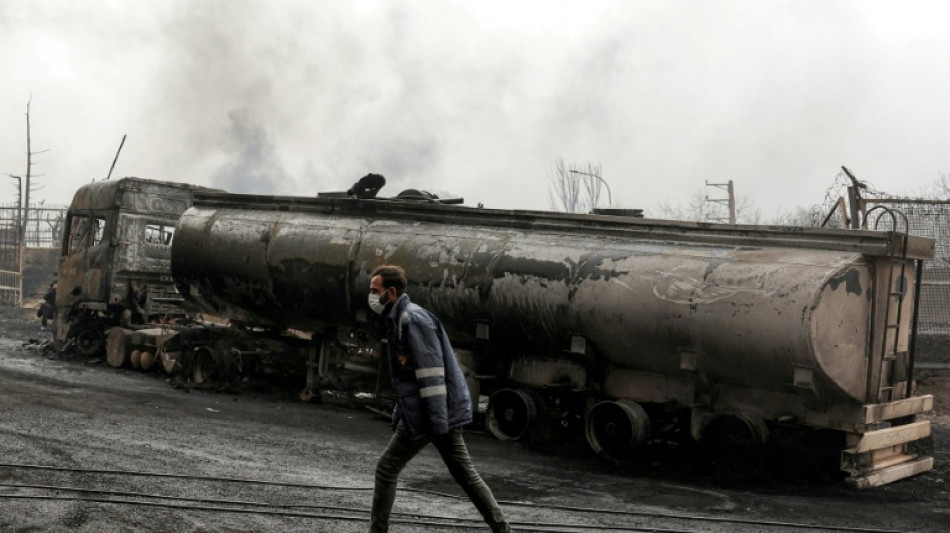
US Federal Reserve policymakers are expected to leave interest rates unchanged at their meeting next week, as the US-Israel war on Iran sends shock waves through markets and recent economic data has begun to show weakness.
The Fed will start its two-day meeting on Tuesday, with an announcement of the benchmark lending rate in the world's largest economy a day later.
The central bank cut rates three consecutive times last year before holding them steady at its January meeting.
It has a dual mandate of holding inflation near a long-term target of two percent while ensuring maximum employment.
With war in the Middle East causing global oil prices to spike, potentially increasing overall inflation and curbing growth, analysts say policymakers are unlikely to make any moves now.
"This is certainly a bind for the Fed, because supply shocks are extremely hard to deal with in that they lift inflation and they curb output," EY-Parthenon chief economist Gregory Daco told AFP.
Affordability is a key political issue for President Donald Trump, who has claimed that prices are cooling even as consumers complain of the high costs of basic goods.
Trump has repeatedly insulted Fed Chair Jerome Powell as he demands lower rates, and the Justice Department threatened Powell with a criminal indictment as part of an investigation into cost overruns for a Fed renovation project.
While consumer inflation has dropped from a peak of 9.1 percent during the Covid pandemic, it remains well above the Fed's two- percent target.
"Unlike other countries, which have already achieved some level of price stability, we're five years in without price stability," said Diane Swonk, chief economist at KPMG.
She warned that, depending on how long the Iran war lasts, inflation could again soar past four percent.
"I think the main story here is that we are seeing inflation moving away from the Fed's two-percent target, and that will lead many Fed policymakers to adopt an even more hawkish stance," said Daco.
- Duelling mandates -
Raising rates to cool the economy, however, could bring the Fed into tension with its other mandate: managing unemployment.
The United States unexpectedly lost 92,000 jobs in February, government data showed, while the unemployment rate rose to 4.4 percent.
Analysts say a relatively steady unemployment rate has been masking churn beneath the surface.
Labor demand has been dropping, but unemployment has not spiked because that has been accompanied by a drop in supply due to Trump's immigration crackdown.
Daco said labor demand gauges were showing signs of concern, including a weak hiring rate "at a decade low," slowing wage growth and business leaders talking about labor replacement due to AI.
Swonk noted that spiking uncertainty due to war in Iran and its knock-on effects would further curb labor demand.
"Uncertainty acts as its own tax on the economy, and one of the first lines of defense that firms do is they freeze hiring," she said.
And recent data ahead of the Fed meeting is not encouraging, with US GDP growth revised sharply lower in the final months of 2025.
- 'Rock and a hard place' -
Some Fed policymakers, however, have been cautious in describing the possible inflationary shocks of the war.
Fed Governor Christopher Waller expressed sympathy on Bloomberg TV last week for consumers facing spiking gasoline prices.
"But for us thinking about policy going forward, this is unlikely to cause sustained inflation," he said.
Swonk warned however that any economic slowdown from the war could be tough to recover from in the immediate term.
"I think people are discounting the risk of the lingering effects," she said, noting that supply disruptions affect more than oil prices.
"There's no question they're between a rock and a hard spot, and it just got harder," Swonk said of policymakers having to balance inflation and unemployment.
To Daco, however, uncertainty means the Fed is more likely to hold rates steady "for a long period of time."
Traders have begun to reduce their outlook for rate cuts, and Swonk said that hikes could even be on the menu.
"This is not a one-way street. We're at a busy intersection, and the stoplight's broken," she said.
B.Carter--ThChM