Oil surges, stocks drop as Trump threatens to block Hormuz / Photo: © AFP/File

Oil prices surged and stock markets broadly fell Monday after US-Iran peace talks broke down and President Donald Trump announced a plan to block the strategic Strait of Hormuz, ratcheting up fears for Middle East energy supplies.
The news dealt a blow to hopes for an end to the six-week conflict that has sent shivers through the global economy.
The dollar, viewed as a safe-haven investment, climbed against major currencies Monday.
"The stagflation word is being widely aired once again as geopolitical turmoil threatens to stymie international growth and stoke inflationary pressures," said Russ Mould, investment director at AJ Bell.
Such concerns have increased with the United States set to begin a blockade of the Strait of Hormuz, through which one-fifth of the world's oil and gas passes, at 1400 GMT on Monday.
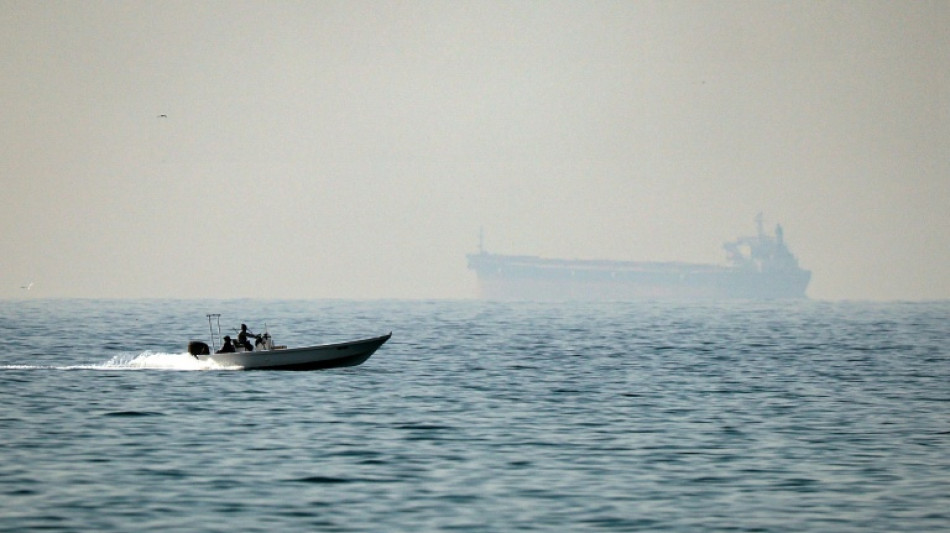
The US military said it would blockade all Iranian Gulf ports, after Tehran effectively halted all traffic at Hormuz during the attacks by the US and Israel.
"The blockade will be enforced impartially against vessels of all nations entering or departing Iranian ports and coastal areas, including all Iranian ports on the Arabian Gulf and Gulf of Oman," US Central Command posted on X.
It added that the US would "not impede freedom of navigation for vessels transiting the Strait of Hormuz to and from non-Iranian ports".
It comes after weekend talks between the warring sides in Pakistan collapsed, and prompted the Iranian military to warn that it would treat a blockade as an act of piracy.
World oil prices jumped around eight percent Monday, while European natural gas prices rallied more than nine percent.
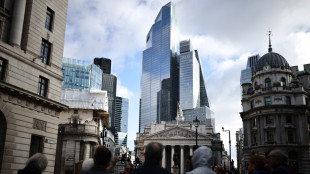
London's stock market fell 0.3 percent in midday deals, with losses capped by gains to share prices of oil giants BP and Shell.
In the eurozone, the Paris and Frankfurt stock markets shed about one percent.
"The deadlock is also weighing on US stock futures as investors ponder the inflationary implications of prolonged disruption to oil and gas supplies," said Derren Nathan, head of equity research at Hargreaves Lansdown.
Official data Friday highlighted the impact of the conflict on inflation, with the US consumer price index spiking to 3.3 percent in March, the highest level since May last year.
Germany, Europe's biggest economy, will feel the effects of the energy shock from the war "for a long time to come, even after it is over", Chancellor Friedrich Merz said Monday, as his government announced relief measures including a fuel-tax cut.
Investors are also looking ahead to the round of first-quarter earnings from companies worldwide beginning this week, to see how the geopolitical turmoil is impacting their operations.
In Hungary, stocks rallied after conservative Peter Magyar won a thumping majority in parliamentary elections Sunday, ousting Prime Minister Viktor Orban after 16 years in power. The BUX index in Budapest was up 2.9 percent at midday.
- Key figures at around 1045 GMT -
Brent North Sea Crude: UP 7.2 percent at $102.06 a barrel
West Texas Intermediate: UP 7.6 percent at $103.95 a barrel
London - FTSE 100: DOWN 0.4 percent at 10,564.69 points
Paris - CAC 40: DOWN 0.9 percent at 8,188.38
Frankfurt - DAX: DOWN 1.0 percent at 23,576.50
Tokyo - Nikkei 225: DOWN 0.7 percent at 56,502.77 (close)
Hong Kong - Hang Seng Index: DOWN 0.9 percent at 25,660.85 (close)
Shanghai - Composite: UP 0.1 percent at 3,988.56 (close)
Euro/dollar: DOWN at $1.1693 from $1.1728 on Friday
Pound/dollar: DOWN at $1.3434 from $1.3463
Dollar/yen: UP at 159.69 yen from 159.19 yen
Euro/pound: DOWN at 87.05 pence from 87.11 pence
burs-bcp/js
G.Fung--ThChM