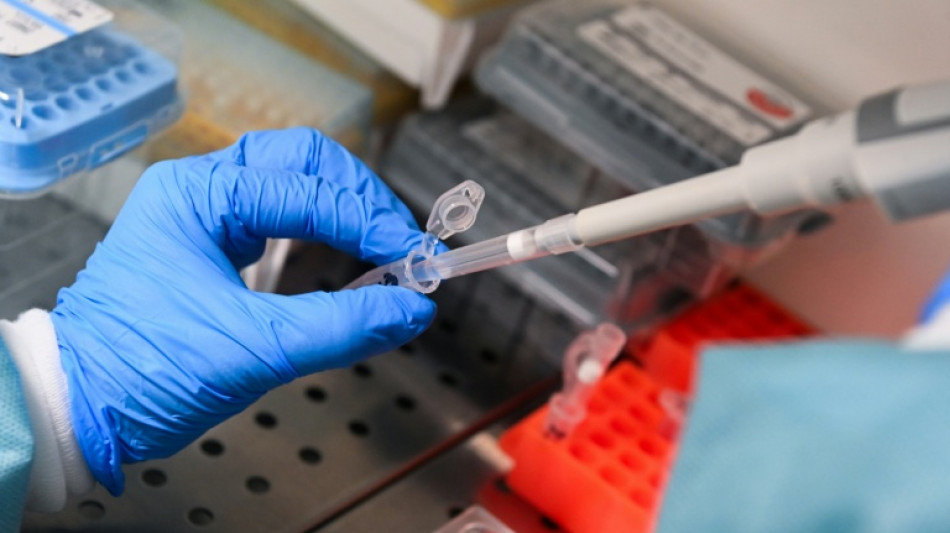
New drugs raise hopes of pancreatic cancer breakthrough / Photo: © AFP/File

After decades of struggling to find a way to treat pancreatic cancer, researchers have developed several promising new drugs that could offer rare hope to patients given this particularly deadly diagnosis.
Pancreatic cancer is notoriously aggressive, with only roughly one in 10 people surviving more than five years after being diagnosed, research has shown.
Rates of this cancer have also been surging worldwide, notably among young adults. It is projected to become the second deadliest cancer, after lung cancer, in developed countries in the coming years.
Despite the scale of this scourge, there has not been "any medical progress for 40 years," Patrick Mehlen, a researcher at France's Leon Berard cancer centre, told AFP.
But more funding and interest over the last decade has finally been making a "real difference," he added.
While a cure is still a long way off for most patients, some of these new drugs could add precious months to their lifespan.
The most widely celebrated news came last week, when US pharma firm Revolution Medicines announced positive results for its experimental drug daraxonrasib.
The drug targets a protein called KRAS which is known to play an important role in tumour growth.
Half of the patients taking the pill survived more than 13 months -- twice as long as a control group receiving chemotherapy.
This may not sound revolutionary, but for a cancer that kills so quickly, doubling the life expectancy of patients is unprecedented.
- 'Heck of a lot better' -
One high-profile patient has spoken out about just what a difference the drug can make.
Ben Sasse, a former senator from the US state of Nebraska, started taking daraxonrasib after being diagnosed with metastasised, stage-four pancreatic cancer late last year.
"In mid-December I got a three-to-four month life expectancy," the 54-year-old told the New York Times.
After taking the drug, "I'm doing a heck of a lot better than I was doing at Christmas," Sasse said.
He added that it was "a nasty drug", pointing to severe side effects that left his face peeling and bloody.
Revolution Medicines has said it will soon apply for its treatment to be approved in the United States. More detailed results about the phase 3 trial will be presented at the ASCO cancer conference in Chicago next month.
Meanwhile, other researchers have been exploring alternative ways to extend the lives of pancreatic cancer patients.
Early trial results, published in the journal Nature on Wednesday, tested a treatment that is not designed to directly eradicate tumours.
Instead, it aims to prevent cancerous cells from starting a process that makes them resistant to other drugs -- including chemotherapy.
The NP137 antibody was tested on 43 patients receiving chemo whose cancer had spread through their pancreas, but not to other parts of their body.
Compared to normal survival rates, the patients lived several months longer, according to the phase 1b trial.
"We're giving people an average of six months more -- which is significant for this disease," said Mehlen, who supervised the research.
The team plans to conduct another trial with a larger sample size and a control group later this year.
Ultimately, Mehlen hopes his drug will not just extend the lives of people receiving chemotherapy, but also daraxonrasib.
- New cancer vaccine -
Promising early trial results were also announced over the weekend for an experimental pancreatic cancer vaccine.
The vaccine, which uses the messenger RNA technology that came to prominence during the Covid-19 pandemic, was developed by pharma firms BioNTech and Genentech.
During the phase 1 trial, 16 patients who already had pancreatic cancer were given the shot.
It promoted immune cells to target cancerous cells in eight of the patients, seven of whom were still alive six years later.
Out of the eight patients whose immune systems did not respond to the vaccine, just two survived that long.
Phase 1 trials are designed to determine whether drugs are safe, not demonstrate they are effective, so more research is planned.
V.Liu--ThChM