Global AI industry falls short on safety, think tank warns
/ Photo: © AFP/File

US artificial intelligence lab Anthropic scored the highest in a semiannual safety ranking, but globally the industry fails to combat "existential" threats, according to a report released on Tuesday.
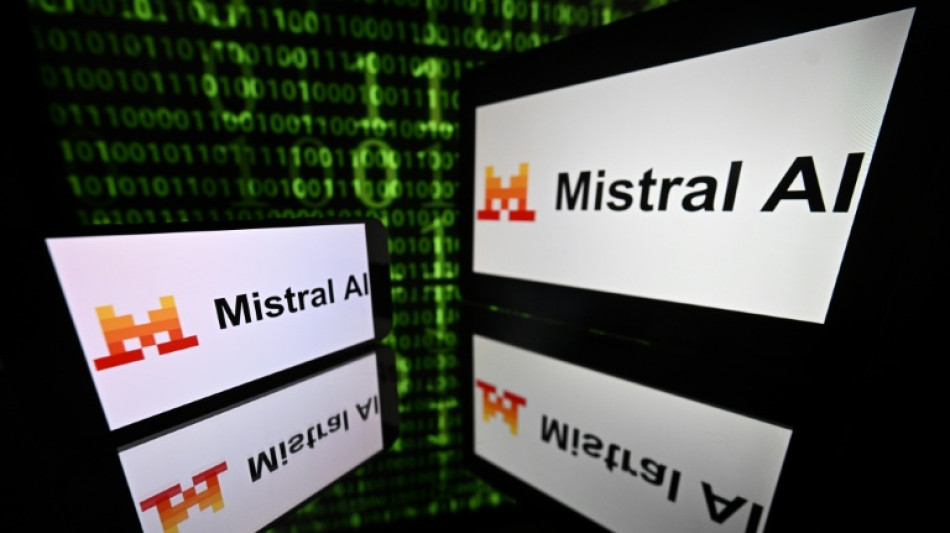
Meta moved up two spots to fourth place, while xAI dropped three spots to seventh place, just ahead of China's DeepSeek and France's Mistral, which placed last, according to US-based AI safety think tank Future of Life Institute, which ranked nine of the world's leading AI companies.
Seven researchers and governance experts determined the rankings based on public data and information provided by the companies.
They evaluated efforts across six distinct categories: risk assessment, current harms, safety frameworks, existential safety, governance and accountability, and information sharing.
No company received an "A" in any single category, while Anthropic got the best overall score of "C+."
Mistral was included on the list for the first time, though when asked by AFP to comment on its last place, the company said the report's framework isn't suited for its approach to developing AI models.
The French company develops so-called open models, which allow users to download and modify them. Many of its competitors develop closed AI models -- including Anthropic, OpenAI and Google DeepMind, which are also included in the report.
"I was very disappointed to find that they came last, especially since Europe has really...been a leader in AI safety," Max Tegmark, an MIT professor and Future of Life president, told AFP.
"We reached out many, many times" but Mistral did not respond to the organization's survey, Tegmark continued.
Alibaba, xAI and DeepSeek did not respond to its survey either, the organization said.
Three Chinese developers included in the report also produce open models and landed in the bottom half of the ranking: DeepSeek (fifth), Alibaba Cloud (sixth) and Z.ai (eighth).
- 'Questionable' practices -
The report noted that several companies that previously banned their technology from military uses have "gradually reversed course," including Anthropic, which the report criticized for having "questionable military engagements."
The US government used Anthropic's technology in military operations in Venezuela and Iran over the past year, according to various media reports -- though the company was subject to a recent ban by the Pentagon over disagreements on AI safety.
All nine companies are failing when it comes to combating "existential" threats such as pursuing models that reach human-level intelligence, known as "artificial general intelligence" or AGI, the report said.
Although "constructive attempts exist," efforts across the board are "entirely inadequate."
Other risks include the possible misuse of a model to carry out a cyberattack or perform tasks potentially harmful to humans.
Anthropic was thrust into the spotlight recently after it released its most powerful model yet, called Mythos.
In early April, the San Francisco-based company released Mythos only to a handful of trusted organizations due to its abilities to expose cyber safety vulnerabilities to bad actors.
However, by June 12 the US government blocked Anthropic from releasing Mythos to foreigners on national security grounds.
The Trump administration eventually lifted the ban a couple of weeks later on June 30.
Z.Huang--ThChM