ASU Students Report Financial Aid Delays Amid Federal Law Changes

Arizona State University students report significant disruptions to their financial aid processes, citing prolonged delays and inadequate support from the university’s financial aid office. These issues have intensified as ASU navigates the implementation of new federal student loan regulations introduced by the One Big Beautiful Bill Act.
Arizona State University students are reporting extensive disruptions to their financial aid processes, describing a period of prolonged uncertainty and inadequate institutional support as the university attempts to implement new federal student loan regulations. The challenges have left many students scrambling to secure funding for tuition payments while navigating complex eligibility requirements introduced by recent legislative changes.
The source of these disruptions is the One Big Beautiful Bill Act, signed into law by President Donald Trump on July 4, 2025. The legislation introduced significant modifications to the federal financial aid system, including new eligibility criteria for various aid programs, revised loan borrowing limits, and a reduction in available loan repayment options. According to a university webpage, the U.S. Department of Education negotiated new rules to implement these provisions, with changes taking effect less than two months before the start of ASU’s Fall 2026 semester.
The tight timeline has forced universities nationwide to rapidly adjust their administrative procedures to comply with the law. For ASU students who rely on federal aid to attend the university, these adjustments have manifested as operational bottlenecks. Students argue that the university’s financial aid office was overwhelmed and unprepared for the volume of issues generated by the transition.
James Valicenti, a doctoral student in behavioral health, experienced these delays firsthand. He stated that the university informed him he needed to verify his eligibility for Grad PLUS loans for the remainder of his program. The One Big Beautiful Bill Act eliminated these loans for most students moving forward, offering exceptions only to those meeting limited qualifications. Valicenti confirmed that he qualified to retain the loan; however, his financial aid account in the My ASU portal simultaneously displayed a balance of $0 and a "Loan Processing" message, with no funds applied to his tuition.
Like many others facing similar discrepancies, Valicenti turned to Reddit to express concerns about his aid status and the responsiveness of ASU Financial Aid. In response to student inquiries, a university spokesperson stated in a written statement that the institution was working to help students understand the federal changes and was providing necessary resources and support.
"We acknowledge the delays some students have faced may have real consequences and our team is working very hard to resolve outstanding inquiries as fast as possible," the spokesperson said. "This is happening at universities from coast to coast after changes made by the federal government to student borrowing guidelines."
The university has attempted to mitigate immediate financial pressure by adjusting payment deadlines. The tuition payment date was moved to September 25. Additionally, a second spokesperson noted in an October written statement that the deadline had been further extended for approximately 100 graduate students who were receiving individualized financial aid assistance.
Despite these administrative adjustments, student dissatisfaction remains high. Valicenti criticized the university’s preparation for the legislative shift. "They had a year, they knew these changes were going down the pipeline," Valicenti said. "It wasn't like, 'Oh this may or may not happen.' No, it was going to happen, and they knew about this."
Mikayla Piantanida, a senior studying elementary education, faced different hurdles related to the new restrictions. The changes meant she no longer qualified for loans she had utilized for the past three years, including a Parent PLUS loan, which the One Big Beautiful Bill Act placed new restrictions on. Piantanida managed to secure a separate loan from an external lender but required the university to sign off confirming her enrollment in classes.
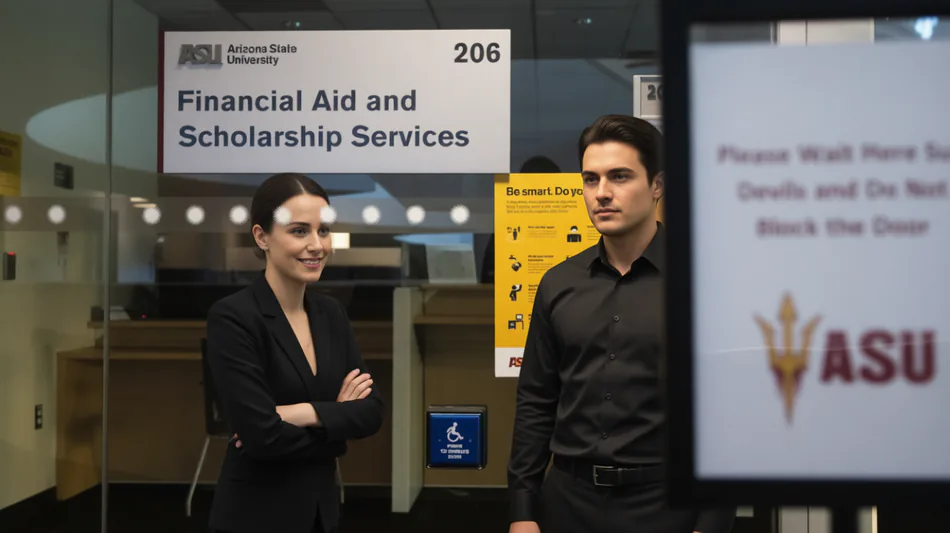
Piantanida reported spending six weeks without a response from the university while receiving urgent emails from the loan company. When she finally called ASU Financial Aid, the office informed her that she would need to wait another six weeks for assistance. After several more weeks of waiting, Piantanida visited the financial aid office in person, where staff were able to assist her. "It took about three months for me to finally get this one piece of paper signed in order to pay the tuition," she said.
Other students reported issues stemming from internal disbursement delays rather than federal eligibility changes. Abigail Tremp, a senior studying liberal studies, encountered difficulties with scholarship disbursements. She began the process to resolve an issue with one scholarship in June but faced unanswered calls and incorrect information from financial aid staff. "Eventually, two months after I started that, I finally got it fixed," Tremp said. "It was only because I called and demanded to speak to someone higher up."
Tremp noted that once senior staff intervened, the issue was resolved the same day. "It clearly wasn't a very hard issue," she said. "It just required someone who knew what they were doing to actually take care of it." Her second scholarship check was not mailed until August. She sent multiple emails throughout the month seeking resolution but received no responses. The scholarship was eventually applied within two to three weeks, a timeline longer than initially communicated by the office.
Kennedi Reeder, a sophomore studying biomedical sciences, sought assistance with certifying an outside loan to cover an overdue balance from the previous year, a matter separate from the federal changes. She reported that the certification process took from early August to mid-September. Upon reviewing the certified loan, Reeder discovered the office had processed it for the wrong school year, requiring her to restart the process.
Reeder described significant difficulties in reaching staff via telephone, citing hold times of up to two hours. She opted for the callback option when phone support proved unmanageable. When she received a callback four or five days later, she found the staff’s knowledge lacking. "It's really hard to get any help, because then they pick up the phone and you ask them questions, and half of the time they're like, 'Well, I don't know,'" Reeder said. "What do you mean you don't know? That's your job. It's your job to know."
Reeder suggested that the university needs to hire more employees for the financial aid office and provide better training on potential student inquiries. She recommended hiring students or alumni who already possess institutional knowledge. "Hire students, hire alumni, they already know a lot of things about ASU — they went there for God's sake," she said.
Valicenti echoed concerns regarding staffing levels, suggesting that the existing problems with ASU Financial Aid were exacerbated by the fallout from the One Big Beautiful Bill Act. "There's not enough financial aid counselors and not enough people that are taking the calls," Valicenti said. "ASU is just not allocating money to be able to accommodate this mass change that's happening."
Tremp also criticized the university’s communication strategy regarding the federal changes. She recommended improving the office’s communications and call center protocols to prevent the dissemination of incorrect information. "They really did a terrible job at communicating this to students," Tremp said.
The financial aid office continues to manage a high volume of inquiries as students navigate the new regulatory landscape. While the university has extended payment deadlines and acknowledged the difficulties faced by students, many report that the resolution process remains slow and inconsistent.
V.Fan--ThChM