The China Mail - Australian doctors find live parasitic worm in woman's brain

USD -
AED 3.672498
AFN 63.999636
ALL 83.250159
AMD 377.159566
ANG 1.790083
AOA 917.000066
ARS 1382.516986
AUD 1.44469
AWG 1.80125
AZN 1.699493
BAM 1.70594
BBD 2.013154
BDT 122.637848
BGN 1.709309
BHD 0.377504
BIF 2964
BMD 1
BND 1.290401
BOB 6.906447
BRL 5.193499
BSD 0.999512
BTN 95.111495
BWP 13.788472
BYN 2.972354
BYR 19600
BZD 2.010179
CAD 1.390045
CDF 2284.999948
CHF 0.797785
CLF 0.023467
CLP 926.609842
CNY 6.894697
CNH 6.88436
COP 3684
CRC 464.734923
CUC 1
CUP 26.5
CVE 95.875047
CZK 21.21415
DJF 177.719659
DKK 6.456897
DOP 60.100677
DZD 132.927981
EGP 54.534799
ERN 15
ETB 157.050442
EUR 0.86409
FJD 2.257399
FKP 0.758039
GBP 0.755085
GEL 2.690084
GGP 0.758039
GHS 11.000203
GIP 0.758039
GMD 73.999637
GNF 8774.999683
GTQ 7.64789
GYD 209.174328
HKD 7.838355
HNL 26.601482
HRK 6.511398
HTG 131.185863
HUF 331.94601
IDR 16949.3
ILS 3.15655
IMP 0.758039
INR 93.48455
IQD 1310
IRR 1315875.000259
ISK 123.920215
JEP 0.758039
JMD 158.129555
JOD 0.708991
JPY 158.595495
KES 130.000195
KGS 87.450086
KHR 4010.000252
KMF 428.501353
KPW 899.974671
KRW 1509.180147
KWD 0.30954
KYD 0.832908
KZT 476.211659
LAK 21949.999484
LBP 89509.104969
LKR 315.318459
LRD 183.675024
LSL 17.07008
LTL 2.95274
LVL 0.60489
LYD 6.404996
MAD 9.342501
MDL 17.701369
MGA 4178.000431
MKD 53.276351
MMK 2099.498084
MNT 3571.008867
MOP 8.070843
MRU 40.110371
MUR 47.101438
MVR 15.469845
MWK 1736.999821
MXN 17.89255
MYR 4.024978
MZN 63.950317
NAD 17.069979
NGN 1385.269964
NIO 36.729719
NOK 9.690696
NPR 152.178217
NZD 1.737605
OMR 0.384494
PAB 0.999507
PEN 3.495972
PGK 4.39017
PHP 60.583962
PKR 279.197676
PLN 3.705315
PYG 6474.685228
QAR 3.644016
RON 4.405496
RSD 101.504001
RUB 81.302838
RWF 1460
SAR 3.75297
SBD 8.042037
SCR 14.056953
SDG 600.999749
SEK 9.45298
SGD 1.284499
SHP 0.750259
SLE 24.550038
SLL 20969.510825
SOS 571.497218
SRD 37.373988
STD 20697.981008
STN 21.725
SVC 8.746053
SYP 110.555055
SZL 17.069963
THB 32.529758
TJS 9.580319
TMT 3.51
TND 2.929893
TOP 2.40776
TRY 44.460397
TTD 6.790468
TWD 31.952901
TZS 2588.311011
UAH 43.911606
UGX 3762.887497
UYU 40.550736
UZS 12195.495095
VES 473.27785
VND 26340
VUV 120.343344
WST 2.769273
XAF 572.15615
XAG 0.013349
XAU 0.000213
XCD 2.70255
XCG 1.801363
XDR 0.710952
XOF 570.49822
XPF 104.05005
YER 238.650541
ZAR 16.88341
ZMK 9001.179364
ZMW 19.105686
ZWL 321.999592
  • RBGPF

    -13.5000

    69

    -19.57%

  • CMSC

    -0.4028

    21.9

    -1.84%

  • CMSD

    -0.4000

    22.1

    -1.81%

  • GSK

    0.9600

    55.19

    +1.74%

  • AZN

    3.3400

    197.22

    +1.69%

  • BCE

    0.0100

    25.24

    +0.04%

  • RELX

    0.4000

    33.15

    +1.21%

  • RIO

    4.4700

    93.29

    +4.79%

  • BP

    -0.3500

    47

    -0.74%

  • BTI

    0.2100

    58.47

    +0.36%

  • NGG

    0.9100

    84.6

    +1.08%

  • VOD

    0.3200

    15.02

    +2.13%

  • RYCEF

    0.7400

    15.09

    +4.9%

  • JRI

    0.3800

    12.3

    +3.09%

  • BCC

    0.9000

    75.85

    +1.19%

Australian doctors find live parasitic worm in woman's brain
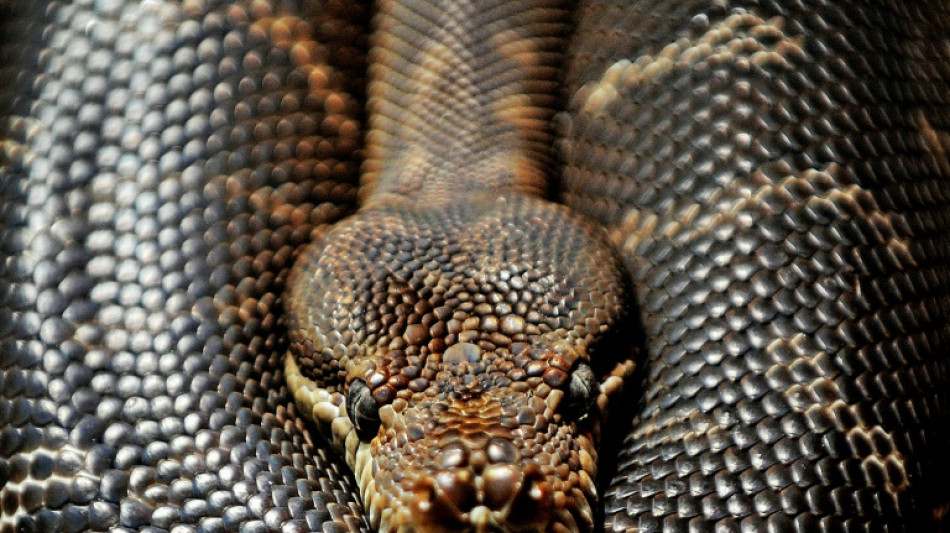
Australian doctors find live parasitic worm in woman's brain / Photo: © AFP/File

Australian doctors find live parasitic worm in woman's brain

A parasitic roundworm typically found in snakes has been pulled "alive and wriggling" from a woman's brain in a stomach-churning medical first, Australian doctors said Tuesday.

Text size:

Baffled doctors performed an MRI scan on the 64-year-old Australian woman after she began suffering memory lapses, noticing an "atypical lesion" at the front of her brain.

It was an eight-centimetre (three-inch) roundworm, called Ophidascaris robertsi, which researchers said was a common parasite in kangaroos and carpet pythons -- but not humans.

"This is the first-ever human case of Ophidascaris to be described in the world," said infectious disease expert Sanjaya Senanayake.

"To our knowledge, this is also the first case to involve the brain of any mammalian species, human or otherwise."

Researchers believe the woman was infected after foraging for edible shrubs near her house, which were likely contaminated with parasitic larvae shed in snake faeces.

The parasite, which appeared as a "stringlike structure" on brain scans, was then identified through DNA testing.

"It is never easy or desirable to be the first patient in the world for anything," Senanayake said.

"I can't state enough our admiration for this woman, who has shown patience and courage through this process."

Senanayake said Ophidascaris roundworms were known to infect animals in other parts of the world, and it was "likely that other cases will be recognised in coming years".

The findings were published in the journal Emerging Infectious Diseases.

E.Choi--ThChM