South Africa Places 36 Hospitals on Standby for Possible Imported Ebola Cases

South Africa has recorded no cases in the current Bundibugyo Ebola outbreak, but health authorities have designated 36 hospitals and strengthened screening, training and referral systems.
South African health authorities have designated 36 hospitals to receive suspected or confirmed cases of Bundibugyo virus disease as the Democratic Republic of Congo confronts its largest recorded Ebola disease outbreak. No current cases have been detected in South Africa, and national experts assess the risk of a domestic outbreak as low, but they say an imported infection remains possible.
The outbreak began after health authorities in the DRC raised the alarm in May over Bundibugyo virus disease, a form of Ebola disease, in the country and neighbouring Uganda. The World Health Organization declared the event a public health emergency of international concern soon afterwards. Most infections have been reported in the DRC.
Ebola disease is not endemic in South Africa, meaning any Bundibugyo case would most likely involve a traveller infected in a country with an outbreak. As far as Spotlight could establish, South Africa has identified only two Ebola disease cases, both in 1996. One involved a healthcare worker who had travelled through an affected country; a nurse was then infected as a secondary case.
The present outbreak has crossed the DRC's borders. Uganda has reported 20 cases and Kenya nine, while Nigeria and France have reported one each. The Ugandan and French cases have been contained, and neither country was believed to have an active case at the time of the report. The WHO has warned that the threat beyond the DRC is real.
Professor Tulio de Oliveira, director of Stellenbosch University's Centre for Epidemic Response and Innovation, said South Africa's risk remains relatively low but preparedness is essential. The National Department of Health also confirmed that the country has no Bundibugyo cases. De Oliveira said conditions in South Africa differ sharply from those complicating control in the DRC, where poverty, a weak health system, illegal mining, conflict and difficult access for aid services have hindered the response. He also raised concern about possible spread to South Sudan, which faces similar constraints.
South Africa has strong diagnostic capacity, experienced virologists and the ability to isolate patients and conduct safe burials, De Oliveira said. Health department spokesperson Foster Mohale said assessments by the department and the National Institute for Communicable Diseases continue to place the outbreak risk at a low level, while recognising the genuine possibility of an imported case.
Bundibugyo virus is not airborne. It spreads through direct contact with the blood or other body fluids of a person who is ill or has died, and infected people are not contagious before symptoms develop. Mohale said early detection, safe isolation and monitoring contacts for 21 days can stop further transmission.
South Africa has also supported control efforts at the source. It has shipped diagnostic tests and the NICD has provided testing assistance to Uganda and the DRC. De Oliveira said containing outbreaks where they emerge is more efficient and less expensive than responding after wider spread. In May, the government pledged $2.5 million, about R40 million, to support the two countries' responses.
Regional coordination is also developing. After a high-level Southern African Development Community meeting in Durban, member states were expected to formulate a joint response plan to strengthen preparedness across the region.
Within South Africa, the National Department of Health is coordinating readiness through the National Public Health Emergency Operations Centre. Mohale said the centre was activated soon after the DRC outbreak was declared in May 2026. The response is divided into 11 pillars with designated leaders, and progress is reviewed weekly.
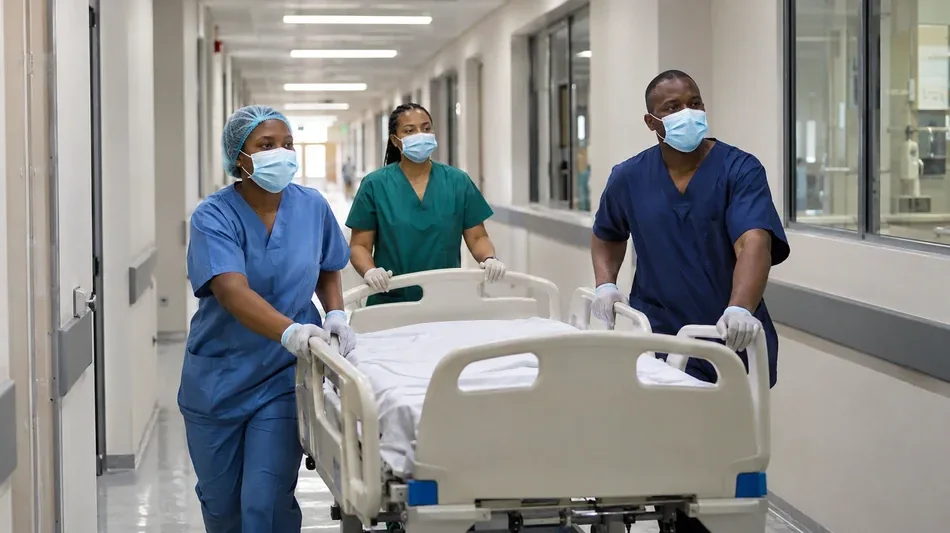
The hospital network includes 24 public and 12 private facilities spread across all nine provinces. The department did not name them because its list was being updated. A July webinar for healthcare workers had previously identified 21 public hospitals across the provinces. Provincial readiness teams are assessing the 36 facilities, while other public and private hospitals are also being prepared to recognise, isolate and refer suspected patients.
No fixed workforce is reserved exclusively for Ebola care. If a patient is admitted, a designated hospital will reassign staff from other services. Workers caring for an Ebola patient must wear full personal protective equipment and will rotate through four-hour shifts to protect their safety and wellbeing.
Referral routes have been established from ports of entry, clinics and hospitals outside the designated network. Emergency Medical Services personnel have been trained to transport patients safely. The aim is to ensure that the wider health system can identify a possible case and move the patient without exposing staff or the public.
Three webinars held in June and July through the health department's Knowledge Hub, in partnership with the NICD, trained healthcare personnel to identify, isolate, test, treat or refer suspected cases. Further sessions are planned. Updated material includes the national Viral Haemorrhagic Fever guidelines, a case definition for Bundibugyo virus disease, infection prevention and control procedures and an NICD fact sheet.
Screening has been strengthened at airports, land crossings and seaports. Port health officials use temperature checks, health questionnaires and passenger information from flight manifests before international aircraft land, allowing closer screening of travellers who have recently been in affected areas. Anyone meeting the criteria for suspicion can be isolated, assessed and transferred to a designated hospital.
Readiness assessments were carried out at six priority entry points between July and September 2026: OR Tambo International Airport, Lanseria International Airport, King Shaka International Airport, Cape Town International Airport, the Beitbridge land border and the Groblersbridge land border.
Under the national case definition, officials should suspect Bundibugyo virus disease when a person at an entry point or healthcare facility has compatible symptoms and has either travelled recently to an outbreak area or had contact with an infected person within the previous 21 days. Warning signs include sudden fever, vomiting, diarrhoea, severe headache, muscle pain or unexplained bleeding. An unexplained illness that tests negative for malaria is also treated as a suspected case.
A healthcare or port official who identifies a suspected case must immediately notify the NICD and the relevant provincial outbreak team and arrange diagnostic testing. Laboratory methods include PCR tests for viral genetic material, antibody tests and antigen detection. The WHO maintains a list of molecular tests with emergency approval for Bundibugyo virus.
Ebola disease is a category one notifiable condition in South Africa. A positive laboratory result must be communicated immediately, and the health department must receive formal notification within 24 hours. Contacts of a confirmed patient are monitored for 21 days.
A person who tests positive would be isolated in a designated hospital and receive supportive care from trained staff and infectious-disease specialists. There is no licensed vaccine or medicine specifically for Bundibugyo virus. Treatment therefore focuses on early and optimised supportive care, including fluids, correction of electrolyte imbalances, oxygen and management of complications, which can materially improve survival.
A vaccine trial is underway in the DRC using a ring-vaccination design in which close contacts of confirmed patients are enrolled and given candidate vaccines. Initial findings are expected early in 2027.
Authorities have tested the response through simulations. Exercises were held at OR Tambo in June and in the Beitbridge and Musina area in August. South Africa also took part in a regional exercise run by the Africa Centres for Disease Control and Prevention and the WHO, while preparedness training is continuing in the private health sector.
Z.Ma--ThChM