The China Mail - Biden strengthens US soot regulations, angering industry

USD -
AED 3.672501
AFN 65.000545
ALL 81.652501
AMD 376.168126
ANG 1.79008
AOA 917.000263
ARS 1431.789723
AUD 1.425591
AWG 1.8025
AZN 1.704112
BAM 1.654023
BBD 2.008288
BDT 121.941731
BGN 1.67937
BHD 0.375914
BIF 2954.881813
BMD 1
BND 1.269737
BOB 6.889932
BRL 5.217399
BSD 0.997082
BTN 90.316715
BWP 13.200558
BYN 2.864561
BYR 19600
BZD 2.005328
CAD 1.36528
CDF 2199.999711
CHF 0.77566
CLF 0.021803
CLP 860.889567
CNY 6.93895
CNH 6.93092
COP 3699.522179
CRC 494.312656
CUC 1
CUP 26.5
CVE 93.2513
CZK 20.463298
DJF 177.555076
DKK 6.322198
DOP 62.928665
DZD 129.553047
EGP 46.713163
ERN 15
ETB 155.0074
EUR 0.8462
FJD 2.209497
FKP 0.73461
GBP 0.734457
GEL 2.694976
GGP 0.73461
GHS 10.957757
GIP 0.73461
GMD 73.000184
GNF 8752.167111
GTQ 7.647681
GYD 208.609244
HKD 7.81385
HNL 26.338534
HRK 6.376101
HTG 130.618631
HUF 319.493022
IDR 16855.5
ILS 3.110675
IMP 0.73461
INR 90.57645
IQD 1306.186308
IRR 42125.000158
ISK 122.709741
JEP 0.73461
JMD 156.057339
JOD 0.709029
JPY 157.200504
KES 128.622775
KGS 87.45031
KHR 4023.848789
KMF 419.000087
KPW 899.990005
KRW 1463.830447
KWD 0.30721
KYD 0.830902
KZT 493.331642
LAK 21426.698803
LBP 89293.839063
LKR 308.47816
LRD 187.449786
LSL 16.086092
LTL 2.95274
LVL 0.60489
LYD 6.314009
MAD 9.153622
MDL 17.000296
MGA 4426.402808
MKD 52.129054
MMK 2099.624884
MNT 3567.867665
MOP 8.023933
MRU 39.425769
MUR 46.060361
MVR 15.449993
MWK 1728.952598
MXN 17.269659
MYR 3.947503
MZN 63.750274
NAD 16.086092
NGN 1366.979859
NIO 36.694998
NOK 9.666396
NPR 144.506744
NZD 1.661284
OMR 0.383441
PAB 0.997082
PEN 3.354899
PGK 4.275868
PHP 58.510949
PKR 278.812127
PLN 3.567015
PYG 6588.016407
QAR 3.634319
RON 4.310399
RSD 99.268468
RUB 76.760504
RWF 1455.283522
SAR 3.748738
SBD 8.058149
SCR 13.84955
SDG 601.511502
SEK 9.011435
SGD 1.272902
SHP 0.750259
SLE 24.450613
SLL 20969.499267
SOS 568.818978
SRD 37.818002
STD 20697.981008
STN 20.719692
SVC 8.724259
SYP 11059.574895
SZL 16.08271
THB 31.535012
TJS 9.342721
TMT 3.505
TND 2.891792
TOP 2.40776
TRY 43.612496
TTD 6.752083
TWD 31.589778
TZS 2577.445135
UAH 42.828111
UGX 3547.71872
UYU 38.538627
UZS 12244.069517
VES 377.985125
VND 25950
VUV 119.182831
WST 2.73071
XAF 554.743964
XAG 0.012866
XAU 0.000201
XCD 2.70255
XCG 1.797032
XDR 0.689923
XOF 554.743964
XPF 100.858387
YER 238.402706
ZAR 16.05502
ZMK 9001.197825
ZMW 18.570764
ZWL 321.999592
  • SCS

    0.0200

    16.14

    +0.12%

  • RBGPF

    0.1000

    82.5

    +0.12%

  • NGG

    1.1700

    88.06

    +1.33%

  • RELX

    -0.7100

    29.38

    -2.42%

  • GSK

    1.0600

    60.23

    +1.76%

  • RIO

    2.2900

    93.41

    +2.45%

  • CMSC

    -0.0400

    23.51

    -0.17%

  • RYCEF

    0.2600

    16.88

    +1.54%

  • BCE

    -0.4900

    25.08

    -1.95%

  • BCC

    1.8700

    91.03

    +2.05%

  • BTI

    0.8400

    62.8

    +1.34%

  • AZN

    5.8700

    193.03

    +3.04%

  • BP

    0.8400

    39.01

    +2.15%

  • VOD

    0.4900

    15.11

    +3.24%

  • CMSD

    0.0600

    23.95

    +0.25%

  • JRI

    0.0900

    12.97

    +0.69%

Biden strengthens US soot regulations, angering industry
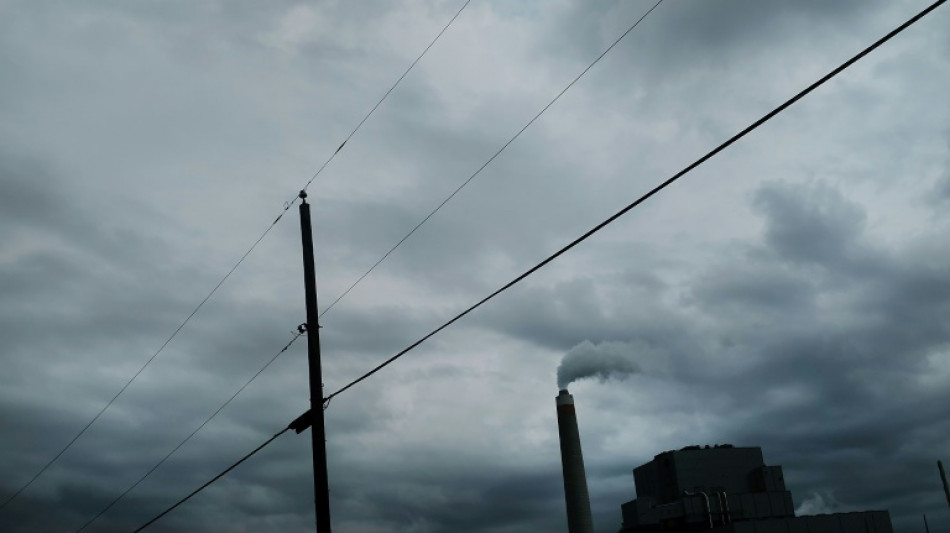
Biden strengthens US soot regulations, angering industry / Photo: © GETTY IMAGES NORTH AMERICA/AFP/File

Biden strengthens US soot regulations, angering industry

President Joe Biden's administration on Wednesday announced tough new air quality standards it said were sorely needed to protect the health of vulnerable communities, though industry groups have said the move would devastate domestic manufacturing.

Text size:

It comes as the Democratic incumbent faces a tough election rematch against the likely Republican candidate Donald Trump, who rolled back dozens of air pollution regulations when he was in office.

The Environmental Protection Agency (EPA)'s new rule concerns fine particulate matter, commonly known as soot, a widespread, deadly pollutant linked to asthma and heart disease, and more.

Under the new standard, levels of PM2.5 (particles that are 2.5 micrometers in diameter and smaller) would not be permitted to exceed an average annual level of 9 micrograms per cubic meter, down from the current 12 micrograms per cubic meter and more stringent than current as well as proposed European Union regulations.

"Today's action is a critical step forward to better protect workers, families and communities from the dangerous and costly impacts of fine particle pollution," EPA chief Michael Regan told reporters on a press call.

Vehicles, smokestacks and fires are common sources of fine particles, which also form when gases emitted by car engines, power plants and industrial processes react in the atmosphere.

The agency estimated the action would prevent up to 4,500 premature deaths and 290,000 lost workdays, and generate up to $46 billion in net health benefits in 2032, the first year that states would be required to meet the new standard.

- Industry critical -

Wednesday's announcement was hailed by environmental and health groups.

"The body of science around this pollution is so robust -- we know it takes people before their time, premature deaths from heart attacks, we know that it gives children and adults asthma and many other sicknesses," said Abbie Dillen, president of the environmental law nonprofit Earthjustice.

"We could not be more grateful on behalf of all of the clients that we've represented over the years," she added.

Industry groups have said the rule would threaten US manufacturing operations, and the issue threatens to become yet another battleground in key swing states in the 2024 presidential election.

"The standards will hinder onshoring, resulting in continued manufacturing abroad -- which is less clean than manufacturing in the US," the National Association of Manufacturers said in a statement when the rule was first mooted a year ago.

The move has also been opposed by the American Forest & Paper Association, with the pulp and paper mills large emitters of air pollution.

But the EPA has disputed the characterizations, calculating that 99 percent of the country's more than 3,100 counties will be in compliance by 2032 because of an overall downward trend in air pollution from other initiatives.

It added states could exclude exceptional circumstances arising from wildfires from the particulate matter they report -- a factor that could be important as climate change makes smoke exposure from forest blazes more common.

O.Tse--ThChM