The China Mail - Greenpeace sounds alarm on microplastics ingested by Hong Kong wildlife

USD -
AED 3.672504
AFN 63.502065
ALL 83.129935
AMD 367.929695
ANG 1.790403
AOA 917.510825
ARS 1479.001976
AUD 1.449171
AWG 1.80125
AZN 1.703002
BAM 1.724577
BBD 2.013888
BDT 122.992813
BGN 1.69088
BHD 0.377147
BIF 2984.81535
BMD 1
BND 1.298984
BOB 6.909809
BRL 5.212501
BSD 0.999934
BTN 94.624111
BWP 13.680173
BYN 2.818068
BYR 19600
BZD 2.01104
CAD 1.42306
CDF 2269.000078
CHF 0.812397
CLF 0.023341
CLP 918.649878
CNY 6.7905
CNH 6.81377
COP 3446.19
CRC 455.186766
CUC 1
CUP 26.5
CVE 97.22259
CZK 21.3314
DJF 177.720414
DKK 6.5809
DOP 58.613453
DZD 133.491532
EGP 49.606497
ERN 15
ETB 158.649909
EUR 0.880397
FJD 2.26715
FKP 0.758197
GBP 0.75975
GEL 2.640017
GGP 0.758197
GHS 11.199781
GIP 0.758197
GMD 72.495399
GNF 8761.518452
GTQ 7.627362
GYD 209.162776
HKD 7.839898
HNL 26.7202
HRK 6.633503
HTG 130.744947
HUF 313.043501
IDR 17967
ILS 2.987899
IMP 0.758197
INR 94.47035
IQD 1310
IRR 1375050.00053
ISK 126.949859
JEP 0.758197
JMD 157.488647
JOD 0.708979
JPY 161.762995
KES 129.529453
KGS 87.450149
KHR 4017.494974
KMF 433.999843
KPW 900.00035
KRW 1542.304285
KWD 0.30949
KYD 0.833297
KZT 486.623047
LAK 22065.000091
LBP 89549.999851
LKR 337.341005
LRD 182.250303
LSL 16.590249
LTL 2.95274
LVL 0.60489
LYD 6.405016
MAD 9.415501
MDL 17.709096
MGA 4224.999805
MKD 54.277663
MMK 2099.539901
MNT 3580.066416
MOP 8.076099
MRU 40.069821
MUR 48.210313
MVR 15.449856
MWK 1736.999969
MXN 17.60321
MYR 4.137983
MZN 63.909993
NAD 16.589831
NGN 1373.859715
NIO 36.610486
NOK 9.83597
NPR 151.394749
NZD 1.770852
OMR 0.384501
PAB 0.999965
PEN 3.421971
PGK 4.38325
PHP 61.409505
PKR 278.049549
PLN 3.77355
PYG 6099.351442
QAR 3.644965
RON 4.609596
RSD 103.362977
RUB 74.875012
RWF 1466
SAR 3.741267
SBD 8.051953
SCR 14.699001
SDG 599.999684
SEK 9.74879
SGD 1.297495
SHP 0.746601
SLE 24.803112
SLL 20969.503664
SOS 571.501729
SRD 37.459634
STD 20697.981008
STN 21.675
SVC 8.749173
SYP 110.532098
SZL 16.590069
THB 33.430162
TJS 9.284423
TMT 3.5
TND 2.937498
TOP 2.40776
TRY 46.49367
TTD 6.780184
TWD 31.815897
TZS 2620.57021
UAH 44.88455
UGX 3689.350352
UYU 39.918699
UZS 12015.000302
VES 620.752985
VND 26335
VUV 118.798432
WST 2.761642
XAF 578.424923
XAG 0.017413
XAU 0.00025
XCD 2.70255
XCG 1.802141
XDR 0.716966
XOF 573.000468
XPF 105.498209
YER 238.624983
ZAR 16.558699
ZMK 9001.197731
ZMW 18.024056
ZWL 321.999592
  • RBGPF

    0.9600

    61.3

    +1.57%

  • RYCEF

    -0.4700

    18.16

    -2.59%

  • CMSC

    -0.0450

    22.065

    -0.2%

  • CMSD

    0.0600

    22.02

    +0.27%

  • RIO

    -1.5500

    94.03

    -1.65%

  • RELX

    -0.0600

    31.15

    -0.19%

  • BCE

    0.1600

    23.2

    +0.69%

  • AZN

    2.0000

    183.02

    +1.09%

  • GSK

    -0.9800

    51.09

    -1.92%

  • BCC

    5.8600

    77.66

    +7.55%

  • VOD

    -0.2400

    13.81

    -1.74%

  • NGG

    1.2600

    82.83

    +1.52%

  • BP

    -1.4700

    37.86

    -3.88%

  • BTI

    0.6500

    61.39

    +1.06%

  • JRI

    -0.0600

    12.57

    -0.48%

Greenpeace sounds alarm on microplastics ingested by Hong Kong wildlife
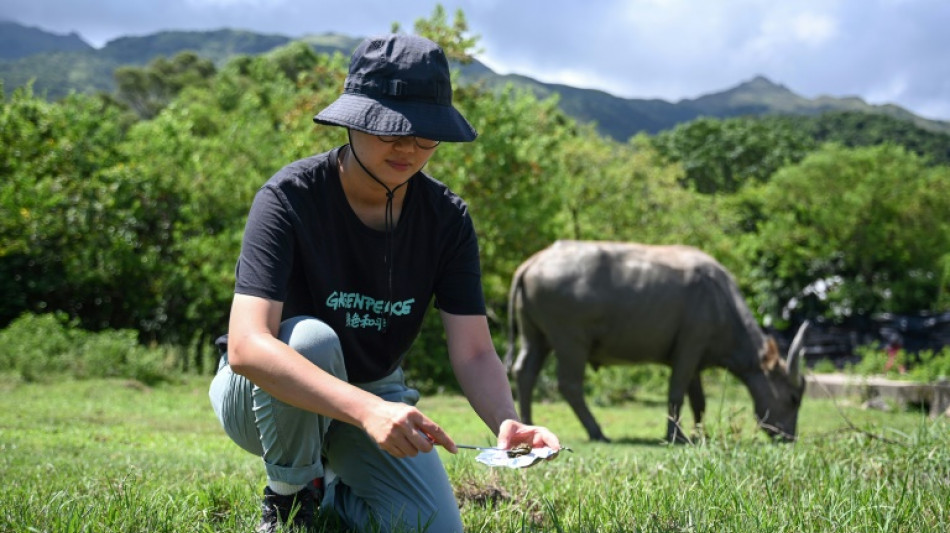
Greenpeace sounds alarm on microplastics ingested by Hong Kong wildlife / Photo: © AFP

Greenpeace sounds alarm on microplastics ingested by Hong Kong wildlife

Microplastic particles turned up in the vast majority of waste samples taken from Hong Kong wildlife in a Greenpeace study, the group said Monday, suggesting that animals still ingest plastics even if they are not feeding in urban areas.

Text size:

The report was released ahead of November talks in South Korea, where governments will be looking to seal a potentially groundbreaking deal tackling the problem of plastic pollution.

The scale of the issue is vast -- microplastics have been found in the deepest ocean trenches, on the highest mountain peaks, in the atmosphere, and even in breastmilk.

Though best known as a city of skyscrapers, Hong Kong is also home to huge swathes of undeveloped countryside home to animals like buffalo, boars, wild cattle, macaques and porcupines -- the species included in the Greenpeace survey.

The group, alongside researchers from local and Taiwanese universities, collected 100 faeces samples from seven locations in 2022, and found 85 percent of them contained microplastics, Greenpeace said in a press release.

"The findings of this study are important, proving that wild animals can ingest microplastics in the countryside, where it is away from urban areas and human activities," said researcher Christelle Not of the University of Hong Kong.

"As an increasing number of studies find microplastics in various natural environments, wildlife, and even human bodies, plastic pollution has become a global issue that urgently needs to be addressed," she added, calling for "a strong global plastic treaty" help meet reduction targets.

The most common types of microplastics detected in the Greenpeace study were polyethylene and polypropylene, commonly found in single-use packaging, takeaway containers and disposable utensils.

During a recent AFP visit to Pui O River on Hong Kong's Lantau island with researchers, buffalo could be seen bathing in the stream a short distance from plastic garbage scattered along the banks.

"If animals ingest microplastics from the environment, those could invade our ecological system tier by tier and affect human health," Greenpeace campaigner Leanne Tam told AFP.

Little is yet known about the specific impacts of microplastic particles on human health and the environment.

Hong Kong, a city of 7.5 million people, sends more than 2,300 tonnes of plastic waste to landfills every day, according to the government's 2022 waste report.

In April, the city enforced a ban on polystyrene utensils in restaurants for both dine-in customers and takeaway.

But a full ban -- which covers more plastic materials used by businesses -- "still lacks a clear timetable", Greenpeace said.

N.Wan--ThChM