Corporate India in spotlight after political donor list release / Photo: © AFP/File

Huge donations by firms under criminal investigation or suspected of being shell companies have been funnelled to India's ruling BJP and other parties, new data showed, highlighting the backscratching ties between corporate titans and the government.
Last week, India's election commission published a list detailing buyers of electoral bonds, a contentious funding scheme that has helped Prime Minister Narendra Modi's party build an immense campaign war chest dwarfing rivals.
Electoral bonds account for more than half of all political donations and were anonymous until India's top court ruled them illegal weeks before the start of national elections next month.
An AFP review of the list found that of the $1.5 billion donated through the scheme, at least $94 million was donated by 17 companies after they faced -- either directly or through their subsidiaries -- investigations for tax evasion, fraud or other corporate malfeasance.
"The electoral bond scheme was sinful in conception, faulty in design and intended to prevent transparency," lawmaker Abhishek Singhvi of the opposition Congress party told AFP.
"Each of these vices stand exposed... by the huge disclosures tumbling out of the closets."
- 'Knocked at their doors' -
Opposition party lawmakers claim the electoral bonds list shows that firms were donating to Modi's ruling Bharatiya Janata Party (BJP) in the hopes of influencing the outcome of criminal probes.
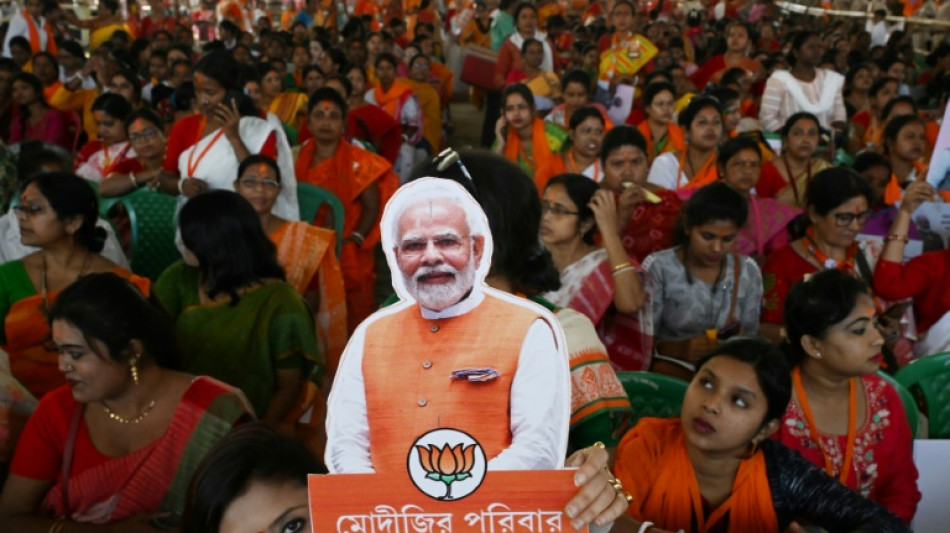
The BJP was far and away the single biggest beneficiary of the scheme, receiving $730 million or around 47 percent of total bonds cashed since April 2019.
Its main competitor Congress received around $171 million over the same period.
Among the companies named as donors are Hero MotoCorp, the country's biggest motorbike maker by sales. It donated $2.4 million to the BJP seven months after confirming its finances were being investigated by the tax department.
Glenmark Pharmaceuticals, a top drug firm, bought $1.17 million worth of electoral bonds for the BJP eight months after Indian media reported an investigation for alleged tax evasion.
Indian miner Vedanta, whose parent company was once listed on the London Stock Exchange, donated more than $40 million spread across half a dozen parties over the past five years.
Local media reported in 2022 that the country's main financial crime agency began investigating the company in 2018 for allegedly paying bribes to facilitate Indian visas for Chinese technicians.
Hero, Glenmark and Vedanta did not respond to requests for comment.
No definitive proof of such a quid pro quo has surfaced. Authorities have also not publicly announced whether investigations against donor companies have been closed or withdrawn.
Nirmala Sitharaman, Modi's finance minister, said last week that any allegation of a link between criminal investigations and political donations was based on "huge assumptions".
"What if the companies gave the money, and after that, we still went and knocked at their doors?" she told a panel hosted by television channel India Today.
The BJP was not the only party to receive electoral bonds from companies facing legal investigation.
Among the several parties funded by lottery company Future Gaming -- the biggest single donor under the scheme with a spend of $164 million -- were the government and opposition of southern Tamil Nadu state.
Future Gaming has since 2011 been the subject of several investigations on suspicion of unpaid income tax, money laundering and fraud, according to media reports.
- 'Black money' -
Ties between corporate India and the country's political class have previously blown up into public scandal -- including to the benefit of Modi, who was swept to office a decade ago on a wave of public discontent over corruption.
Modi made hay from a number of corporate bribery accusations directed against his opponents, including allegations that ministers and bureaucrats had taken money from telecom companies in return for favourable licensing deals.
His government introduced electoral bonds in 2017, pledging the scheme would clear up the illicit "black money" donated to parties in return for political favours.
But the new scheme did not close off other avenues of funding, including anonymous cash donations or tax-deductible electoral trusts in which multiple companies can pool money together for parties without public scrutiny.
Indian media also identified several other irregularities with the electoral bond scheme, reporting that several companies donated amounts far in excess of their annual profit or revenue.
Others were loss-making or had been freshly incorporated, suggesting they had been used as front companies to make donations on behalf of an unidentified third party.
Milan Vaishnav, of the Carnegie Endowment for International Peace, said the donation list vindicated the election commission's objections to the scheme when it was first unveiled.
"This is precisely what the EC had warned, (that) the creation of this opaque instrument could allow for shell companies, foreign firms, and unknown third parties to give to parties without detection or outside scrutiny."
Y.Su--ThChM