The China Mail - 'I couldn't reach them': Afghans abroad despair at blackout

USD -
AED 3.672494
AFN 63.999845
ALL 81.982266
AMD 366.231177
ANG 1.790403
AOA 917.507894
ARS 1485.74101
AUD 1.439273
AWG 1.8
AZN 1.701675
BAM 1.710303
BBD 2.013834
BDT 123.232447
BGN 1.69088
BHD 0.376991
BIF 2975.597599
BMD 1
BND 1.291434
BOB 6.923833
BRL 5.141496
BSD 0.999886
BTN 94.906999
BWP 13.504556
BYN 2.855969
BYR 19600
BZD 2.010948
CAD 1.42177
CDF 2254.999796
CHF 0.806285
CLF 0.023535
CLP 926.30966
CNY 6.796404
CNH 6.796975
COP 3355.69
CRC 455.51533
CUC 1
CUP 26.5
CVE 96.425526
CZK 21.192969
DJF 178.054699
DKK 6.53772
DOP 59.045237
DZD 133.035937
EGP 48.853052
ERN 15
ETB 160.395355
EUR 0.874599
FJD 2.238699
FKP 0.74808
GBP 0.747065
GEL 2.635034
GGP 0.74808
GHS 11.41383
GIP 0.74808
GMD 73.500129
GNF 8769.375396
GTQ 7.629008
GYD 209.151527
HKD 7.84255
HNL 26.765367
HRK 6.590153
HTG 130.805488
HUF 309.540496
IDR 17891.4
ILS 3.02605
IMP 0.74808
INR 94.897351
IQD 1309.803853
IRR 1375700.000087
ISK 125.779705
JEP 0.74808
JMD 157.475908
JOD 0.709021
JPY 161.889038
KES 129.289799
KGS 87.449791
KHR 4016.475156
KMF 431.496617
KPW 900.00035
KRW 1513.834983
KWD 0.30969
KYD 0.833206
KZT 469.178771
LAK 22530.235324
LBP 89538.226099
LKR 334.761659
LRD 181.778433
LSL 16.240676
LTL 2.95274
LVL 0.60489
LYD 6.413418
MAD 9.349651
MDL 17.592738
MGA 4239.503992
MKD 53.911857
MMK 2099.417966
MNT 3585.605216
MOP 8.076412
MRU 39.901534
MUR 47.079846
MVR 15.450152
MWK 1733.412037
MXN 17.42375
MYR 4.0709
MZN 63.899493
NAD 16.240676
NGN 1370.80389
NIO 36.798335
NOK 9.80788
NPR 151.84952
NZD 1.75699
OMR 0.384499
PAB 0.999886
PEN 3.399124
PGK 4.394249
PHP 61.433984
PKR 277.987285
PLN 3.754725
PYG 6087.237875
QAR 3.645172
RON 4.5781
RSD 102.631974
RUB 76.230685
RWF 1465.280905
SAR 3.75636
SBD 8.097426
SCR 13.460689
SDG 600.500338
SEK 9.659699
SGD 1.291315
SHP 0.746601
SLE 24.374984
SLL 20969.503664
SOS 571.383598
SRD 37.692996
STD 20697.981008
STN 21.424886
SVC 8.749262
SYP 110.532098
SZL 16.231248
THB 33.257013
TJS 9.243786
TMT 3.5
TND 2.957395
TOP 2.40776
TRY 46.840205
TTD 6.785945
TWD 32.1045
TZS 2625.002995
UAH 44.49669
UGX 3659.688336
UYU 40.243455
UZS 12015.320846
VES 666.216185
VND 26292
VUV 120.145102
WST 2.767779
XAF 573.619637
XAG 0.016239
XAU 0.00024
XCD 2.70255
XCG 1.801948
XDR 0.71319
XOF 573.619637
XPF 104.291099
YER 237.074977
ZAR 16.238015
ZMK 9001.208119
ZMW 18.422779
ZWL 321.999592
  • VOD

    0.1250

    13.205

    +0.95%

  • RYCEF

    -0.6300

    19.46

    -3.24%

  • RBGPF

    0.1700

    68.32

    +0.25%

  • CMSC

    -0.0200

    22.04

    -0.09%

  • BCE

    0.6400

    21.51

    +2.98%

  • RELX

    0.7100

    32.98

    +2.15%

  • GSK

    0.5950

    53.685

    +1.11%

  • CMSD

    -0.0800

    22.15

    -0.36%

  • AZN

    2.4900

    192.65

    +1.29%

  • BP

    0.9700

    38.36

    +2.53%

  • NGG

    1.4000

    83.99

    +1.67%

  • RIO

    -2.0600

    91.52

    -2.25%

  • BTI

    0.7000

    62.16

    +1.13%

  • BCC

    -1.0850

    74.195

    -1.46%

  • JRI

    0.0300

    13.14

    +0.23%

'I couldn't reach them': Afghans abroad despair at blackout
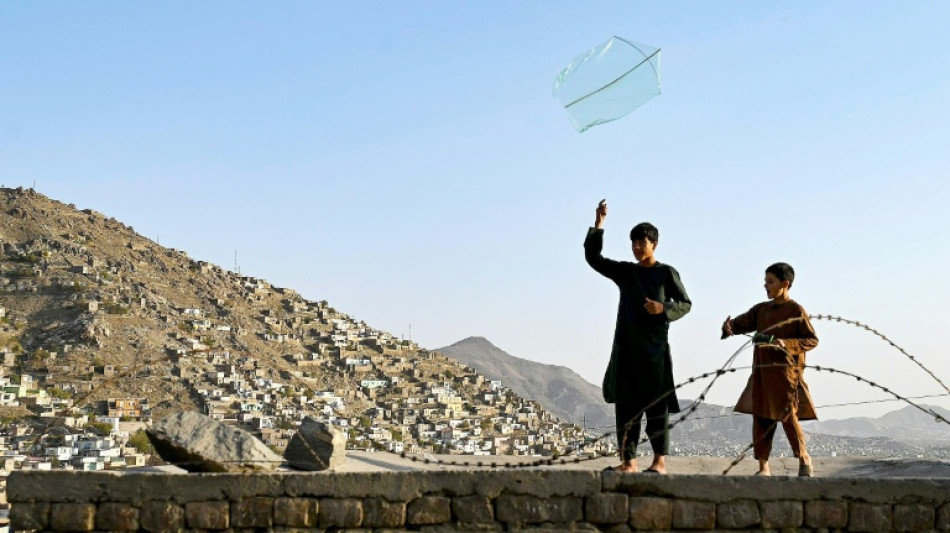
'I couldn't reach them': Afghans abroad despair at blackout / Photo: © AFP

'I couldn't reach them': Afghans abroad despair at blackout

Afghans around the world are despairing at being unable to reach their loved ones at home after a Taliban-enforced internet blackout took effect on Monday.

Text size:

Internet connection in Afghanistan is now operating at less than one percent of normal levels, according to internet governance watchdog Netblocks, after Taliban authorities imposed a blackout lasting "until further notice" on Monday.

The blackout spells worse conditions for the population of one of the world's poorest countries, who have already endured decades of conflict, a protracted humanitarian conflict, and an earthquake a month ago.

But the shutdown is deeply distressing for Afghans abroad too, many of them displaced against their will and fearful for the wellbeing of their loved ones at home.

"My mom, my sisters and my brothers, they are in Afghanistan. One day, I called them like 20 or 10 times, but I couldn't reach them," Mehdi, a 29-year-old Afghan restaurant worker in Pakistan, told AFP.

"I don't know how they survive and how they live," he said, explaining that on top of cutting off basic communication, he is no longer able to send money home to support his household.

- 'The whole family is anxious' -

Shadowy supreme leader Hibatullah Akhundzada ordered the blackout to combat what Taliban authorities consider "vice".

The outage will hinder social media access, prevent women from circumventing an education ban via online programmes, censor media, and make it impossible for people like Mehdi to support their families financially through money transfers.

The United Nations has warned of a "very dire situation" with "serious human rights ramifications".

"The whole family is anxious," Nooriya Qaderi, 59, an Afghan refugee in New Delhi, told AFP. "Because of these problems I can't talk to my family... everyone is worried."


"We can't communicate... (and) sending money has become very difficult," he told AFP.

"There are so many challenges. No one knows how long the blackout will go on for."

At the beginning of 2025, 13.2 million people had access to the internet in Afghanistan -- around 30.5 percent of the population, according to the specialist website DataReportal, with around 4.05 million social media users.

Rahimullah Habiboghli is in his twenties and came to France alone five years ago. He has been unable to reach his family since the blackout took effect.

"I can't believe it. It cannot last, it's just not possible. No country in the world is completely cut off from the internet," Habiboghli told AFP.

The young man is the founder of an association that supports education in Afghanistan, and he regularly raises funds to transfer home -- a practice he is unsure about how to continue.

In 2024, Kabul had touted its 9,350-kilometre (5,800-mile) fibre optic network, largely built by former US-backed governments, as a "priority" to bring the country closer to the rest of the world and lift it out of poverty.

"They want to keep their people in the dark, preventing them from seeing the world so they can stay in power and the population can be free," Habiboghli said.

burs-video-cc/phz

C.Mak--ThChM