The China Mail - War has halted Gulf oil flow -- and restarting it won't be easy

USD -
AED 3.673104
AFN 63.000368
ALL 84.000368
AMD 377.540403
ANG 1.790083
AOA 917.000367
ARS 1398.189041
AUD 1.428235
AWG 1.8
AZN 1.70397
BAM 1.706029
BBD 2.014653
BDT 122.757664
BGN 1.709309
BHD 0.377528
BIF 2974
BMD 1
BND 1.280193
BOB 6.912915
BRL 5.297604
BSD 1.000305
BTN 92.343792
BWP 13.632359
BYN 2.960162
BYR 19600
BZD 2.011968
CAD 1.373041
CDF 2257.000362
CHF 0.789905
CLF 0.023229
CLP 917.210396
CNY 6.896604
CNH 6.90499
COP 3710.29
CRC 470.629279
CUC 1
CUP 26.5
CVE 96.750394
CZK 21.407204
DJF 177.720393
DKK 6.532235
DOP 61.750393
DZD 132.5414
EGP 52.340704
ERN 15
ETB 157.050392
EUR 0.874225
FJD 2.22425
FKP 0.749032
GBP 0.75495
GEL 2.730391
GGP 0.749032
GHS 10.88504
GIP 0.749032
GMD 73.503851
GNF 8780.000355
GTQ 7.670839
GYD 209.297761
HKD 7.82775
HNL 26.570388
HRK 6.584804
HTG 131.176999
HUF 343.384504
IDR 16948.6
ILS 3.14434
IMP 0.749032
INR 92.51075
IQD 1310
IRR 1321775.000352
ISK 126.050386
JEP 0.749032
JMD 156.968275
JOD 0.70904
JPY 159.62804
KES 129.203801
KGS 87.449704
KHR 4015.00035
KMF 428.00035
KPW 899.878965
KRW 1498.170383
KWD 0.30735
KYD 0.833657
KZT 489.763519
LAK 21425.000349
LBP 89550.000349
LKR 311.307837
LRD 183.250382
LSL 16.780381
LTL 2.95274
LVL 0.60489
LYD 6.380381
MAD 9.395039
MDL 17.4521
MGA 4155.000347
MKD 53.875806
MMK 2099.194294
MNT 3570.249458
MOP 8.064707
MRU 40.120379
MUR 45.910378
MVR 15.460378
MWK 1737.000345
MXN 17.888515
MYR 3.938504
MZN 63.903729
NAD 16.780377
NGN 1387.960377
NIO 36.720377
NOK 9.75199
NPR 147.749893
NZD 1.725735
OMR 0.384499
PAB 1.000358
PEN 3.448504
PGK 4.31725
PHP 59.824038
PKR 279.303701
PLN 3.73967
PYG 6454.173536
QAR 3.64125
RON 4.454038
RSD 102.657038
RUB 80.101756
RWF 1459
SAR 3.752562
SBD 8.051718
SCR 14.33459
SDG 601.000339
SEK 9.446785
SGD 1.282935
SHP 0.750259
SLE 24.603667
SLL 20969.510825
SOS 571.503662
SRD 37.548038
STD 20697.981008
STN 21.65
SVC 8.753451
SYP 111.636388
SZL 16.770369
THB 32.420369
TJS 9.588758
TMT 3.51
TND 2.951038
TOP 2.40776
TRY 44.190104
TTD 6.784777
TWD 32.078038
TZS 2609.846038
UAH 44.117624
UGX 3761.323442
UYU 40.187022
UZS 12115.000334
VES 440.41445
VND 26294
VUV 118.960301
WST 2.788339
XAF 572.193582
XAG 0.012349
XAU 0.000198
XCD 2.70255
XCG 1.802964
XDR 0.708301
XOF 571.503593
XPF 103.875037
YER 238.550363
ZAR 16.897404
ZMK 9001.203584
ZMW 19.472176
ZWL 321.999592
  • RBGPF

    0.1000

    82.5

    +0.12%

  • RYCEF

    -0.4000

    16.55

    -2.42%

  • CMSC

    0.0150

    23.155

    +0.06%

  • NGG

    0.5600

    91.37

    +0.61%

  • GSK

    -0.1750

    54.105

    -0.32%

  • RELX

    0.0400

    34.22

    +0.12%

  • BTI

    0.3800

    60.27

    +0.63%

  • RIO

    -2.2300

    88.47

    -2.52%

  • BP

    0.6550

    42.815

    +1.53%

  • BCE

    -0.0550

    25.625

    -0.21%

  • VOD

    0.1450

    14.455

    +1%

  • CMSD

    -0.0300

    23.07

    -0.13%

  • AZN

    -1.7900

    190.71

    -0.94%

  • JRI

    -0.1750

    12.645

    -1.38%

  • BCC

    0.1850

    69.805

    +0.27%

War has halted Gulf oil flow -- and restarting it won't be easy
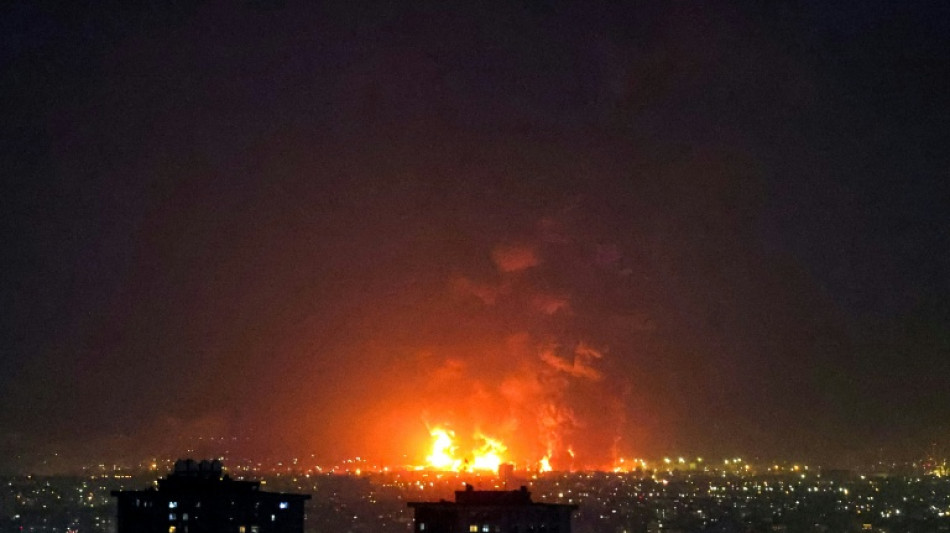
War has halted Gulf oil flow -- and restarting it won't be easy / Photo: © AFP

War has halted Gulf oil flow -- and restarting it won't be easy

The war in the Middle East has largely paralysed the Gulf region's crucial oil industry, which has been hit by attacks and an export blockade.

Text size:

The war has forced companies to dramatically slow or even halt production -- and restarting it will not be easy, even when the war is over.

- What has been targeted? -

Since the war started with US-Israeli strikes on Iran on February 28, at least 33 strikes or attempted strikes have targeted energy infrastructure in the Middle East, according to an AFP tally.

The United States and Israel carried out 13 of them against Iran.

The other 20, which struck seven Gulf countries, were attributed to Iran.

The strikes mostly hit oil and gas fields or complexes, such as the massive Ras Tanura refinery in Saudi Arabia, Ras Laffan gas processing base in Qatar and the complex housing the Ruwais refinery in the United Arab Emirates.

Iran has also effectively blocked the crucial Strait of Hormuz, the usual shipping lane for around 20 percent of the world's oil and liquefied natural gas output.

- Why is production down? -

Some infrastructure has been damaged.

Other facilities have closed or reduced activity as a precaution, such as Ruwais.

The near-closure of the strait has also had a major impact.

Gulf countries' output of oil and oil products has plunged from 30 million barrels per day last year, excluding Oman, to 10 million currently, according to the International Energy Agency (IEA).

It said the amount passing through the Strait of Hormuz had fallen to less than 10 percent of pre-war levels.

Saudi Arabia and the UAE have pipelines that can send some oil beyond the region, but their capacity is limited.

The result is storage facilities that are full to the brim.

"That's the main issue at the moment," an industry insider told AFP.

"Since there aren't enough ships to empty the storage facilities and export the product, suppliers have to stop production."

There is no easy fix, warned Pankaj Srivastava, a commodities expert at Rystad Energy.

"With crude supply increasingly stranded in the Gulf, refiners may soon be forced to adjust operations, curtailing runs as product exports stall and directing output solely to domestic markets," he said.

- How long to restart? -

"Depending how they were shut down, (restarting refineries) can take a week or two to reach full output," said the industry insider.

For oil wells, it is simpler: "You just reopen the valve."

According to the IEA, "upstream production will take weeks and, in some cases, months, to return to pre-crisis levels", depending on the site.

And "in the absence of a full ceasefire, ship owners, charterers, insurers, and crew will need to see robust security measures" to return to the strait, such as armed escorts, it added.

It said a traffic management system may need to be created to handle the massive backlog when traffic resumes in the strait, estimating it would take "several days to weeks" to clear.

J.Liv--ThChM