Israel dismisses calls to add Lebanon to US-Iran ceasefire / Photo: © AFP

Israel vowed more strikes against Hezbollah on Thursday, dismissing mounting international demands that the fragile truce between the United States and Iran in the Gulf be expanded to cover the war in Lebanon.
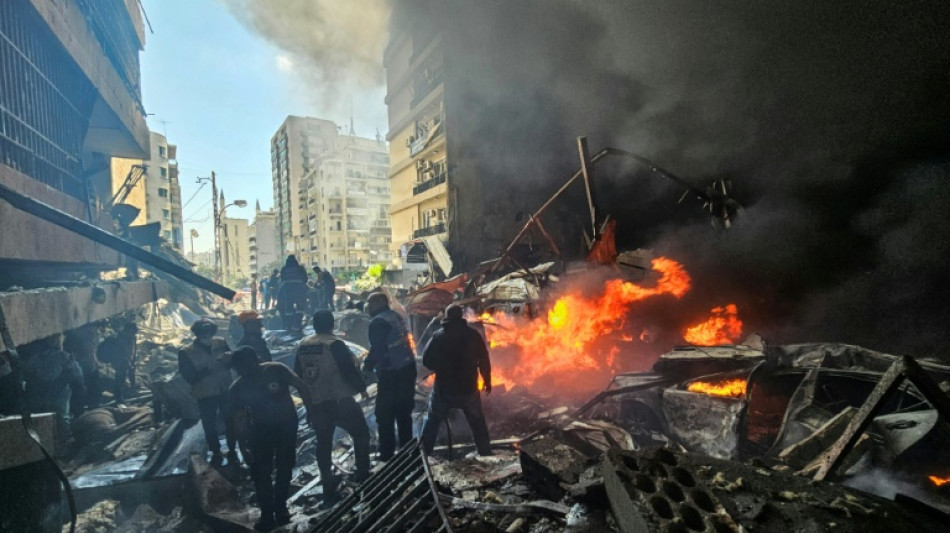
At least 203 people were killed and 1,000 wounded in the latest strikes, the Lebanese health ministry said, and Iran's parliamentary speaker warned Tehran sees Lebanon as an "inseparable part of the ceasefire" and threatened "strong responses".
President Donald Trump has claimed victory in the Middle East war after agreeing a two-week truce to allow talks between US and Iranian negotiators to end a conflict that has already killed thousands and plunged the global economy into turmoil.
But the future of the negotiations -- planned to begin this week in Pakistan -- was already in danger on Thursday after Tehran denounced Israel's raids on Lebanon and its nuclear energy agency ruled out any restrictions on the country's enrichment of uranium, a key demand of Washington.
"We are continuing to strike Hezbollah with force, precision, and determination," Israel's Prime Minister Benjamin Netanyahu said, in a social media post. "Our message is clear: anyone who acts against Israeli civilians, we will strike them. We will continue to hit Hezbollah wherever necessary."
In response, Iran's parliamentary speaker Mohammad Bagher Ghalibaf posted: "Lebanon and the entire Resistance Axis, as Iran's allies, form an inseparable part of the ceasefire. Ceasefire violations carry explicit costs and STRONG responses."
Tehran's ambassador to Pakistan, meanwhile, deleted a social media post saying an Iranian delegation would arrive on Thursday. An official at the Iranian embassy in Islamabad told AFP the post was removed "because of some issues" and refused to say whether the delegation was still expected.
- 'Running left and right' -
But, amid fears that the fragile truce could break down in the Gulf, there were international calls for the ceasefire to encompass Lebanon.
"Israeli actions are putting the US-Iran ceasefire under severe strain. The Iran truce should extend to Lebanon," the European Union's top diplomat Kaja Kallas said.
France's foreign minister Jean-Noel Barrot condemned the strikes as "unacceptable", while his British counterpart Yvette Cooper called for the ceasefire to include Lebanon.
The Lebanese prime minister's office said Thursday would be "a national day of mourning for the martyrs and wounded of the Israeli attacks that targeted hundreds of innocent, defenceless civilians".
Hezbollah said it had fired rockets towards Israel in response to what it called a violation of the truce.
US Vice President JD Vance backed Israel in saying Lebanon was excluded from the truce, days before he was due to lead talks with Tehran in Pakistan.
"If Iran wants to let this negotiation fall apart... over Lebanon, which has nothing to do with them, and which the United States never once said was part of the ceasefire, that's ultimately their choice," he said.
But Ghalibaf had already appeared to threaten the ceasefire, posting on X that the "workable basis on which to negotiate" had already been violated, making further talks "unreasonable".
Separately, the head of Iran's nuclear energy agency Mohammad Eslami, declared: "The claims and demands of our enemies to restrict Iran's enrichment programme are merely wishes that will be buried."
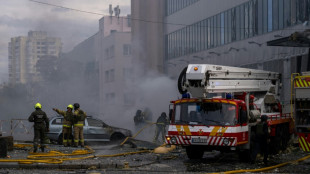
UN rights chief Volker Turk called the scale of killing in Lebanon "horrific", after strikes across the capital Beirut that came without warning triggered horror and panic.
"People started running left and right, and smoke was billowing," said Ali Younes, who was waiting for his wife near Corniche Al-Mazraa, one of the areas targeted.
- High-stakes talks -
The bellicose rhetoric came ahead of high-stakes talks in Pakistan expected on Friday or Saturday.
A key point of contention remains the Strait of Hormuz, through which a fifth of the world's oil as well as vast quantities of natural gas and fertiliser pass in peacetime.
Iran announced alternative routes on Thursday for ships travelling through the strait,citing the risk of sea mines.
But it was unclear if Tehran was in practice allowing vessels to pass through the strait, following reports on Wednesday suggesting it was shut -- something the White House called "completely unacceptable".
C.Smith--ThChM