Thais fete new year with family despite fuel price spike / Photo: © AFP

Soaring fuel prices are driving up costs for Thais travelling home for the holidays, but the chance to spend the new year with loved ones is a price worth paying, they say.
"There aren't many opportunities to go home during festivals like this," said 24-year-old army cadet Korawich Changpat at Bangkok's Mo Chit Two bus station, despite his inflated fare back to central Chaiyaphum province.
"First of all, I'll go see my mother. Looking this handsome in my uniform, I must go pay my respects to her," he told AFP.
Thailand is gearing up for its biggest annual holiday, Songkran, which will run from April 13-15.
It celebrates the Buddhist new year with water-splashing festivities that spill out into the streets, representing renewal and rejuvenation.
The run-up began late Friday as Thais clocked off in the capital and clamoured to motor back to their family homes out in the provinces.
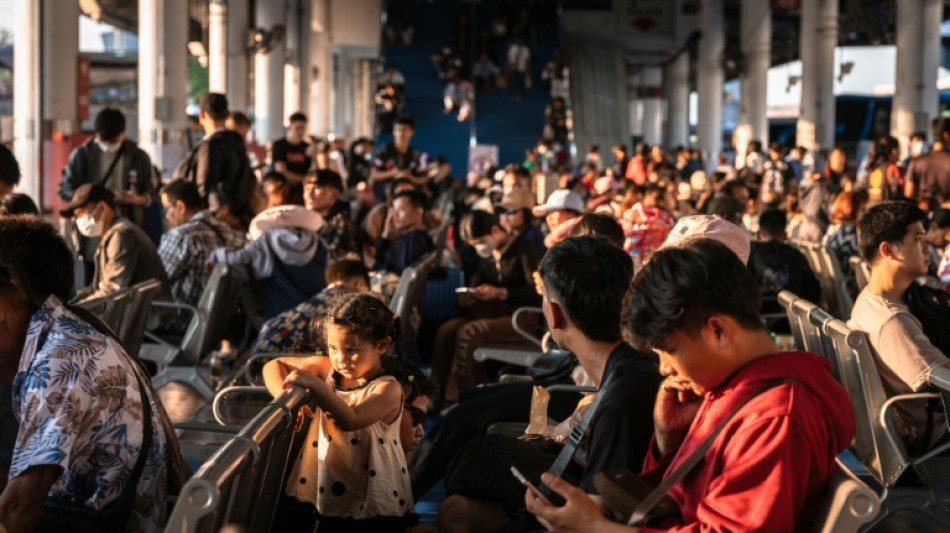
At Mo Chit Two bus station, AFP journalists saw thronging queues for coaches as night fell after a scorching day.
Thousands of passengers lugged bulging suitcases, colourful woven plastic bags and taped cardboard boxes, weaving past ticket counters and boarding gates.
The biggest state-run bus company Bor Kor Sor has said it expects up to 180,000 passengers daily in the four days running up to Songkran -- a rise of nearly 80 percent on last year.
The price of some fuel types has surged more than a third since the United States and Israel launched attacks on Iran in late February, prompting Tehran to effectively close the crucial Strait of Hormuz.
The resulting fuel squeeze has pushed Thai travellers towards cheaper, more cramped public transport.
It will get them home nonetheless.
"The war has pushed fuel prices up, so travel costs have increased," said 29-year-old migrant factory worker Ken, who goes by only one name.
He and his partner Bee, 28, moved to the capital to earn cash.
But the family and their baby face an inflated cost to get back home to Thailand's northern reaches for Songkran.
"I miss my mother," said Bee before departing to reunite with family.
- Looming hardships -
Around 20 percent of the world's seaborne oil trade passes through the Strait of Hormuz, according to the International Energy Agency, 80 percent of it bound for Asian markets.
The United States and Iran have agreed a two-week ceasefire with plans to reopen the strait.
But even if the fragile truce holds, analysts predict the global oil industry will take months to recover.
In Thailand, snaking queues have formed at pumping stations, and some in rural areas have run dry.
Even as the truce began on Wednesday, Bangkok said it was considering shutting petrol stations overnight after Songkran to preserve supply.
The prospect of upcoming hardships make the festival a more pointed moment of celebration.
"Since it's the festival season, I want to go back and spend time with my family," said nurse Suthida Thanachartnamatthong.
"The war has quite an impact on me," added the 23-year-old -- complaining even her short commute to work has spiked more than 10 percent during the war.
But as she prepared to depart for northern Chiang Mai, the hurdles to a homecoming did not faze the healthcare worker.
"Happy Thai new year!" she exclaimed.
B.Carter--ThChM