UN Security Council to meet on Lebanon war as Israeli forces push into south / Photo: © AFP

The UN Security Council was to hold an emergency meeting on the war in Lebanon, as Israel pounded the country and pressed its deepest offensive into Lebanese territory in two decades on Monday.
Ahead of the meeting, US President Donald Trump posted on social media that he had persuaded Israel and Hezbollah to de-escalate, hours after Israel threatened to again target Beirut's densely populated southern suburbs.
It comes a day before Lebanon and Israel are to begin a fourth round of US-hosted direct negotiations on Tuesday. Military delegations held security talks last week.
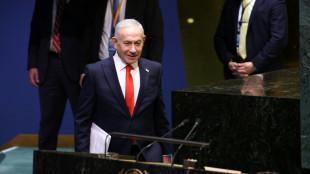
"There will be no Troops going to Beirut, and any Troops that are on their way, have already been turned back," Trump said on his Truth Social network after a "very productive" call with Israeli Prime Minister Benjamin Netanyahu.
"Likewise, through highly placed Representatives, I had a very good call with Hezbollah, and they agreed that all shooting will stop -- That Israel will not attack them, and they will not attack Israel," he added.
Earlier on Monday, Tehran -- engaged in stalled negotiations for an end to its wider war with the Washington -- said a Lebanon ceasefire remained a key condition for any deal, as Iran's Revolutionary Guards threatened to open "new fronts" over Israel's offensive in Lebanon.
Lebanon's state-run National News Agency (NNA) reported Israeli airstrikes on more than 40 locations in the country's south on Monday, including one that damaged a hospital in the city of Tyre.
An AFP correspondent saw heavy damage in the area and first responders putting out a blaze at the Jabal Amel hospital's car park which had been hit.
The health ministry shared videos showing damage inside a hospital ward, with rubble and debris on the ground, blown-out ceilings, blood on the floor and shattered glass.
- 'No calm in Beirut' -
Hezbollah claimed a series of attacks on Israeli troops who have invaded southern Lebanon and on targets across the border on Monday.
Before Trump's statement, a source close to Hezbollah told AFP on condition of anonymity that the group had "not committed to stop attacking" northern Israel.
Stephane Dujarric, spokesman for UN Secretary-General Antonio Guterres, said that "we are deeply alarmed by the escalation in military activities across southern Lebanon and beyond," urging all sides "to respect the cessation of hostilities and avoid further escalation".
Earlier on Monday, Netanyahu and his Defence Minister Israel Katz said they had ordered strikes on Beirut's southern suburbs "in light of the repeated violations of the ceasefire in Lebanon by the terrorist organisation Hezbollah and the attacks on our cities and citizens".
Israel's military later urged residents of the area, a Hezbollah stronghold mostly spared heavy attacks since April, to evacuate.
It also issued evacuation warnings for more than a dozen south Lebanon locations.
Katz said separately there would be "no calm in Beirut" if Hezbollah attacks continued, vowing to establish a military-controlled zone in the area of southern Lebanon's Litani River.
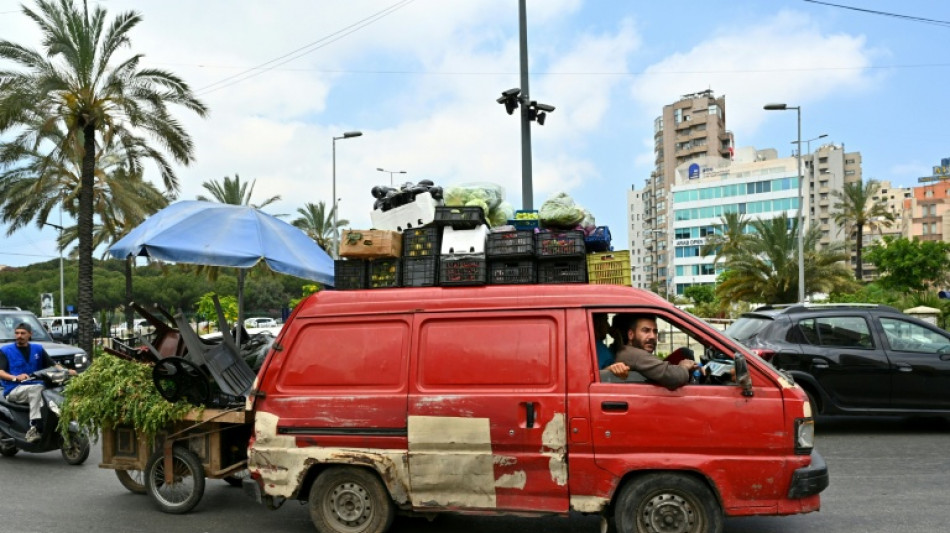
AFP journalists saw hundreds of families fleeing the usually densely populated southern suburbs, some on foot or on motorbikes, others in cars packed with belongings. A correspondent later said streets there were largely deserted.
- 'Vicious aggression' -
Hezbollah drew Lebanon into the Middle East war on March 2 by firing rockets at Israel in retaliation for the US-Israeli killing of Iran's supreme leader.
A truce to halt the fighting in Lebanon began on April 17, but has never been observed. Both Israel and Hezbollah accuse each other daily of violating the ceasefire, justifying their attacks by the other's alleged breaches.
South Beirut resident Hadi, 24, said he had hoped for some stability during the truce but "that feeling did not last long".
"Our fears intensified this morning" after the Israeli announcement, which "caused widespread panic, and we immediately left the area", he told AFP by telephone.
Lebanon's health ministry said Israeli attacks since March 2 have killed at least 3,433 people.
Lebanese President Joseph Aoun said his country was facing "a vicious and reprehensible Israeli aggression", calling talks with Israel "the only solution to stop the war with the least possible damage".
On Sunday, Israeli troops seized south Lebanon's strategic Beaufort castle, which they used as a base during their previous two-decade occupation of southern Lebanon that ended in 2000.
Hezbollah said its fighters were now in a "battle of attrition" against Israeli forces near the fortress.
G.Fung--ThChM