'Blind spots': drone alert lays bare Lithuania poor shelter access / Photo: © AFP

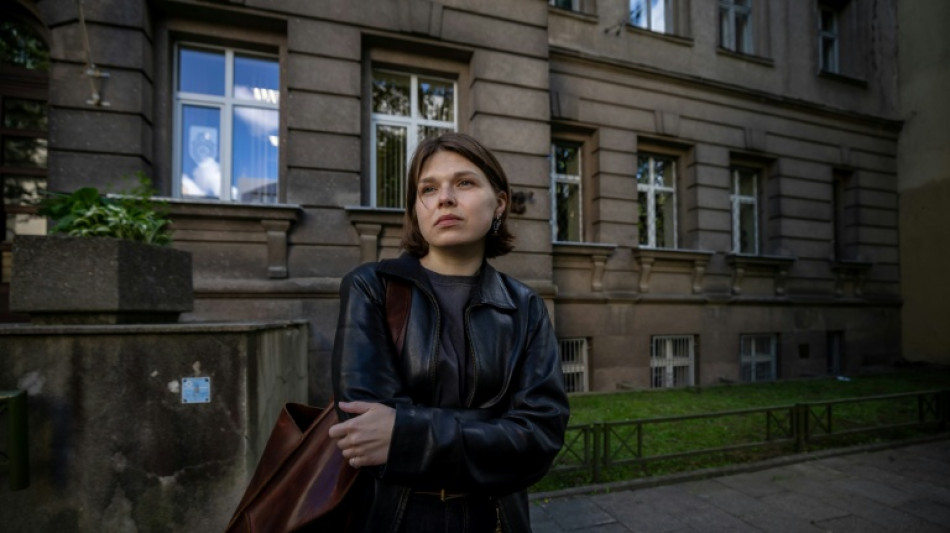
When a drone threat alert blared out in Lithuania's capital Vilnius urging residents to seek shelter, Ruta Gaskauskaite hurried down to the nearest one, only to discover it was locked.
Squeezed between Russia and Kremlin-allied Belarus, Lithuania has for years been warning of the risks to Russia's Baltic neighbours.
But as Ukraine stepped up its retaliatory strikes on Russian oil hubs in the Baltic Sea and its drones were found straying across the region, the side effects of the war that it had been warning against caught Lithuania off guard.
The alert on May 20 for people to flee underground over a drone in Lithuanian airspace was the starkest reminder in years that emergency planning should be fully operational.
Gaskauskaite found that it was not.
"We have this app ... that says where all the nearby shelters are," the 29-year-old culture project manager told AFP.
"We went to one of them, but it was covered in cobwebs. And it seemed that no one was there".
It was only the third underground shelter marked in the vicinity of her flat that Gaskauskaite managed to get into -- but not without an almost 20-minute wait for it to be unlocked.
The alert was the first time an EU and NATO capital had had to warn its population to take shelter since Russia launched its full-scale invasion of Ukraine in 2022.
- 'Gaps' to be fixed -
Gaskauskaite soon found that her case was not isolated.
After the alert was lifted, accounts of disgruntled residents who had been barred from entering shelters in schools or found them shut started pouring in.
"Unfortunately, that test showed that there are some ... blind spots that we didn't think about," Gaskauskaite said.
Problems were so commonplace that Lithuanian Prime Minister Inga Ruginiene -- who had taken shelter with the country's president and lawmakers -- offered a public apology for communication errors and vowed a review of procedures.
"You cannot be fully prepared for all the situations," Deputy Defence Minister Tomas Godliauskas told AFP, while conceding there are "some gaps that we would like to fix" in Lithuania's planning.
"We have to improve our approach to the shelter system," he said, including knowing how the shelters are managed and who owns them.
But for Godliauskas, a former military man now responsible for national and civil preparedness, the goal is also to train more of Lithuania's 2.8 million citizens for the event of an emergency.
He aims to double the number of shooting ranges from the current 67 so that the army, rifle association members and hunters could practise.
He also wants to roll out a network of modular training facilities that could serve as shelters.
- 'Multi-use shelters' -
That chimed with a pet project of the mayor of Kazlu Ruda, a town of around 6,000 people some 115 kilometres (71 miles) from Vilnius, surrounded by dense forests where NATO soldiers train.
Kazlu Ruda lies some 50 kilometres (31 miles) from the border with Russia's Kaliningrad exclave.
"We don't have real multi-use shelters" for civilians, the mayor, Mantas Varaska, told AFP.
He has been drumming up support for an underground shelter up to 100 metres long that could accommodate 3,000 people and in peacetime host sports venues, gyms and a shooting range.
Varaska pointed at a green expanse stretching along the rail line in the town centre, chosen carefully so that "in the case of emergency, if you even don't have a car, you have to run five minutes to reach a safe place."
He hoped construction could start next year but for now was working to secure funding.
- 'Preparing for the worst' -
At the end of 2024, Lithuania had 6,344 shelters, which could protect 53 percent of the population, the country's National Audit Office said in a report last year.
The distinctive yellow stickers now dot Vilnius and can be seen on the entrances to parking lots, schools, ministries and ordinary basements under the city's Soviet-era apartment blocks.
But problems persist: the report warned that 91 percent of shelters were not accessible to people with disabilities.
It concluded that "the state is not yet ready to protect the entire population in the event of emergencies or war."
Some residents -- like Ruta Gaskauskaite -- decided to take matters in their hands.
Days after the air alert in Vilnius, she gathered with friends to review stockpiles and refresh first aid procedures.
"That's the only thing that makes me calmer, to know that I'm prepared," she said.
"I'm just doing that, preparing myself, just hoping (for) the best, preparing for the worst".
W.Cheng--ThChM