Bond yields are surging: Here's why that could spell trouble / Photo: © AFP

From Japan to Europe and the United States, officials are getting antsy as bond yields hit highs not seen in a decade or more, making borrowing more expensive for governments as well as businesses and consumers.
The main reason is soaring deficits and the resulting debt piles, which are fuelling doubts among investors that countries will get their financial houses in order.
And stubbornly high inflation in Europe and the US has accelerated further as the Middle East war pushes up energy prices, which may require central banks to raise interest rates.
- Where are rates now? -
Yields on government-issued debt rise when investors demand higher interest rates to buy or hold bonds.
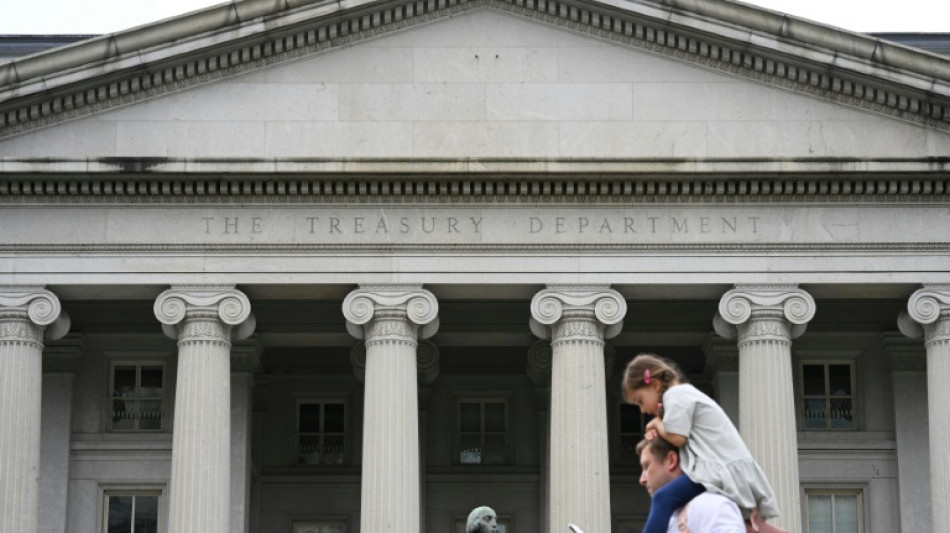
US Treasury bonds have long been considered among the safest investments available, allowing Washington to borrow money from around the world at favourable rates.
But the yield on 30-year Treasuries, a gauge of long-term confidence in the economy, hit 5.34 percent in mid-August, the highest since 2007, before the global financial crisis.
It has since fallen back to around 5.17 percent.
The trend is similar in Europe, where the benchmark 10-year German bund is yielding around 3.22 percent, a level not seen since 2011.
In France, where the government is struggling to make spending cuts ahead of next year's presidential election, the 10-year OAT stands at 4.05 percent, the highest since 2008 and well above the 3.5-percent yield at the beginning of the year.
Even in Japan, which for years had yields close to zero as the government grappled with deflation, the 10-year yield has jumped to nearly 2.9 percent from just 2.1 percent in February.
- Why are they rising? -
Government spending in several major economies has soared, and investors have little faith that governments will take tough steps to control their budgets.
"Since the major financial crisis of 2008-2009, public debt has kept growing around the world," said Frederik Ducrozet, head of macroeconomic research at the Swiss bank Pictet.
And "since the Covid pandemic, the start of the Iran war, and the trade wars, we've had a series of shocks" that have required massive spending to withstand, he said.
Charlotte de Montpellier, an economist at ING, noted that even "countries that usually know how to tighten their belts, like Germany, are seeing their deficits climb as well".
And since governments have to issue ever more bonds to finance those deficits, "they are competing among themselves to attract capital", she said.
That means they have to offer higher interest rates to borrow -- with the yields on bonds already on the market effectively telling them how high they will go.
- What's the price to pay? -
Governments are also now competing for cash with technology companies that are borrowing massively to fuel the artificial intelligence boom.
The situation is especially alarming in the United States, where government debt topped $40 trillion for the first time this month.
That is double the total debt from just 10 years ago, and servicing costs have ballooned as a result -- money that could otherwise be spent on health care or defence or education.
Last year the interest outlays for Washington hit a whopping $970 billion, up from $350 billion in 2021.
All this comes at a time when bond investors are unsure what the new head of the Federal Reserve, Kevin Warsh, is going to do about inflation running at 3.7 percent -- nearly double the Fed's two-percent target.
"One of the reasons for this increase in yields... is the uncertainty about US monetary policy," de Montpellier said.
"Since Warsh's arrival, he wants to communicate less, he's been a bit vague," she said, referring to his reluctance to give guidance on future Fed rate moves.
"But we know that what happens in the US is going to have a very strong impact on bond markets and interest rates in general," she said.
For everyday consumers, rising bond yields translates directly into higher borrowing costs, whether for mortgages or car loans.
Companies also find themselves having to pay more if they want credit to invest, potentially weighing on economic activity overall.
"So you have fewer home purchases, fewer business financing projects, and in the end the economy slows -- so it's clearly not good news," de Montpellier said.
B.Carter--ThChM