Czech PM Babiš Faces Backlash for Israel Trip During Velvet Revolution Anniversary

Czech Prime Minister Andrej Babiš is facing intense criticism after confirming a trip to Israel from November 16 to 18, which coincides with the anniversary of the 1989 Velvet Revolution. The decision means Babiš and a significant portion of the government will miss the central state celebrations in Prague, drawing accusations of hypocrisy from opposition leaders and political analysts.
Czech Prime Minister Andrej Babiš is facing intense criticism after confirming a trip to Israel from November 16 to 18, which coincides with the anniversary of the 1989 Velvet Revolution. The decision means Babiš and a significant portion of the government will miss the central state celebrations in Prague, drawing accusations of hypocrisy from opposition leaders and political analysts.
Babiš initially announced the visit on Facebook on Sunday, with the Straka Academy, the office of the Prime Minister and government, confirming the final dates yesterday. The trip replaces an originally scheduled visit to Vietnam, which has been postponed to early December. Babiš stated that he accepted the invitation from Israeli Prime Minister Benjamin Netanyahu to discuss anti-ballistic missile protection, as well as other joint projects in security, defense, child protection, and healthcare.
The Czech delegation includes the ministers of defense, foreign affairs, health, sports, and prevention, along with the Chief of the General Staff of the Czech Army, government officials, and business representatives. The visit occurs amid a political transition in Israel, where President Isaac Herzog has tasked rival Gadi Eisenkot with forming the next government following last month’s election, though negotiations for a Knesset majority may take weeks.
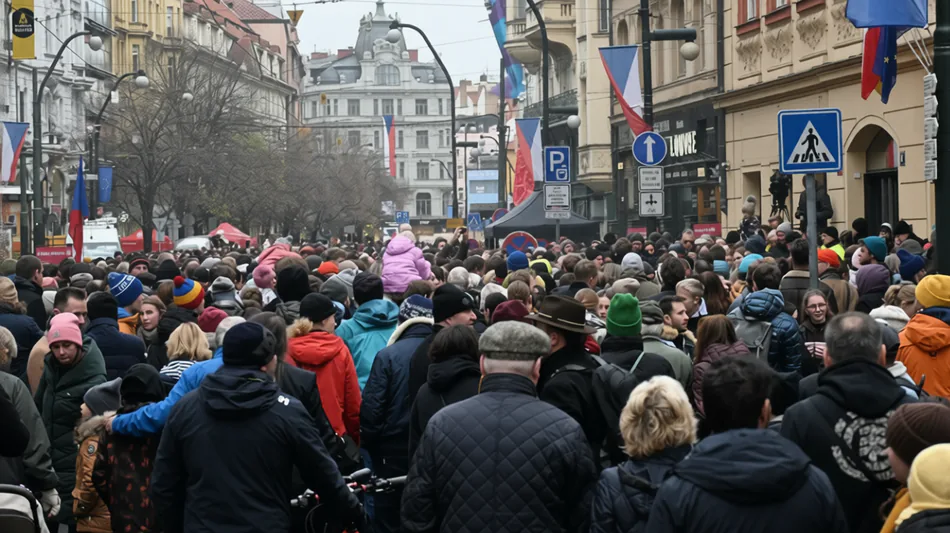
The backlash was immediate because November 17 is one of Czechia’s most important state holidays, marking the end of more than four decades of communist and authoritarian rule. The main celebrations are held on Národní třída in Prague, where Babiš had originally planned to attend but later scrapped those plans.
Political scientist Jan Kubáček told Blesk that if government members truly wanted to be present, they would have found another date. "If members of the government want to commemorate November 17, they can just as well commemorate it on Tomáš Garrigue Masaryk Square in Tel Aviv," he argued.
Babiš justified the decision by stating that the Czech government had waited for an invitation from Israel for a long time and felt it had no choice regarding the date. He expressed regret at missing Národní třída, where he normally attends every year, but added that the trip might contribute to calming the tense situation in the Middle East.
In Babiš’s stead, Deputy Prime Minister Karel Havlíček and Finance Minister Alena Schillerová, both from the ruling ANO party, will represent the government on November 17. The Prime Minister’s reference to "calming the tense situation" was interpreted by some as a nod to growing public anger over the government’s plans to fund public media directly from the state budget, a move that has sparked fears of political interference.
Opposition leaders were less forgiving. Martin Kupka, chairman of the ODS party and opposition leader, slammed the decision on social media. "To leave your own country as prime minister for the most important holiday of freedom and democracy on November 17? That is the definition of cowardice and hypocrisy," he wrote.
The controversy arises just days before a mass anti-government protest is expected on Prague’s Letná plain on Sunday, November 15, with up to a quarter million people anticipated to join. Babiš has previously faced unwelcome crowds during past November 17 celebrations on Národní třída, including boos and cries of "Shame!" and "StB!" last year. In 2018, during his first term, critics suggested he tried to avoid protesters by visiting the commemorative site just after midnight.
Q.Yam--ThChM