How young is too young as child prodigies win big at Asian Games / Photo: © AFP

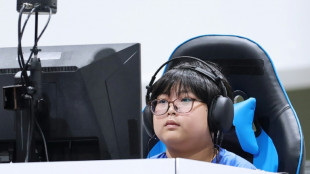
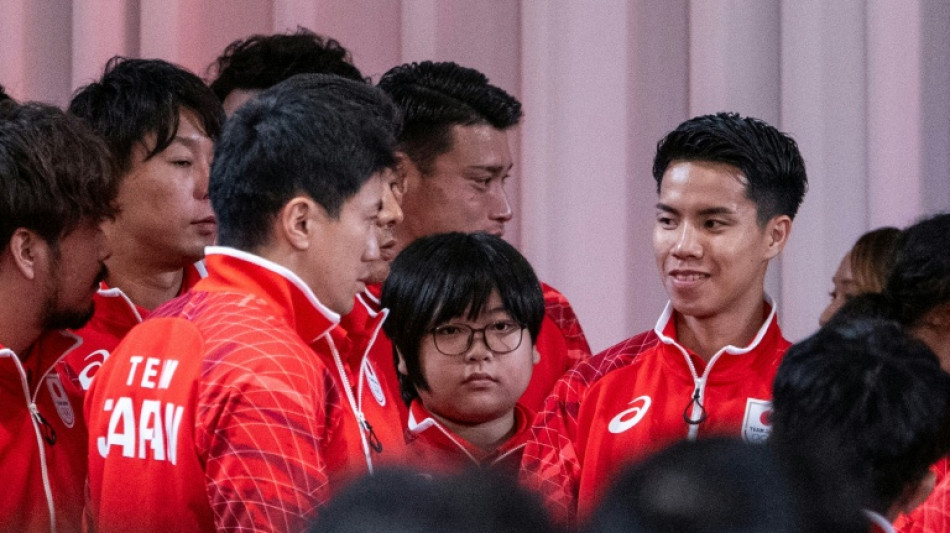
The Asian Games has crowned teenage champions before, but this edition has witnessed stunning successes by child prodigies, culminating in Yuki Kurihara standing atop the podium aged just 11.
The Japanese primary school student demolished opponents three times his age on the way to a historic gold in eSports in Aichi-Nagoya.
He is Japan's youngest Asian Games champion in history and almost certainly the youngest the Games have ever seen.
Kurihara did not even react after winning Saturday's final in Puyo Puyo Champions, a puzzle game where players try to clear their screen of coloured blobs by lining them up and popping them.
The boy, who does not turn 12 until June and wants to be a train driver when he grows up, later explained that he felt "embarrassed".
Kurihara's face was splashed across national newspapers on Sunday.
There is no publicly available official list of the youngest medallists ever at the Games, which were first contested in 1951.
But the introduction in recent editions of events intended to attract younger viewers has resulted in some eye-catching displays by children.
In skateboarding, Taiwan's 12-year-old Ku Yong-yan took home silver on Friday in the "men's" park final.
The winner, Japan's Izuru Nagahara, was a relative veteran at 15.
Nagahara had anaesthetic injections in his knee to dull the pain from injury before his winning run.
Also in the skateboarding was Mazel Paris of the Philippines, who was just nine when she competed at the previous Asian Games.
Asked what has changed since Hangzhou in 2023, the 12-year-old replied: "I got taller for sure."
This week will see another teenage phenomenon enter the fray with India's 15-year-old cricketer Vaibhav Sooryavanshi.
- Abuse concerns -
But the presence of young children competing on the international stage against adults and under expectations to win for their country comes with a caveat.
Kanae Doi, Japan director at Human Rights Watch, said ahead of the Games that "moments of triumph do not come easily. They are built on years of disciplined training, often beginning in childhood".
"At its best, that journey should provide children with the joy of play and competition, along with opportunities for physical, mental and personal growth," she wrote in the Japan Times.
"Many young athletes instead encounter physical, verbal and even sexual abuse in the very environments meant to help them develop."
She said that in Games host Japan, children "frequently experience abuse in sports training within Japanese schools, federations and elite sports programmes".
In 2024, the International Olympic Committee released its consensus statement on youth athletes at the Olympic Games.
It noted that 50 percent of common mental health conditions first emerge before 18.
Adolescent athletes are also more susceptible to certain injuries, it said.
Chinese swimmer Yu Zidi became the youngest medallist in world championships history last year with bronze aged 12.
Now a teenager and hotly tipped to make a splash at the Los Angeles 2028 Olympics, Yu is one of the faces of the Nagoya Games with three golds, all in record times.
But when it came to reporters swarming around her after races, she looked all of her 13 years.
"Interviews are way harder than the race," she said.
- Under pressure -
Each sport has its own rules on minimum age.
For World Aquatics, the minimum age for major international championships is 14 but exceptions can be made for younger swimmers if, like Yu, they are fast enough.
Yu has spoken previously about struggling to balance her swimming with school work.
Yu's team-mate Zhang Yufei, 28, a multiple Olympic gold medallist and world champion, said the youngster's stunning displays were no longer a shock.
But she cautioned: "I hope she can withstand that pressure."
N.Lo--ThChM