The China Mail - NASA images reveal crater left by SpaceX rocket's Moon crash

USD -
AED 3.673042
AFN 66.000368
ALL 82.000368
AMD 362.466517
ANG 1.790365
AOA 917.000367
ARS 1521.867204
AUD 1.44321
AWG 1.8025
AZN 1.70397
BAM 1.740516
BBD 2.01375
BDT 122.920986
BGN 1.683441
BHD 0.37704
BIF 2997.5
BMD 1
BND 1.279623
BOB 12.012672
BRL 5.210804
BSD 0.999844
BTN 96.860456
BWP 13.821826
BYN 3.011507
BYR 19600
BZD 2.010786
CAD 1.42485
CDF 2310.000362
CHF 0.828362
CLF 0.025096
CLP 990.920396
CNY 6.70455
CNH 6.707804
COP 3272.06
CRC 458.133471
CUC 1
CUP 23.995372
CVE 98.350394
CZK 21.719304
DJF 177.720393
DKK 6.642604
DOP 60.050393
DZD 134.000358
EGP 52.20214
ERN 15
ETB 161.02504
EUR 0.88815
FJD 2.26404
FKP 0.757935
GBP 0.755116
GEL 2.60504
GGP 0.757935
GHS 11.74504
GIP 0.757935
GMD 73.503851
GNF 8750.000355
GTQ 7.640625
GYD 209.141311
HKD 7.84745
HNL 26.820388
HRK 6.696704
HTG 130.925789
HUF 327.440388
IDR 17888.5
ILS 3.05233
IMP 0.757935
INR 96.14625
IQD 1310
IRR 1746539.503816
ISK 121.930386
JEP 0.757935
JMD 158.282088
JOD 0.70904
JPY 157.82504
KES 128.280385
KGS 87.450384
KHR 4056.00035
KMF 438.00035
KPW 900.000318
KRW 1343.975039
KWD 0.30883
KYD 0.833148
KZT 449.216421
LAK 22457.503779
LBP 89550.000349
LKR 330.631023
LRD 171.350382
LSL 16.650381
LTL 2.95274
LVL 0.60489
LYD 6.405039
MAD 9.941504
MDL 17.867027
MGA 4430.000347
MKD 54.802323
MMK 2099.878546
MNT 3598.367683
MOP 8.081321
MRU 40.085039
MUR 48.150378
MVR 15.460378
MWK 1736.000345
MXN 18.161204
MYR 4.084904
MZN 63.903729
NAD 16.650377
NGN 1330.790377
NIO 36.655039
NOK 9.618604
NPR 154.976729
NZD 1.780469
OMR 0.383882
PAB 0.999831
PEN 3.447504
PGK 4.484039
PHP 62.583504
PKR 276.650374
PLN 3.89575
PYG 5849.556144
QAR 3.643504
RON 4.741904
RSD 104.529038
RUB 83.633376
RWF 1475
SAR 3.737074
SBD 8.078071
SCR 13.774934
SDG 601.503676
SEK 10.040104
SGD 1.278804
SHP 0.75503
SLE 24.603667
SLL 20969.491881
SOS 571.503662
SRD 37.811504
STD 20697.981008
STN 22.225
SVC 8.748081
SYP 13002.000254
SZL 16.650369
THB 33.520369
TJS 9.20325
TMT 3.5
TND 2.994504
TOP 2.40776
TRY 49.129904
TTD 6.77945
TWD 31.821804
TZS 2635.003038
UAH 44.988787
UGX 3989.587737
UYU 40.296887
UZS 11787.503617
VES 865.47815
VND 25985.5
VUV 120.084308
WST 2.780871
XAF 582.588484
XAG 0.016565
XAU 0.000241497186
XCD 2.70255
XCG 1.80192
XDR 0.707052
XOF 582.588484
XPF 106.450363
YER 236.303589
ZAR 16.655104
ZMK 9001.203584
ZMW 19.645988
ZWL 321.999592
SSP 5712.591904
MXV 2.054907
  • RYCEF

    0.4000

    19.71

    +2.03%

  • CMSC

    0.0000

    20.4

    0%

  • BTI

    0.4200

    56.05

    +0.75%

  • BP

    0.2800

    44.43

    +0.63%

  • RBGPF

    1.6000

    67

    +2.39%

  • RIO

    -0.1500

    94.41

    -0.16%

  • AZN

    -0.4300

    166.15

    -0.26%

  • GSK

    0.4600

    49.7

    +0.93%

  • BCE

    -0.4100

    20.56

    -1.99%

  • NGG

    -0.2500

    75.24

    -0.33%

  • VOD

    -0.0400

    16.58

    -0.24%

  • RELX

    -0.4500

    33.07

    -1.36%

  • BCC

    -0.5500

    76.59

    -0.72%

  • CMSD

    -0.0300

    20.27

    -0.15%

  • JRI

    -0.2500

    10.77

    -2.32%

NASA images reveal crater left by SpaceX rocket's Moon crash
NASA images reveal crater left by SpaceX rocket's Moon crash / Photo: © NASA Goddard/Intuitive Machines/AFP

NASA images reveal crater left by SpaceX rocket's Moon crash

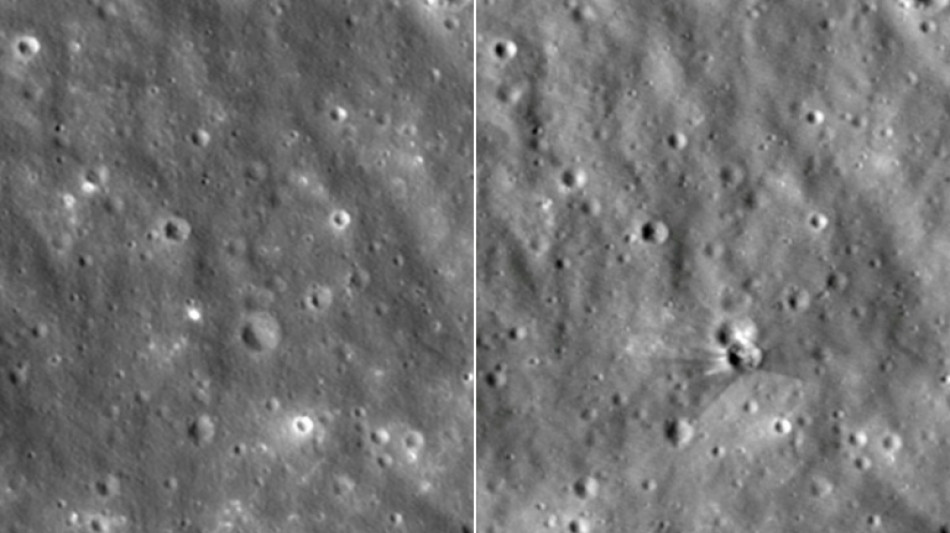
NASA on Tuesday released new images of the crater caused by a SpaceX rocket slamming into the Moon earlier this month.

Text size:

The photographs were captured by the Lunar Reconnaissance Orbiter (LRO) between August 11 and 12, and show the impact formed by a SpaceX Falcon 9 upper stage striking the Moon's surface on August 5.

Scientists from the US space agency determined the crater was 60-feet-wide (18 meters), and less than 10 feet deep, based on the length of its shadow.

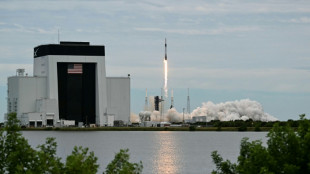
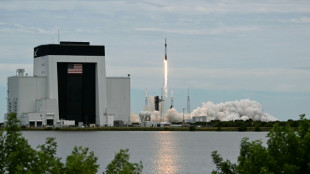
The Falcon 9 launched in January 2025 carrying Firefly Aerospace's Blue Ghost 1 lunar lander, a private mission that made a soft landing on the Moon.

These weren't the first images of the crash site. The Korean space agency published pictures on August 6 that were taken a day earlier by Korea Pathfinder Lunar Orbiter (KPLO), also known as Danuri.

The LRO, in service since 2009, circles the Moon from pole to pole every two hours while the Moon rotates underneath it.

A NASA statement said it was challenging to capture the image. To photograph a specific spot on the Moon, the spacecraft must wait until that location turns into view, which took six days in this case -- and the spacecraft had to be tilted just right so that its camera pointed to the crater while it passed 60 miles overhead.

Timing was the other challenge, NASA said: "If the camera snapped even 10 seconds too early or too late, the target would drift off-center by 10 miles."

The images they captured from different viewing angles brought out different features, including brighter and darker streaks fanning out around the crater.

NASA explained the darker streaks "are made of surface dust and rocks altered over a long time by solar wind, galactic cosmic rays, and micrometeorite impacts" that was thrown up by the collision from 1.5 feet below the surface.

The brighter streaks that hug the crater's rim were fresh material excavated from deeper underground.

Finding the crater site was a global endeavor that brought together leading experts and hobbyists.

NASA said its Center for Near Earth Object Studies incrementally refined the trajectory until identifying the location of impact, which it then provided to Korea.

The Danuri team in turn sent their coordinates to NASA's LRO team to help refine their follow-up imaging sequence.

P.Deng--ThChM