The China Mail - Nobel physics winner's pride at pioneering AI role

USD -
AED 3.672495
AFN 64.000154
ALL 81.992851
AMD 360.053619
ANG 1.790365
AOA 917.000567
ARS 1520.589806
AUD 1.43843
AWG 1.8025
AZN 1.706653
BAM 1.747811
BBD 2.014182
BDT 123.181412
BGN 1.683441
BHD 0.377117
BIF 3003.57462
BMD 1
BND 1.28025
BOB 11.99975
BRL 5.004901
BSD 0.999987
BTN 96.714521
BWP 13.824844
BYN 3.066935
BYR 19600
BZD 2.01126
CAD 1.42508
CDF 2317.499925
CHF 0.832625
CLF 0.024763
CLP 977.789631
CNY 6.704604
CNH 6.708585
COP 3243.57
CRC 456.562244
CUC 1
CUP 24.000894
CVE 98.537993
CZK 21.857098
DJF 178.074663
DKK 6.68655
DOP 60.28597
DZD 134.620907
EGP 52.373597
ERN 15
ETB 162.472475
EUR 0.894591
FJD 2.252298
FKP 0.753189
GBP 0.75715
GEL 2.575029
GGP 0.753189
GHS 11.820534
GIP 0.753189
GMD 73.99997
GNF 8798.033959
GTQ 7.637967
GYD 209.155291
HKD 7.848265
HNL 26.845398
HRK 6.737101
HTG 130.956211
HUF 328.011003
IDR 17897
ILS 3.067803
IMP 0.753189
INR 96.75075
IQD 1310.008937
IRR 1732150.000076
ISK 122.549894
JEP 0.753189
JMD 158.865058
JOD 0.709007
JPY 158.221495
KES 129.899962
KGS 87.448497
KHR 4071.546982
KMF 437.999892
KPW 900.000318
KRW 1338.697801
KWD 0.31047
KYD 0.833423
KZT 447.018136
LAK 22425.379803
LBP 89552.993744
LKR 330.857909
LRD 171.00983
LSL 16.693431
LTL 2.95274
LVL 0.60489
LYD 6.424486
MAD 9.972833
MDL 17.810545
MGA 4459.338695
MKD 55.022341
MMK 2099.693644
MNT 3596.990612
MOP 8.084004
MRU 40.04075
MUR 47.380229
MVR 15.410482
MWK 1734.071502
MXN 18.08996
MYR 4.089398
MZN 63.897294
NAD 16.693655
NGN 1326.820208
NIO 36.800222
NOK 9.58275
NPR 154.747383
NZD 1.78726
OMR 0.384485
PAB 1
PEN 3.442492
PGK 4.532618
PHP 62.823016
PKR 276.934316
PLN 3.92011
PYG 5834.699887
QAR 3.64604
RON 4.789903
RSD 104.965987
RUB 85.473868
RWF 1477.033065
SAR 3.750854
SBD 8.065041
SCR 13.89894
SDG 601.551421
SEK 10.041355
SGD 1.280375
SHP 0.754461
SLE 24.680316
SLL 20969.491881
SOS 571.492404
SRD 37.649988
STD 20697.981008
STN 21.894255
SVC 8.750592
SYP 13002.000254
SZL 16.688114
THB 33.684965
TJS 9.230295
TMT 3.5
TND 2.987578
TOP 2.40776
TRY 49.197301
TTD 6.783645
TWD 31.863497
TZS 2650.003025
UAH 44.87185
UGX 4075.012399
UYU 40.10688
UZS 11795.247585
VES 872.77465
VND 25980.5
VUV 120.182413
WST 2.784712
XAF 586.812907
XAG 0.016601
XAU 0.00024253625
XCD 2.70255
XCG 1.802299
XDR 0.707052
XOF 586.812907
XPF 106.577301
YER 236.224959
ZAR 16.68511
ZMK 9001.196831
ZMW 19.890974
ZWL 321.999592
SSP 5747.740458
MXV 2.044606
  • RYCEF

    0.4000

    19.71

    +2.03%

  • CMSC

    0.0000

    20.4

    0%

  • BTI

    0.4200

    56.05

    +0.75%

  • BP

    0.2800

    44.43

    +0.63%

  • RBGPF

    1.6000

    67

    +2.39%

  • RIO

    -0.1500

    94.41

    -0.16%

  • AZN

    -0.4300

    166.15

    -0.26%

  • GSK

    0.4600

    49.7

    +0.93%

  • BCE

    -0.4100

    20.56

    -1.99%

  • NGG

    -0.2500

    75.24

    -0.33%

  • VOD

    -0.0400

    16.58

    -0.24%

  • RELX

    -0.4500

    33.07

    -1.36%

  • BCC

    -0.5500

    76.59

    -0.72%

  • CMSD

    -0.0300

    20.27

    -0.15%

  • JRI

    -0.2500

    10.77

    -2.32%

Nobel physics winner's pride at pioneering AI role
Nobel physics winner's pride at pioneering AI role / Photo: © AFP

Nobel physics winner's pride at pioneering AI role

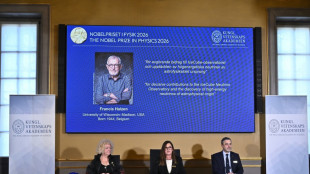
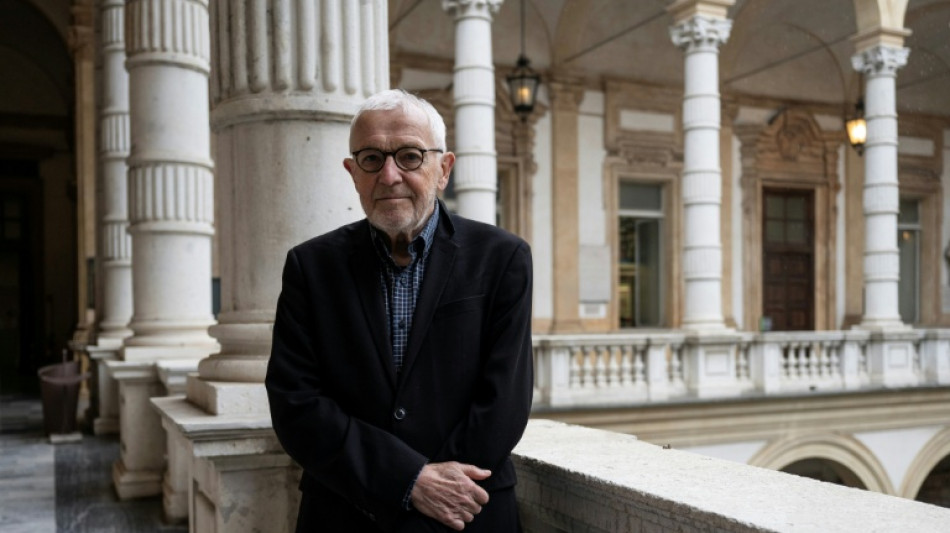
Nobel Prize for physics winner Francis Halzen spoke with pride on Wednesday about his early promotion of artificial intelligence in his research on neutrinos.

Text size:

Halzen, 82, a professor at the University of Wisconsin-Madison, was visiting the city of Turin in northern Italy and spoke to reporters there a day after the Nobel announcement.

The US-Belgian physicist is the mind behind the IceCube neutrino observatory, made up of 5,484 optical modules used as sensors deep in the Antarctic ice.

"In fact, the first neural nets appeared in the late 1980s, and I am very proud that I wrote a paper in 1991 proposing to use AI to analyse the data of part of the classical physics experiment," Halzen said.

"We kind of used neural nets occasionally. And that changed a few years ago, when these very powerful neural nets came along."

Neural networks are computer programs that try to mimic the way the human brain recognises patterns in data.

Halzen's research on neutrinos -- rare subatomic particles originating in the distant cosmos -- has provided insight into the far reaches of space.

- 'Tour de France' dream -

He said the IceCube observatory had "solved a very interesting problem for the AI".

"When you look at the sky normally, you see the Milky Way. But when you look at the sky of neutrinos, you see other galaxies, you don't see the Milky Way," he said.

"It was only after we used neural nets and machine learning techniques that we finally began to see the Milky Way in our data, which we now have extracted convincingly," he said.

At a time when applied technologies dominate research, the Nobel announcement is "clear recognition of the importance of fundamental research" for "understanding our nature and our origins", said Antonio Zoccoli, president of Italy's National Institute for Nuclear Physics, with which Halzen collaborates.

Halzen said that "doing science is more difficult" now because of funding issues, although "universities are surviving".

But he said he was the "wrong person" to talk about funding cuts since his observatory had been spared.

Halzen's project has received some $250 million (224 million euros) from the US National Science Foundation.

He joked that he has been writing a proposal and hoped the Nobel announcement would help to get it funded.

Asked if he had always dreamt about winning the Nobel prize for physics, he said he preferred cycling as a child.

"I'm from Belgium, I wanted to win the Tour de France," he joked.

B.Carter--ThChM