RYCEF
0.4000

In Latin America’s long struggle between democratic renewal and authoritarian relapse, Nicaragua is increasingly hard to classify as anything other than a state in deliberate retreat from pluralism. What began as a familiar story of populist consolidation has, over the past several years, hardened into something more structurally enduring: a family-centred power system, insulated by security institutions, and sustained by an economy that remains outward-facing while the political sphere is sealed.
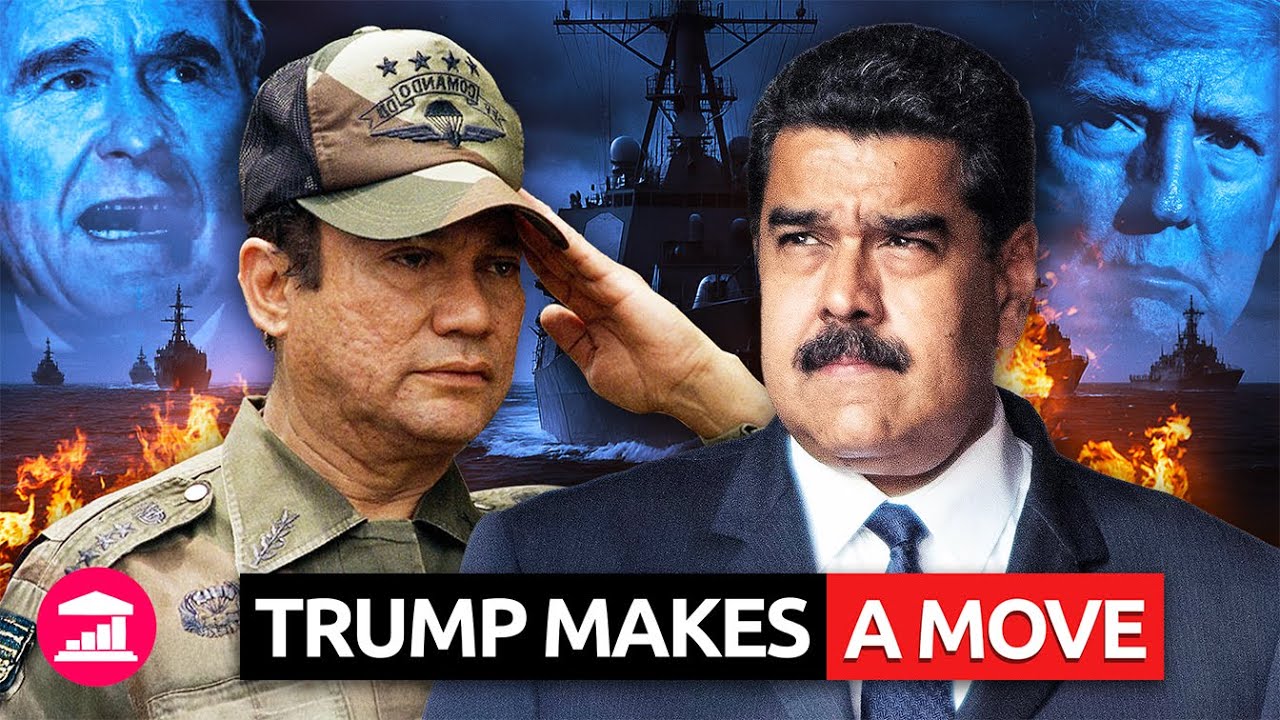
That combination—political closure paired with selective economic openness—helps explain why Nicaragua is now being discussed in the same breath as Venezuela and Cuba. The comparison is not simply rhetorical. The mechanisms are recognisable: the capture of institutions, the criminalisation of dissent, the conversion of citizenship into a conditional privilege, and the use of migration and security issues as bargaining chips in geopolitical negotiation. Yet Nicaragua also differs in crucial ways that may make it more brittle than either Caracas or Havana. It has neither Venezuela’s hydrocarbon cushion nor Cuba’s long-established apparatus for managing scarcity. Instead, it relies heavily on remittances, preferential trade access, and a transnational labour pipeline that is acutely sensitive to foreign policy shifts—particularly from the United States.
If Venezuela and Cuba represent distinct models of authoritarian survival, Nicaragua now shows signs of adopting elements of both—while adding its own, increasingly dynastic signature.
A state redesigned around a ruling couple
At the centre of Nicaragua’s transformation is the steady re-engineering of the state into an extension of the ruling party and, more specifically, the presidential household. In early 2025, a sweeping constitutional overhaul formalised what had long been visible in practice: the elevation of Daniel Ortega and Rosario Murillo into a co-presidential executive, with an expanded mandate and the power to “coordinate” other branches of government. The shift was not merely symbolic. It marked the legal consolidation of executive primacy over institutions that, even in fragile democracies, traditionally provide friction—courts, electoral authorities, legislatures, municipalities.
This is how modern authoritarian systems seek permanence: not only through control, but through the normalisation of control. When coercion is fused with legality, repression becomes administratively routine rather than episodic. The result is a state that can punish opponents not only with police power, but with paperwork—asset seizures, professional bans, travel restrictions, and citizenship revocations.
One of the most consequential features of Nicaragua’s current model is the treatment of nationality as a revocable status. Hundreds of Nicaraguans have reportedly been stripped of citizenship and had property confiscated under accusations framed as betrayal of the nation. This practice is more than punitive; it is strategic. By forcing opponents into statelessness or dependency on foreign protection, the government reshapes exile into a tool of domestic control: those outside the country are separated from assets, voting rights, and family networks, while those inside are reminded that political nonconformity can carry irreversible consequences.
In parallel, surveillance and social control have been extended beyond formal policing into neighbourhood-level monitoring—an approach designed to make dissent socially dangerous, not merely legally risky. The goal is to collapse the space between public life and state scrutiny, until self-censorship becomes the default survival strategy.
The dismantling of civil society and the narrowing of public life
No authoritarian consolidation is complete without the removal of independent intermediaries: civic groups, religious institutions, universities, journalists, professional associations. In Nicaragua, the pattern has been systematic. Large numbers of non-governmental organisations have lost legal status; private universities have faced closures or state takeovers; independent voices have been pushed into exile; and public debate has been reduced to what is permitted within an increasingly controlled information environment.
Religious institutions—particularly the Catholic Church—have faced escalating pressure. Clergy have reported constant scrutiny, and prominent church-linked figures have been targeted through detentions, expulsions, and administrative constraints. The church’s vulnerability is not accidental. In many societies where parties and unions have been weakened, religious networks remain one of the last nationwide structures capable of convening people outside the state’s direct control. When a government fears mobilisation, it seeks to neutralise the institutions that can still gather citizens without official permission.
What emerges is a public sphere that still exists in appearance—schools, parades, ministries, elections—but lacks the independent connective tissue that makes democratic life resilient. Citizens may still vote; what they cannot safely do is organise.
The economic paradox: outward trade, inward fear
Nicaragua’s economic reality complicates the picture. Unlike Cuba’s heavily state-dominated economy, Nicaragua has cultivated export industries integrated into global supply chains, including apparel manufacturing and agriculture. It has benefited for years from preferential access to foreign markets, and it has used special regimes and incentives to attract investment into export zones.
At the household level, the single most important stabiliser has been remittances. Money sent back by Nicaraguans abroad has become a pillar of consumption, a cushion against inflation, and a de facto social safety net that the state itself does not have to finance. In many communities, remittances are not marginal income—they are the difference between subsistence and collapse.
This is where Nicaragua becomes uniquely vulnerable. The regime can centralise power at home, but it cannot easily control the economic lifelines that sustain daily life. Remittances depend on migrant employment conditions, immigration enforcement, and the legal status of diaspora communities. Export earnings depend on trade policy decisions abroad. Even modest shocks in either channel can trigger domestic stress—job losses, price spikes, and a sudden exposure of how little autonomous resilience the economy possesses.
The government’s political strategy, in other words, sits atop an economic structure it does not fully command. That is a departure from the Cuban model, where the state historically sought near-total command over production and distribution. Nicaragua’s leadership appears to prefer an approach closer to Venezuela’s later-stage pattern: allowing selected private activity to continue, while the ruling circle captures strategic rents—through favourable concessions, selective regulation, and coercive extraction—without accepting the political pluralism that usually accompanies a market economy.
A new pressure point: trade sanctions move from diplomacy to commerce
International pressure on Nicaragua has increasingly migrated from condemnations to mechanisms with direct economic consequences. Recent actions have signalled a willingness—especially in Washington—to use trade law and targeted designations not only as moral statements, but as leverage instruments. The logic is straightforward: a government that can absorb diplomatic criticism may not withstand disruptions to export access, supply chains, and hard-currency inflows.
This matters because Nicaragua’s export model is deeply intertwined with preferential arrangements and predictable market entry. If that predictability is replaced by punitive tariffs or suspended benefits, the first casualties are not ministers in Managua; they are workers in factories, farmers in export sectors, and small businesses dependent on wage-driven consumption. That social pressure can, in turn, produce political risk—either by forcing the regime to negotiate or by pushing it towards deeper repression to contain unrest. The regime appears aware of the danger. It has periodically released detainees or adjusted behaviour in ways that suggest tactical calibration—small concessions designed to reduce pressure without altering the fundamentals of control.
The two levers that keep returning: drugs and migration
Beyond trade, two issues repeatedly define Nicaragua’s external exposure: narcotics trafficking routes and migration flows. On narcotics, Nicaragua’s geographic position is inescapable. Central America remains a transit corridor for drug shipments moving north, and being identified internationally as a significant transit point carries consequences. It invites intensified scrutiny, potential sanctions, and security cooperation demands that can become politically awkward for a government that frames itself as sovereign and anti-interventionist.
On migration, Nicaragua has played a more complex game. Over recent years, Managua has functioned not only as a country of origin for migrants fleeing repression and economic strain, but also—at times—as a transit platform for third-country nationals heading towards the United States. That dynamic matters because migration has become one of the most politically charged issues in U.S. domestic policy. When Nicaragua is perceived as facilitating irregular flows—whether through permissive entry rules, tolerated smuggling networks, or the monetisation of transit—it risks provoking punitive responses that go beyond rhetoric.
In early 2026, Nicaragua abruptly restricted a key entry pathway that had been used by Cuban nationals travelling onward through Central America. The decision was widely interpreted as a response to external pressure. Whether it represents a genuine policy shift or a tactical pause is less important than what it reveals: Managua understands that migration policy can trigger immediate retaliation, and it is willing to adjust when the cost rises.
This is one of the central reasons Nicaragua is now framed as “next”. Cuba and Venezuela have long been treated as entrenched cases—sanctioned, isolated, yet durable. Nicaragua, by contrast, still sits at a hinge point where external leverage can bite quickly: through trade, through migration enforcement, and through the financial and legal targeting of officials and their networks.
Allies without a safety net: Russia and China as partners, not substitutes
As Nicaragua’s relations with Western democracies deteriorate, it has leaned more heavily into partnerships with Russia and China. For the ruling circle, these relationships offer two attractions: political backing without human rights conditionality, and potential security cooperation that strengthens regime survival. Yet geopolitically useful partners do not automatically provide economic substitution at scale. China can offer investment promises, trade deals, and infrastructure interest, but replacing Nicaragua’s established export dependence is not an overnight project. Nor do Chinese arrangements necessarily translate into broad-based prosperity; they often concentrate benefits among politically connected intermediaries and strategic sectors.
Russia’s role is different: less commercial, more security-oriented. Training, equipment, intelligence cooperation, and symbolic military ties can contribute to regime stability—particularly if the leadership’s primary fear is not economic recession but elite fracture or loss of coercive control. Still, security support does not pay wages in export zones, and it does not replace remittances.
This is the structural imbalance at the heart of Nicaragua’s predicament: the regime’s political future depends on authoritarian insulation, but the population’s economic survival depends on transnational openness.
Why the comparison to Venezuela and Cuba is suddenly sharper
To understand why Nicaragua now appears closer to the Venezuelan and Cuban trajectories, it helps to distinguish between two questions: how regimes fall, and how they survive. Cuba’s model is survival through closure: information control, institutional discipline, and the endurance of scarcity through rationing, surveillance, and managed exit via migration.
Venezuela’s model has been survival through fragmentation and rent capture: selective repression, politicised distribution of resources, and the use of external enemies to justify internal consolidation—while presiding over deep economic dysfunction and mass emigration. Nicaragua is converging with both. Politically, it has moved towards Cuban-style closure: restricting civil society, policing narrative, narrowing the permitted national identity. Economically, it risks Venezuelan-style stress: dependence on external inflows, exposure to sanctions, and the danger that a sudden disruption triggers cascading hardship.
The “next” label reflects an emerging belief that Nicaragua has reached the stage where international policy tools can still reshape outcomes. The window for such leverage is not indefinite. If Nicaragua completes a full transition into a sealed, heavily sanctioned, security-dominated state, the tools that remain are blunter and more humanitarian in nature—aid to refugees, support for exiles, and long-term containment. That is why the focus has intensified now: before the hinge point closes.
What to watch: the signals of a decisive turn
If Nicaragua is to avoid becoming a fully entrenched counterpart to Venezuela or Cuba, several indicators will matter more than speeches.
- First, trade policy decisions abroad: any escalation from targeted measures to broad-based tariff or preference suspensions would test the regime’s economic tolerance and its willingness to compromise.
- Second, the remittance channel: shifts in diaspora legal status, deportation patterns, and enforcement regimes can directly affect household stability inside Nicaragua—far more quickly than abstract sanctions.
- Third, elite cohesion: the detention or marginalisation of insiders is often a sign of regime insecurity. When a government begins purging its own ecosystem, it may be tightening control—or reacting to internal distrust.
Fourth, the scale of repression versus tactical concessions: the release of detainees, limited migration restrictions, or selective cooperation on security issues can indicate a strategy of pressure management. The question is whether such moves are temporary valves or the start of meaningful opening. Finally, the constitutional and legal architecture: once repression is fully embedded in law—citizenship revocation powers, expanded executive control, subordination of institutions—it becomes harder to reverse without systemic rupture.
Nicaragua’s direction is not predetermined. But the trajectory is clear enough to make the comparison unavoidable. In the contest between political closure and economic dependence, the regime has so far chosen closure—while betting that dependence can be managed. That bet is becoming riskier by the month. When regimes miscalculate the balance between coercion and prosperity, history suggests the outcome is rarely gentle.
Nicaragua may not yet be Venezuela or Cuba. But it is beginning to resemble the moment just before the label becomes irreversible.