Hundreds hospitalised in Japan heatwave 'disaster' / Photo: © AFP

More than 450 people received hospital treatment for heat-related issues in a single day in Tokyo -- the highest number since records began 16 years ago, emergency services said Thursday.
The figure was released as Japan sweltered in a heatwave that has killed at least 14 people over the past week.
A total 453 people had hospital treatment for heat-related issues on Wednesday, the most since records began in 2010, the Tokyo Fire Department said. Emergency callouts were also at the highest level since at least 1963.
"We are urging people to stay hydrated and use air conditioners," a fire brigade spokesman told AFP.
The number of patients appeared to rise as temperatures climbed, with notable increases on Tuesday and Wednesday, the spokesman said.
In Tokyo prefecture -- home to around 14 million people -- one person had died in the current heatwave with four others in a critical condition and 18 in a serious state, he said.
Nick Estes, 35, an American tourist visiting the Asakusa area of Tokyo with his family, said Thursday the weather was "extremely hot".
"We've been planning our trips around trying to make sure we can spend time in the metro to cool off, finding little shops to pop into to maybe buy a little souvenir that has air conditioning, doing everything we can to stay cool," Estes told AFP.
"But especially with younger kids, it's been absolutely brutal... I was here last summer, actually, and somehow it actually feels even hotter this year than it did a year ago."
The Fire and Disaster Management Agency has dubbed the heatwave a "disaster", reporting on Wednesday at least 14 deaths across the country over the previous week and 11,000 people seeking emergency medical care.
- 'Disaster' -
In the central region of Aichi, which includes Nagoya and is experiencing some of the most intense heat, 116 people were taken to hospital on Wednesday, officials said.
Heatstroke alerts have been issued for almost the whole country of around 125 million people.
"Temperatures have been rising since mid-July, and severe heat is expected to continue nationwide," the disaster agency said.
"It is no exaggeration to call this extreme heat a 'disaster' with many people being rushed to hospitals or even dying as a result of heatstroke," it said.
On Thursday, at least six places experienced 40C temperatures or hotter by early afternoon, while the mercury rose to 39.9C in three other locations.
The hottest place was Hamamatsu in the central Shizuoka region at 41.1C.
It was followed by Toyota city -- headquarters of the car giant -- in the neighbouring Aichi region at 40.8C and Kuwana in Mie at 40.7C.
Japan's highest recorded temperature was registered on August 5, 2025, at 41.8C in Isesaki, north of Tokyo.
Japan introduced this year a new term to describe heat above 40C called "kokushobi", which translates to "cruelly hot day".
The new term was designed to draw greater public attention to heat-related warnings, although it does not trigger any official measures nationwide.
- 'Hotter and hotter' -
Scientists say human-induced climate change is increasing the frequency and intensity of extreme heat events in Japan and elsewhere.
Japan sweltered through its hottest summer on record last year.
"You leave the hotel at 8.30... it feels as if it was noontime. And as the day progresses, it just gets hotter and hotter and hotter," said Yesenia Gueta, 47, visiting from Los Angeles.
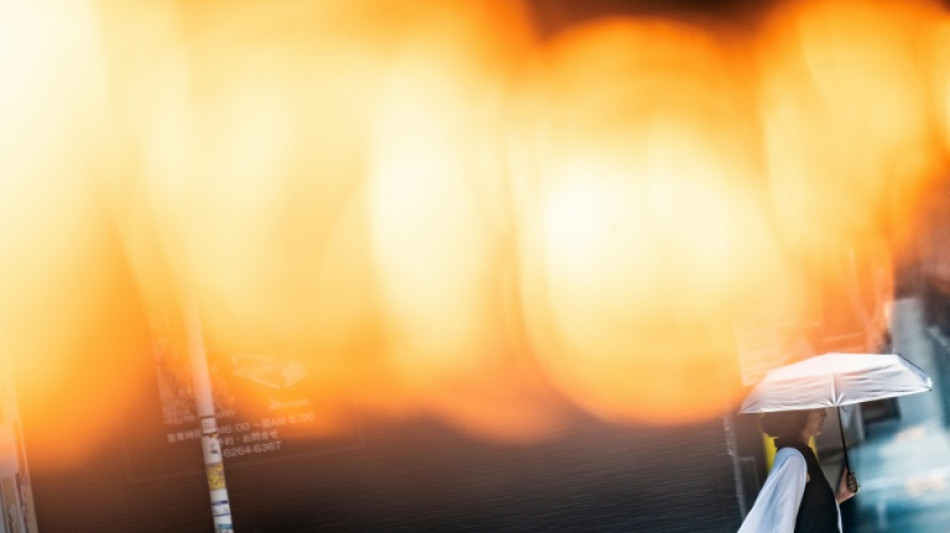
"Now I understand why (Japanese) clothing is loose, why they wear the umbrellas all the time. I mean, it is extreme. And I agree with that term," Gueta said.
"Since it's like this in mid-July, I wonder what's going to happen in August. I'm worried," said Japanese university student Nukochama, 24.
"I carry a big fan like this, fully charged, so I can turn it on anytime."
R.Lin--ThChM