Food security fears mount as UK farmers battle drought / Photo: © AFP

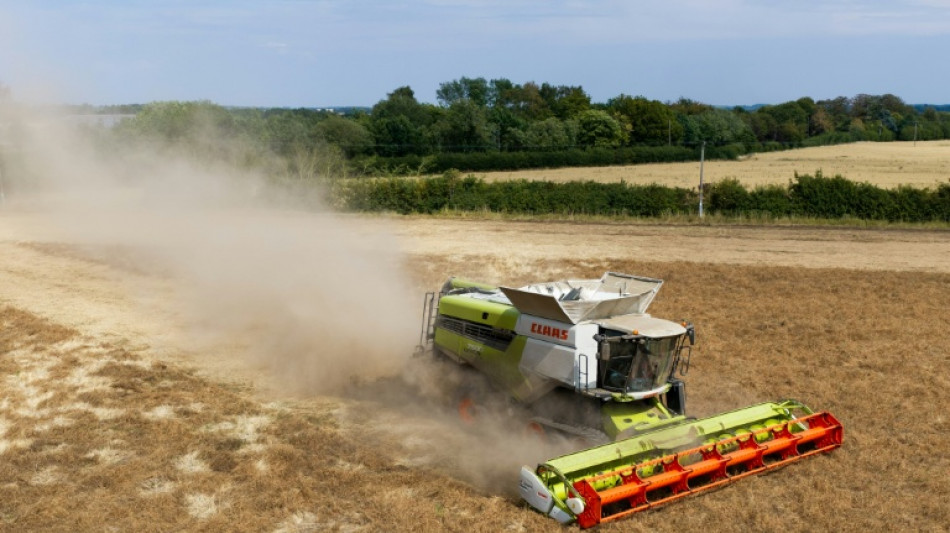
Giant dust clouds rose from a green-red combine harvester as it crawled across a parched field, a sign that something was awry with UK farmer John Pawsey's land.
"It suddenly, completely dried out," Pawsey said. For weeks the drought "just seems to have gone on for ever" on his farm in the eastern county of Suffolk.
English farmers have been contending with the driest July ever recorded by the Met Office weather agency -- unwelcome news for those like Pawsey who have only seen paltry yields of crops such as oats, wheat and vetch.
Concern over food security has gripped Britain's headlines amid a series of heatwaves this year.
"All of our fears were realised when we got our combines into the field and realised that actually the yield was ... between 25 and 30 percent down," Pawsey said.
His family has tilled the Suffolk soil since a Scottish great-grandfather moved there, one of many farm workers who flocked south following the late 19th century agricultural depression.
Like his ancestors, Pawsey, 62, is navigating a turbulent future.
"I am worried about the coming years," he admitted.
The drought is the most recent weather-related challenge to hit the nation's farmers over the past five years.
Food growers must learn to adapt, Pawsey urged, adding dynamic farmers should view the changing climate as an "opportunity."
His organic farm has experimented with new crops, like fava beans and chickpeas more suited to hotter, drier climates, and techniques to build resilience such as pairing two different crops in the same field to force them to grow as they compete for space and nutrients.
The government needs to support farmers in "making a transition" towards using similar methods, Pawsey argued.
Food security expert Timothy Benton endorses farming less intensively, saying "a more circular, diverse farming system" would be more secure and less dependant on imports of such things as fruits and fertilisers.
"Climate impacts will become greater," Benton told AFP, adding "food systems will have to change".
"We're not investing enough in the forms of technological innovation to address a larger crisis," he said.
Benton argued: "Food is not just food, it's what you grow, produce and the products and processes needed to bring it to the general population."
- Different menu -
Climate change could also force Britain to change its eating habits, said Nicola Cannon, professor at the Royal Agricultural College. She has been growing soya with the aim of introducing it to more British farms.
Dinnertime staples have been hit especially hard by the drought. This year's pea yield was only "50 percent of what we wanted," Cannon said.
They had little chance to grow, as there has been "very little moisture since March," she added.
On Pawsey's Suffolk farm, an entire crop of quinoa failed.
"We just had no rain," he said. "The only things that started growing were docks (leaves) and thistles."
Shortages of certain foods may result if drought conditions continue, National Farmers' Union president Tom Bradshaw told the BBC.
"We have taken our food supply for granted for far too long," he warned.
Lower yields make farming less profitable, meaning farmers will lack capital to invest in adaptation and experimenting with new crops.
Buying seasonal British produce gives "farmers more market certainty which allows them to invest in adaptations," Cannon said.
"We've invested too much in worrying about wheat genetics and not enough about farming systems," expert Benton said.
"Food security is national security," Prime Minister Andy Burnham's spokesperson said earlier this week.
The government has promised "record investment in water infrastructure, including nine new reservoirs," they added.
Adapting food systems will require greater state intervention, Benton added.
"Change will be much more expensive," he said, warning that "things are going to get worse in the decades ahead."
Pawsey said that if weather trends continue, "farmers will go out of business."
"It'll either mean higher prices or the government will have to continue to support farmers," he said.
K.Lam--ThChM