The China Mail - El Nino weather pattern enters record territory: scientist

USD -
AED 3.672987
AFN 64.505413
ALL 79.681969
AMD 363.314944
ANG 1.790365
AOA 917.999867
ARS 1514.224301
AUD 1.403706
AWG 1.8025
AZN 1.69611
BAM 1.703184
BBD 2.013646
BDT 122.674864
BGN 1.683441
BHD 0.37701
BIF 2995
BMD 1
BND 1.27508
BOB 9.817864
BRL 5.108797
BSD 0.999813
BTN 95.741151
BWP 13.568577
BYN 3.014404
BYR 19600
BZD 2.010772
CAD 1.40301
CDF 2309.999892
CHF 0.821399
CLF 0.024005
CLP 947.870031
CNY 6.695398
CNH 6.69284
COP 3203.86
CRC 447.264035
CUC 1
CUP 26.5
CVE 96.354668
CZK 21.210995
DJF 177.720035
DKK 6.519602
DOP 55.480032
DZD 133.826665
EGP 51.919974
ERN 15
ETB 163.266874
EUR 0.872098
FJD 2.237703
FKP 0.746662
GBP 0.747915
GEL 2.598711
GGP 0.746662
GHS 11.514967
GIP 0.746662
GMD 73.499164
GNF 8755.000583
GTQ 7.630277
GYD 209.132512
HKD 7.84585
HNL 26.838338
HRK 6.570701
HTG 130.669151
HUF 315.286007
IDR 17876
ILS 3.01405
IMP 0.746662
INR 95.79565
IQD 1309.739445
IRR 1374849.99978
ISK 120.510281
JEP 0.746662
JMD 157.569319
JOD 0.708978
JPY 157.482503
KES 129.500773
KGS 87.449497
KHR 4051.153211
KMF 430.000028
KPW 900.000318
KRW 1374.409894
KWD 0.30843
KYD 0.833134
KZT 448.570296
LAK 22396.2937
LBP 89529.353879
LKR 330.474084
LRD 172.957769
LSL 16.267765
LTL 2.95274
LVL 0.60489
LYD 6.368434
MAD 9.527745
MDL 17.560513
MGA 4363.785198
MKD 53.573917
MMK 2099.622693
MNT 3595.947098
MOP 8.079142
MRU 40.181308
MUR 47.660011
MVR 15.450175
MWK 1733.583555
MXN 17.224102
MYR 4.078017
MZN 63.910189
NAD 16.267765
NGN 1329.22987
NIO 36.79288
NOK 9.442503
NPR 153.18619
NZD 1.74909
OMR 0.384502
PAB 0.999726
PEN 3.37493
PGK 4.452592
PHP 62.748954
PKR 277.059879
PLN 3.789701
PYG 5950.431935
QAR 3.654295
RON 4.591022
RSD 102.300338
RUB 83.749319
RWF 1470.6766
SAR 3.755068
SBD 8.000512
SCR 13.878121
SDG 601.501353
SEK 9.838485
SGD 1.27635
SHP 0.747524
SLE 24.649683
SLL 20969.491881
SOS 571.358904
SRD 37.710504
STD 20697.981008
STN 21.335609
SVC 8.747562
SYP 13002.000254
SZL 16.265572
THB 33.250311
TJS 9.222905
TMT 3.51
TND 2.943779
TOP 2.40776
TRY 48.801798
TTD 6.793432
TWD 31.733299
TZS 2640.002957
UAH 44.758256
UGX 3929.235445
UYU 40.171729
UZS 11826.842692
VES 847.485098
VND 26022.5
VUV 117.918556
WST 2.750287
XAF 572.058947
XAG 0.015151
XAU 0.00023
XCD 2.70255
XCG 1.801858
XDR 0.707052
XOF 572.058947
XPF 103.856068
YER 236.550209
ZAR 16.251198
ZMK 9001.198309
ZMW 19.520776
ZWL 321.999592
SSP 5712.013969
MXV 1.952361
  • CMSC

    0.0400

    20.75

    +0.19%

  • BCC

    0.5500

    76.24

    +0.72%

  • NGG

    -0.0800

    76.72

    -0.1%

  • AZN

    2.4550

    168.535

    +1.46%

  • RIO

    -0.2800

    97.09

    -0.29%

  • BTI

    0.0400

    55.87

    +0.07%

  • GSK

    0.9350

    51.155

    +1.83%

  • CMSD

    0.0190

    20.469

    +0.09%

  • BCE

    -0.0450

    22.015

    -0.2%

  • RELX

    -0.0300

    33.38

    -0.09%

  • JRI

    -0.0360

    11.514

    -0.31%

  • BP

    -1.3050

    43.275

    -3.02%

  • VOD

    0.0980

    17.048

    +0.57%

  • RYCEF

    -0.0100

    19.99

    -0.05%

  • RBGPF

    -1.6900

    68.3

    -2.47%

El Nino weather pattern enters record territory: scientist
El Nino weather pattern enters record territory: scientist / Photo: © AFP/File

El Nino weather pattern enters record territory: scientist

The strengthening El Nino weather pattern has tied for the most intense on record on a widely-used metric, a senior scientist told AFP Monday, even as its influence is already being felt from Central America to Indonesia.

Text size:

Zeke Hausfather, a climatologist at Berkeley Earth and co-author of comprehensive climate change reports for the United Nations, said that the sea surface temperature anomaly in the tropical Pacific now stands at 3.07C, which ties with the 2015-2016 El Nino.

"This month (September) is very likely to have the highest monthly anomalies on record, barring something quite unexpected in the coming week," he said in an email.

Hausfather's figures, published on the Climate Brink dashboard, draws on the National Oceanic and Atmospheric Administration (NOAA) satellite-and-buoy sea surface record.

They are based on how much daily sea surface temperatures in the Nino 3.4 region -- an imaginary box in the Pacific -- are above a 30-year-average.

But NOAA itself has shifted to a newer method called the Relative Oceanic Nino Index (RONI), which gauges warming in the Nino 3.4 region against warming across the whole tropical belt. The goal of this change is to account better for the impacts of climate change heating oceans in general.

On that metric, the numbers run lower, and the current El Nino is still below the record, though expected to eventually break it.

El Nino is the warming phase of a natural cycle in the tropical Pacific known as the El Nino-Southern Oscillation (ENSO).

It sets in when trade winds that blow from east to west temporarily ease up, allowing warm water which normally piles up in the western Pacific Ocean to slide back east and rise to the surface.

When those warmer-than-average surface temperatures last for a few months, they cause more storms and clouds over the region, which in turn cause ripple effects through the entire global atmosphere.

The upshot is hotter and drier conditions in some places, cooler and wetter in others.

Human-caused climate change can increase El Nino's impacts. A warmer atmosphere holds more moisture, so El Nino-linked rains can turn more extreme. It also dries out soil, deepening drought where El Nino brings it.

Scientists aren't in full agreement about whether climate change intensifies El Ninos themselves, but a recent study based on coral skeletons found there had been "striking amplification" of El Ninos in the past 40 years compared to the pre-industrial period.

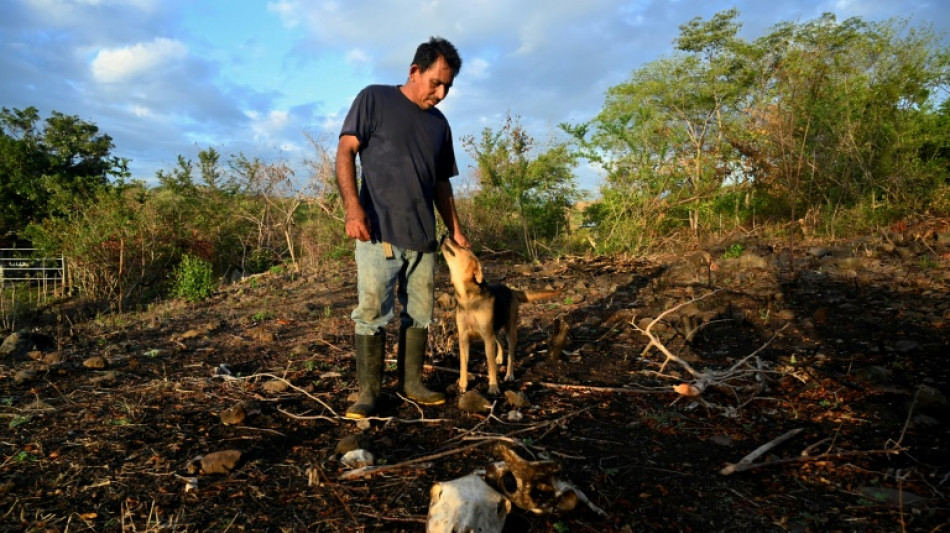
This El Nino is already hitting some regions hard, including in Central America, where animals and crops are dying from drought. Lack of water also poses huge problems for the Panama Canal.

Five percent of global trade passes through the waterway linking the Atlantic and Pacific. It cannot function without the reservoir water it uses to power locks that lift and lower ships at the start and end of their passage, and authorities have had to slash traffic through the canal.

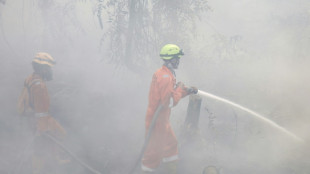
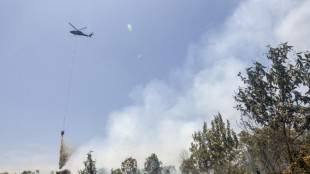
In Indonesia, it is blamed for drought that has fueled wildfires which have wrought havoc on the vast archipelago.

H.Au--ThChM