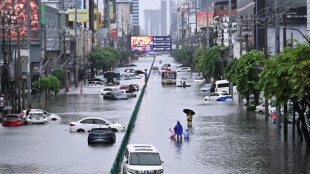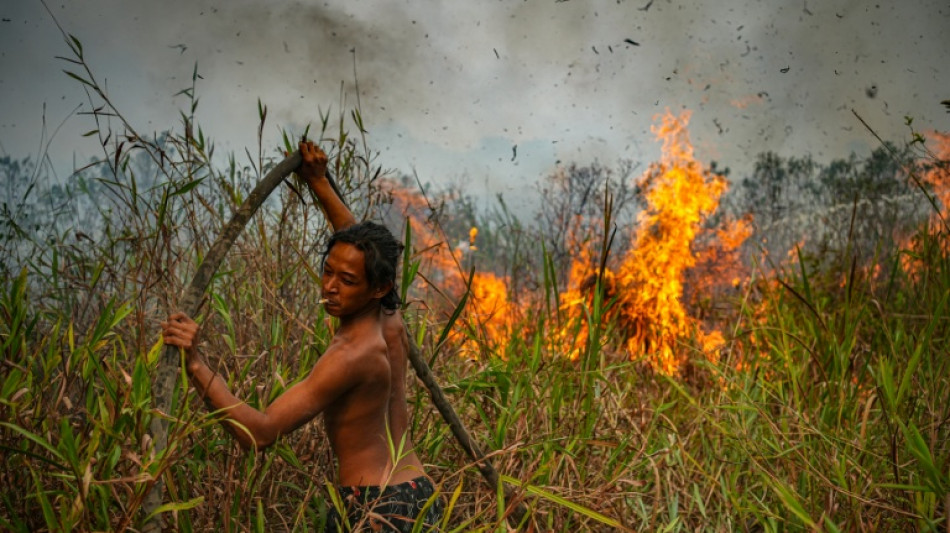
The wildfires choking Indonesia, sparking regional haze / Photo: © AFP/File

For weeks, Indonesia has been battling fires that have burned vast swathes of forest and peat ecosystems, causing toxic haze to blanket parts of the country, Malaysia and Singapore.
The fires have harmed humans and animals alike, and prompted criminal charges, license suspensions and a presidentially mandated new agency to tackle fires in peat ecosystems.
Here's what to know:
- What is the latest situation? -
Between January and July alone, more than 202,000 hectares (780 square miles) were razed by fire, according to government figures. That is an area roughly three times the size of the capital Jakarta, and represents a 69-percent increase in burned areas in the same period last year.
But the figures have not been updated since, and the burning has only worsened.
The Nusantara Atlas project, which uses satellite monitoring, estimates nearly 896,000 hectares -- over five times the size of Greater London -- had burned by the end of August.
South Papua province on the country's easternmost island was the most-affected region, with over 168,000 hectares burned as of August, according to Nusantara Atlas.
NGO Yayasan Pusaka Bentala Rakyat said fires have been detected inside a large-scale government food estate project in South Papua, local media reported.
- What is causing the fires? -
The El Nino weather phenomenon typically brings dry conditions to Indonesia, and this cycle is predicted to be among the strongest in decades and last until early 2027.
But experts said human factors are also key, including slash-and-burn land-clearing and decades of forest degradation that have changed the naturally fire-resistant landscape.
"El Nino isn't actually the cause, but it's a trigger. There still needs to be an ignitor," IPB University forestry lecturer Ati Dwi Nurhayati told AFP.
"We know that in peatlands, almost 100 percent (of the fires) was caused by human activity."
Peat ecosystems are dense layers of partially decomposed organic materials that are normally waterlogged. But in much of Indonesia they have been dried out so the land can be planted. This created highly flammable regions.
Once peat catches fire, it can smoulder and reignite for days, making firefighting efforts complex.
In the first eight months of this year, over 212,000 hotspots have been detected inside peat ecosystems across the country, according to NGO Pantau Gambut.
The figure was more than double that recorded during 2015's strong El Nino.
- What is the government's response? -
Indonesia has deployed firefighters assisted by volunteers across affected areas, and used cloud-seeding and water-bombing, with limited success. Malaysia and Japan have also offered assistance.
Authorities revoked the permits of five companies accused of contributed to the fires, with dozens more frozen.
President Prabowo Subianto last week ordered the creation of a new government agency to manage tropical peat and mangrove ecosystems and carry out fire prevention.
Indonesia set up a similar agency after the 2015 fires, initially tasked with peat and expanded to mangroves in 2020. But its mandate was not renewed when it expired in 2024.
In 2015, fires burned more than two million hectares in Indonesia, costing an estimated $16.1 billion in damages, according to the World Bank.
But the agency's establishment has been met with some scepticism.
"The important thing is to ensure that this agency's mandate can answer the issue of peat management, not just introduce a new structure," Pantau Gambut senior campaigner Putra Saptian said in a statement.
- What are the impacts? -
Indonesia's health ministry said last week that cases of respiratory illness have climbed past 170,000 in haze-hit provinces across Sumatra and Borneo.
The blazes have also had a devastating impact on wildlife.
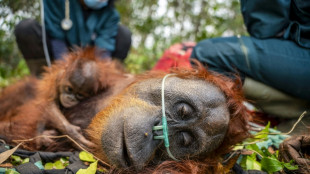
Indonesian authorities have rescued 100 animals, including 53 orangutans, that were threatened by the blazes, a forestry ministry official said last week.
In Borneo, fires have been detected within habitats containing 52 percent of the island's orangutan population, the International Union for Conservation of Nature said.
The haze has spread beyond Indonesia's border, drifting particularly into Malaysian Borneo's Sarawak state where schools have periodically closed because of the smog.
It has also reached Singapore and even caused declining air quality in the Philippines and southern Thailand.
C.Smith--ThChM