Australia touts new funds for Pacific infrastructure at Fiji 'pre-COP' / Photo: © AFP

Australia announced new funds aimed at protecting frontline communities and infrastructure in the Pacific from the impacts of climate change on Wednesday, at a summit aimed at drawing the world's attention to life on the frontline of global warming.
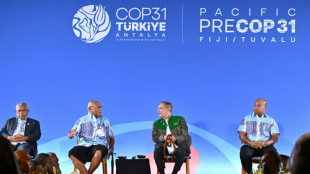
This week's "pre-COP" meetings in the Fijian city of Nadi are a precursor to the larger UN-sponsored global climate summit -- known as COP31 -- to be held in Turkey next month.
The South Pacific is among the regions of the world most vulnerable to global warming -- from rising seas jeopardising homes to increasing temperatures causing coral bleaching.
Speaking on the sidelines of the pre-COP on Wednesday, Papua New Guinea Prime Minister James Marape told journalists it was an issue of "morality".
"Nations who have sovereign borders are facing the threat of being nations no more," he said.
"We live with the burden of decisions made elsewhere."
On Wednesday, the Australian government said it would invest AU$3 million (US$2 million) on a number of regional road and communications infrastructure projects in Papua New Guinea, Fiji, Kiribati and Tuvalu.
Australia's climate minister Chris Bowen said the funds would "help these countries adjust to climate change, particularly focused on the coastlines with erosion, with rising sea levels".
Pacific nations have used the pre-COP to push for a "just transition" with more support for the countries most affected by climate change.
"For our countries, it's not a distant threat; it's happening to us right now, and we need to be able to help our people to survive," Fiji's climate minister Lynda Tabuya said as her government announced $10 million towards the Pacific Resilience Facility fund.
A UN report released in August found developing countries needed $310 billion-$365 billion to adapt, yet had only $26 billion in adaptation finance available in 2023.
- 'Frontline' of climate change -
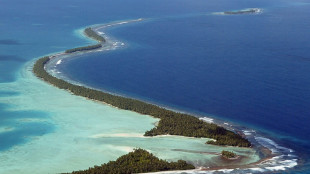
On Tuesday, over a dozen leaders visited the nearby Pacific nation of Tuvalu -- one of the world's least-visited countries already laying plans to relocate its population of 10,600 if the island nation is consumed by the ocean.
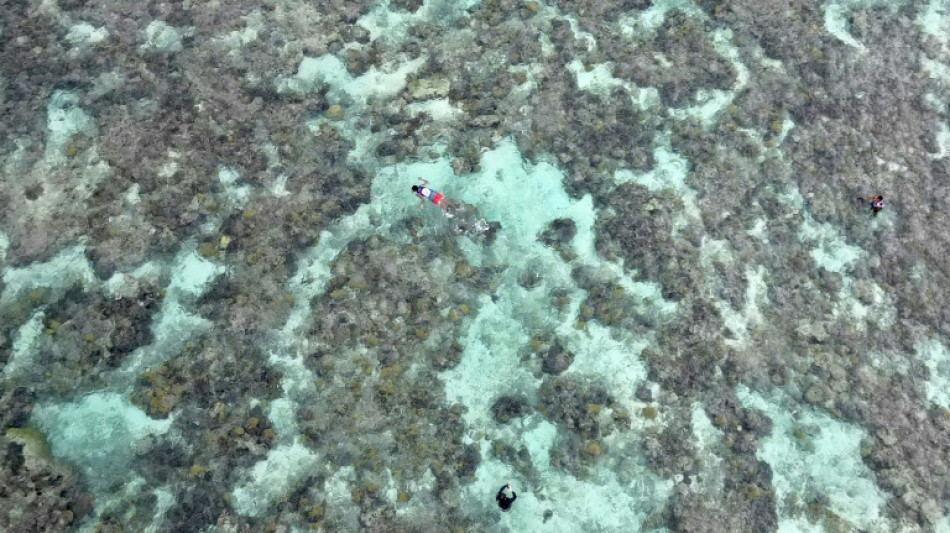
A marine heatwave in 2024 wiped out an estimated 99.9 percent of the coral that built the remote Tuvalu islands.
With just a few hours on the remote archipelago before flying back to Fiji, there was a rush from organisers to get in as many events as possible.
"The objective of this Tuvalu event is for you, leaders, to experience and feel climate change first-hand, from being in the frontline of the impact of climate change," Tuvalu Prime Minister Feleti Teo told visiting officials.
But Australia drew criticism from a Tuvalu government adviser, who accused Prime Minister Anthony Albanese of disrespect by not wearing a traditional headpiece during an event and for overstepping during the running of the visit.
Australia is head of this year's climate negotiations but has faced accusations of hypocrisy given its role as a major coal exporter.
O.Tse--ThChM