The China Mail - Cocaine market sees new players, bananas and Amazon submarines: report

USD -
AED 3.672498
AFN 63.999753
ALL 81.264432
AMD 360.339845
ANG 1.789785
AOA 917.000425
ARS 1545.105597
AUD 1.451325
AWG 1.8025
AZN 1.702165
BAM 1.75029
BBD 2.013844
BDT 124.537437
BGN 1.747831
BHD 0.377772
BIF 2991.837758
BMD 1
BND 1.281347
BOB 11.99429
BRL 5.492901
BSD 0.999897
BTN 93.858629
BWP 13.774679
BYN 2.994523
BYR 19600
BZD 2.011053
CAD 1.40974
CDF 2315.000042
CHF 0.820355
CLF 0.024869
CLP 978.689807
CNY 6.688502
CNH 6.66964
COP 3242.07
CRC 453.465426
CUC 1
CUP 23.998962
CVE 98.678647
CZK 21.814499
DJF 178.065763
DKK 6.702095
DOP 60.760377
DZD 136.35964
EGP 53.915701
ERN 15
ETB 164.116992
EUR 0.89656
FJD 2.265599
FKP 0.741654
GBP 0.74795
GEL 2.605004
GGP 0.741654
GHS 11.683738
GIP 0.741654
GMD 74.509811
GNF 8856.154607
GTQ 7.64085
GYD 209.627114
HKD 7.840103
HNL 26.875436
HRK 6.76901
HTG 131.052321
HUF 325.597991
IDR 18109.05
ILS 3.18377
IMP 0.741654
INR 94.00895
IQD 1515.921743
IRR 1891353.000292
ISK 122.650321
JEP 0.741654
JMD 158.687685
JOD 0.708952
JPY 158.217503
KES 129.869904
KGS 87.447798
KHR 4073.961373
KMF 440.999591
KPW 899.999961
KRW 1361.420139
KWD 0.31096
KYD 0.833408
KZT 448.201333
LAK 22494.272623
LBP 89542.808303
LKR 332.502562
LRD 169.993019
LSL 16.535754
LTL 2.95274
LVL 0.60489
LYD 6.398697
MAD 9.7739
MDL 17.8737
MGA 4543.684976
MKD 55.2191
MMK 2099.952938
MNT 3601.972253
MOP 8.072028
MRU 40.368171
MUR 47.029821
MVR 15.454983
MWK 1733.939535
MXN 18.634905
MYR 4.059922
MZN 63.910031
NAD 16.536864
NGN 1347.530078
NIO 36.79922
NOK 9.43215
NPR 150.173627
NZD 1.801655
OMR 0.384493
PAB 0.999964
PEN 3.444468
PGK 4.556905
PHP 63.122498
PKR 276.535369
PLN 3.94083
PYG 6249.384815
QAR 3.654602
RON 4.788703
RSD 105.367008
RUB 81.897795
RWF 1475.916015
SAR 3.754695
SBD 8.051718
SCR 13.744538
SDG 601.498241
SEK 9.87942
SGD 1.282065
SHP 0.745545
SLE 22.909884
SLL 20969.504398
SOS 571.446471
SRD 37.5835
STD 20697.981008
STN 21.925605
SVC 8.748764
SYP 13001.999685
SZL 16.531226
THB 33.559502
TJS 9.224126
TMT 3.51
TND 2.991995
TOP 2.40776
TRY 50.157501
TTD 6.780829
TWD 32.752987
TZS 2642.495565
UAH 45.297
UGX 4089.81484
UYU 40.226773
UZS 11931.108854
VES 893.76898
VND 25582.5
VUV 119.513361
WST 2.778515
XAF 588.104602
XAG 0.019283
XAU 0.000246855371
XCD 2.70255
XCG 1.801976
XDR 0.707052
XOF 588.104602
XPF 106.728476
YER 236.174982
ZAR 16.520085
ZMK 9001.194649
ZMW 20.318702
ZWL 321.999592
SSP 5745.196153
MXV 2.0965
  • RYCEF

    0.4000

    19.71

    +2.03%

  • CMSC

    0.0000

    20.4

    0%

  • BTI

    0.4200

    56.05

    +0.75%

  • BP

    0.2800

    44.43

    +0.63%

  • RBGPF

    1.6000

    67

    +2.39%

  • RIO

    -0.1500

    94.41

    -0.16%

  • AZN

    -0.4300

    166.15

    -0.26%

  • GSK

    0.4600

    49.7

    +0.93%

  • BCE

    -0.4100

    20.56

    -1.99%

  • NGG

    -0.2500

    75.24

    -0.33%

  • VOD

    -0.0400

    16.58

    -0.24%

  • RELX

    -0.4500

    33.07

    -1.36%

  • BCC

    -0.5500

    76.59

    -0.72%

  • CMSD

    -0.0300

    20.27

    -0.15%

  • JRI

    -0.2500

    10.77

    -2.32%

Cocaine market sees new players, bananas and Amazon submarines: report
Cocaine market sees new players, bananas and Amazon submarines: report / Photo: © AFP/File

Cocaine market sees new players, bananas and Amazon submarines: report

The global cocaine market is changing.

Text size:

Colombia is still the biggest producer of the drug, but other actors are taking an ever bigger role in manufacturing and distributing it, according to a report based on thousands of Colombian prosecutor's files leaked by hackers.

A group of around a hundred journalists has deciphered some seven million emails and 38,000 files leaked by the Guacamaya hacktivist group which in 2022 broke into the computer systems of security agencies and armies from Mexico, Chile, Peru, Salvador and Colombia.

The so-called "Narcofiles" report outlines the networks of cocaine production and trafficking around the world.

"The market is changing," Nathan Jaccard, Latin America editor for the Organized Crime and Corruption Reporting Project (OCCRP), a consortium of investigative journalists which accessed the files, told AFP.

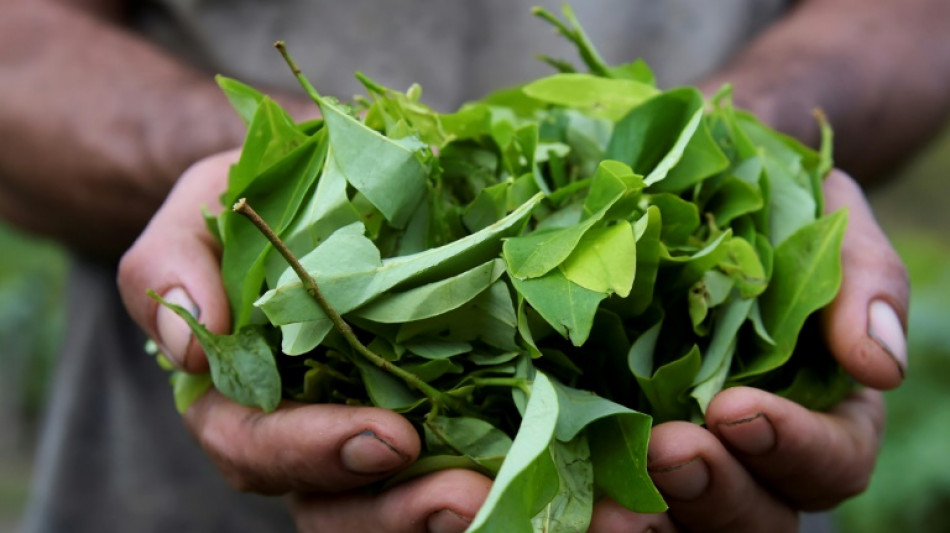
Colombia cultivated a record 230,000 hectares of coca leaf in 2022, and produced 1,738 tonnes of cocaine, according to the United Nations.

However, the country's cocaine trade has been hard hit by falling coca leaf prices and the emergence of new, synthetic drugs such as fentanyl.

The "Narcofiles" report shows that Mexican, Albanian, Brazilian, Ecuadorian and Israeli groups are starting to gain power in the global drug trade.

"Colombia no longer plays a leading role in the international drug trafficking chain," explains Elizabeth Dickinson, an analyst at Crisis Group.

A leaked memorandum between Colombia and Israel describes a "significant increase" in crimes committed in the South American country by Israelis attracted by sex tourism and linked, according to local authorities, to cocaine trafficking.

- Bananas and submarines -

The "Narcofiles" also revealed the growing role of the banana industry in the export of cocaine, and an increase in trafficking along routes such as the Amazon River, from which more and more submarines loaded with cocaine head to the Atlantic.

According to the European Commission, 70 percent of drug seizures in Europe take place at ports. Traffickers use banana shipments to hide their goods, as fresh produce passes customs checks more quickly.

Another new hotspot in the cocaine market is the triple border point where Peru, Colombia and Brazil meet in the Amazon.

This region was "relatively calm 15 years ago", said Jaccard.

The report also reveals that coca leaf plantations have multiplied in Central America and Mexico, while coca paste is increasingly being processed in laboratories in Europe.

"Drug traffickers are deciding to move closer to the markets" to reduce costs and risks, while maximizing profits, Jaccard explained.

Some of the changes mean that Colombian cartels and their kingpins, the likes of Pablo Escobar, no longer "run the show," said Dickinson.

Although large criminal structures such as the Clan del Golfo, the world's leading producer of cocaine, continue to operate in the country, "we are witnessing a process of atomization of groups" which reduces their power, said Jaccard.

Z.Ma--ThChM