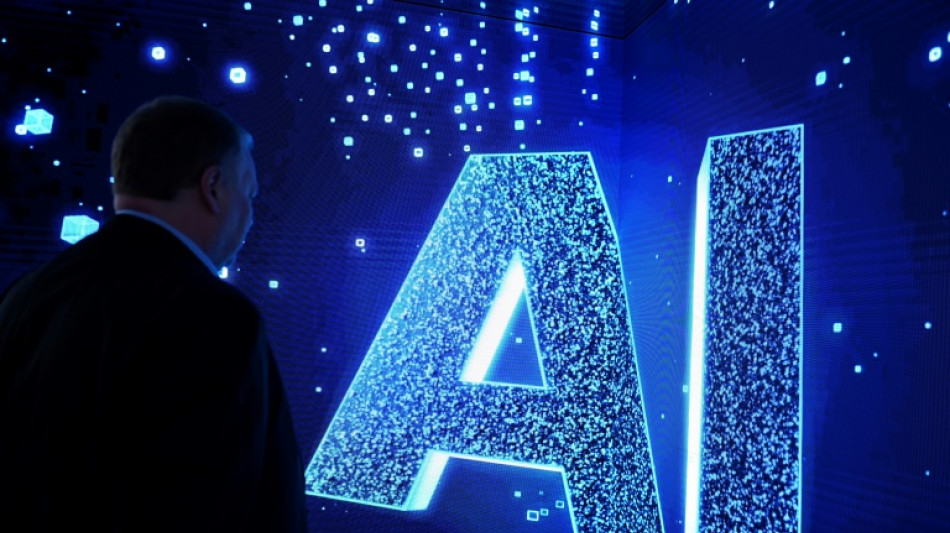
AI vs humans: influencers face competition from virtual models / Photo: © AFP

Social media influencers have embraced artificial intelligence to spice up their content but they are also facing growing competition from AI-generated Instagramers, TikTokers and YouTubers.
Sporting pink hair and posing in lingerie, swimsuits or gym outfits, Aitana Lopez has more than 300,000 followers on Instagram where she is described as a "gamer at heart" and "fitness lover" -- except she's not real.
Aitana was created by The Clueless, a Barcelona-based company that describes itself as an "AI modeling agency" run by "visionaries on a mission to redefine the world of influencers".
Sofia Novales, project manager at The Clueless, said the "rising costs associated with human influencers" was a reason behind the company's creation.
"Virtual models, being digital, present a more economical alternative," Novales said.
Another plus: total control over content.
"The advantages lie in unparalleled creative control, allowing seamless decision-making on image, fashion, and aesthetics without the need for physical photoshoots," Novales said.
The rise of AI has fuelled concerns about the proliferation of deepfake videos that could be used maliciously.
Meta, owner of Facebook and Instagram, said Friday it would start putting "Made with AI labels" on AI-generated content in May.
AI presents a huge business opportunity for content creators: The influencer market is expected to grow rapidly, from $16.5 billion in 2022 to nearly $200 billion by 2032, according to Allied Market Research.
- Younger audience -
Using virtual influencers is not new: Barbie already has millions of followers on Instagram.
But they are now being used in advertisements where they can't be told apart from a real person.
Take Lil Miquela, a "19-year-old Robot living in LA" created by a California agency in 2016.
With 2.6 million followers on Instagram and 3.5 million on TikTok, Lil Maqueta has promoted brands as big as BMW.
The idea was to "create something never seen before," the German premium carmaker said in a statement to AFP.
"Attracting a younger, technology-savvy generation is for us the icing on the cake," it said.
Maud Lejeune, who heads up the Paris-based digital strategy agency AD Crew, said that it isn't difficult for the public to accept AI influencers.
"It's like actors on TV: we know it isn't real yet we follow them and we find it interesting, it's like watching a mini-series."
AD Crew represents more than 30 influencers, but Lejeune created her own virtual influencer, Metagaya, two years ago.
"The current level of design didn't exist then. It's technical, you've got to dress them, take photos for the background, create a story," said Lejeune, acknowledging that Metagaya didn't turn out very well.
The rapid technological progress brought by the likes of OpenAI's Sora video generator could make it easier to create and operate realistic virtual influencers.
- Deepfakes -
Human influencers are also seizing on AI technology to make better videos.
France's Charles Sterlings sees an opportunity to improve translations.
He uses different tools on platforms like HeyGen and Rask.ai to automatically translate and lip-sync his video posts into English and Spanish.
Sterlings also uses Deepshot, a platform that allows users to create deepfakes by changing the words and mouth movement of people in real videos.
He said it took him just a few minutes and a few dollars to manipulate a video of French President Emmanuel Macron.
But Sterlings sees the technology as a competitor as well as a useful tool.
"Anyone with a phone can be an influencer. But eventually, it will be artificial intelligence, available 24 hours a day, and much cheaper to develop," he said.
For Maud Lejeune, AI can help influencers produce more content.
"It's tough to put yourself in front of the camera for a long time and certain creators burn out... Maybe AI will provide a new way to create without exposing oneself," she said.
The Clueless has no qualms about its AI models taking away business from real influencers.
"We don't foresee real models becoming obsolete or replaced by AI-generated models like Aitana," said Novales. "In our view, they can coexist as another competition of the industry."
J.Liv--ThChM