
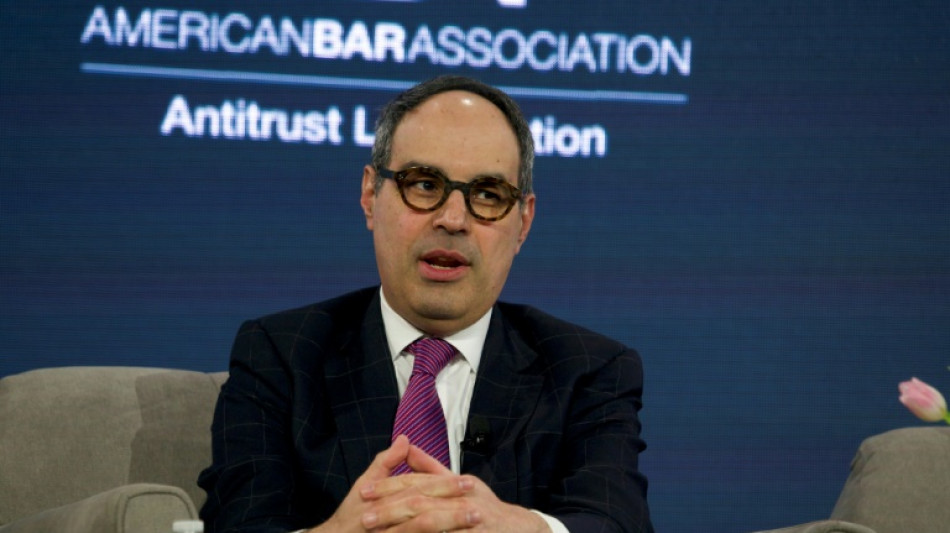
After long peace, Big Tech faces US antitrust reckoning / Photo: © AFP

After more than a decade of leaving Big Tech largely to itself, US antitrust enforcers have cranked up the heat, with several high-profile cases underway that could radically change the way the industry's giants do business.
Launched under both the Trump and Biden administrations, five major cases from the Federal Trade Commission (FTC) and the Department of Justice (DOJ) are moving forward against major US technology companies -- including two against Google that could see the company split up.
The most recent came in March against Apple by the FTC, which alleges the iPhone maker abuses its dominance of the premium smartphone sector.
Washington had largely remained silent on Big Tech cases since its wars with Microsoft that began in the 1990s and ended in a settlement in the early 2000s, after a bruising battle with the DOJ.
Inspired by moves in Europe and elsewhere, the new generation of cases allege that the practices of tech giants including Amazon and Meta stifle competition, harm consumers, and warrant significant changes in business operations.
The cases are on different timelines, before different federal judges and are based on a wide variety of allegations. With appeals, the lawsuits could drag on as long as a decade.
The first case in the campaign, launched in 2020 against Google over its search engine, could have an initial decision as early as the end of this year.
In the second Google case, also brought by the DOJ, the company is targeted for its dominance of the digital advertising sector. Amazon and Meta meanwhile face cases with the FTC.
The suits have drawn applause from lawmakers, with frustration over the power of big tech companies running high with the public.
But many in the business community and legal profession have balked, seeing the lawsuits as legally thin or politically motivated.
The heads of the FTC and the DOJ's antitrust section adamantly stand by their cases, seeing their mission as a means to protect consumers.
"It's always good to kind of look at the actual facts rather than go off of the vibes," FTC chair Lina Khan told a conference in Washington, organized by the American Bar Association, in response to her critics.
"We're really addressing the pain points that affect people's lives including health care and digital (tech), but way, way beyond that," she said.
Instead of getting bogged down in legal theory, Khan said the FTC's cases were "fit for purpose in the year 2024."
"That means... not relying on outdated assumptions and theories that are clearly contravened with what we're seeing with our own eyes," she added.
- Legally creative? -
In an informal survey of 19 top antitrust scholars by University of Michigan Law professor Daniel Crane, a majority of respondents believed the cases would be difficult to prosecute.
"Gathering the overall sense, it's fair to say that there is an expectation that more of the cases will lose than win," Crane wrote, with the Google cases seen as the government's strongest and Amazon as the weakest.
Khan's critics point to widespread opinions in the legal community that the Biden administration's cases walk on thin legal ground.
"I'm kind of exasperated by these lawsuits, because they seem highly motivated, rather than based on sober legal and economic analysis," said Michael Santoro, a professor of management at Santa Clara University, who was not part of the survey.
A senior executive from a tech giant, on condition of anonymity, said that "ultimately they are turning antitrust law upside down."
Speaking in Washington with her US counterparts, the EU's competition czar Margrethe Vestager said she wished she had been more on the offensive in her earlier antitrust decisions.
"If I were to redo it, I would have been bolder, because we don't have a lot of time. Concentration is increasing in every jurisdiction," she said.
Vestager, in office for almost a decade, has pursued her own wave of cases against tech companies that have been accused of being far-fetched or legally creative.
In its latest tech-related decision, last month the EU hit Apple with a 1.8-billion-euro fine ($1.9 billion) for preventing music streaming services from offering subscription options outside of its App Store.
G.Fung--ThChM



