The China Mail - Environmental groups urge EU 'high risk' label for Sarawak

USD -
AED 3.673042
AFN 65.000368
ALL 81.503989
AMD 360.340403
ANG 1.789785
AOA 918.000367
ARS 1544.046724
AUD 1.454757
AWG 1.8
AZN 1.70397
BAM 1.75029
BBD 2.013844
BDT 124.537437
BGN 1.747831
BHD 0.37735
BIF 3010
BMD 1
BND 1.281347
BOB 11.99429
BRL 5.504904
BSD 0.999897
BTN 93.858629
BWP 13.774679
BYN 2.994523
BYR 19600
BZD 2.011053
CAD 1.41135
CDF 2320.000362
CHF 0.820469
CLF 0.02484
CLP 977.630396
CNY 6.676504
CNH 6.67282
COP 3251.53
CRC 453.465426
CUC 1
CUP 23.998962
CVE 99.403894
CZK 21.83445
DJF 177.720393
DKK 6.708504
DOP 60.750393
DZD 136.38704
EGP 53.769786
ERN 15
ETB 161.203874
EUR 0.896804
FJD 2.25525
FKP 0.741654
GBP 0.748671
GEL 2.59504
GGP 0.741654
GHS 11.68504
GIP 0.741654
GMD 74.503851
GNF 8857.503848
GTQ 7.64085
GYD 209.627114
HKD 7.84215
HNL 27.07504
HRK 6.76901
HTG 131.052321
HUF 326.000354
IDR 18108.5
ILS 3.18593
IMP 0.741654
INR 94.04725
IQD 1514
IRR 1891353.000352
ISK 122.790386
JEP 0.741654
JMD 158.687685
JOD 0.70904
JPY 158.50504
KES 129.950385
KGS 87.447804
KHR 4080.00035
KMF 442.00035
KPW 899.999961
KRW 1363.803789
KWD 0.31098
KYD 0.833408
KZT 448.201333
LAK 22505.000349
LBP 89550.000349
LKR 332.502562
LRD 170.303772
LSL 16.560381
LTL 2.95274
LVL 0.60489
LYD 6.430381
MAD 9.757504
MDL 17.8737
MGA 4595.000347
MKD 55.203803
MMK 2099.952938
MNT 3601.972253
MOP 8.072028
MRU 40.250379
MUR 47.030378
MVR 15.403739
MWK 1737.000345
MXN 18.62534
MYR 4.061504
MZN 63.903729
NAD 16.560377
NGN 1347.210377
NIO 36.610377
NOK 9.459904
NPR 150.173627
NZD 1.803102
OMR 0.384144
PAB 0.999964
PEN 3.442504
PGK 4.492039
PHP 63.108038
PKR 276.625038
PLN 3.94555
PYG 6249.384815
QAR 3.643038
RON 4.792204
RSD 105.586038
RUB 81.925564
RWF 1475
SAR 3.754695
SBD 8.048583
SCR 14.018084
SDG 601.503676
SEK 9.894504
SGD 1.282604
SHP 0.748923
SLE 22.950371
SLL 20969.504398
SOS 571.503662
SRD 37.583504
STD 20697.981008
STN 22.275
SVC 8.748764
SYP 13001.999685
SZL 16.560369
THB 33.550369
TJS 9.224126
TMT 3.5
TND 2.985504
TOP 2.40776
TRY 50.141304
TTD 6.780829
TWD 32.775304
TZS 2642.503628
UAH 45.297
UGX 4089.81484
UYU 40.226773
UZS 12000.000334
VES 896.316404
VND 25582.5
VUV 119.513361
WST 2.778515
XAF 588.264929
XAG 0.019249
XAU 0.00024594347
XCD 2.70255
XCG 1.801976
XDR 0.707052
XOF 588.264929
XPF 107.450363
YER 236.625037
ZAR 16.51847
ZMK 9001.203584
ZMW 20.318702
ZWL 321.999592
SSP 5745.196153
MXV 2.095424
  • RYCEF

    0.4000

    19.71

    +2.03%

  • CMSC

    0.0000

    20.4

    0%

  • BTI

    0.4200

    56.05

    +0.75%

  • BP

    0.2800

    44.43

    +0.63%

  • RBGPF

    1.6000

    67

    +2.39%

  • RIO

    -0.1500

    94.41

    -0.16%

  • AZN

    -0.4300

    166.15

    -0.26%

  • GSK

    0.4600

    49.7

    +0.93%

  • BCE

    -0.4100

    20.56

    -1.99%

  • NGG

    -0.2500

    75.24

    -0.33%

  • VOD

    -0.0400

    16.58

    -0.24%

  • RELX

    -0.4500

    33.07

    -1.36%

  • BCC

    -0.5500

    76.59

    -0.72%

  • CMSD

    -0.0300

    20.27

    -0.15%

  • JRI

    -0.2500

    10.77

    -2.32%

Environmental groups urge EU 'high risk' label for Sarawak
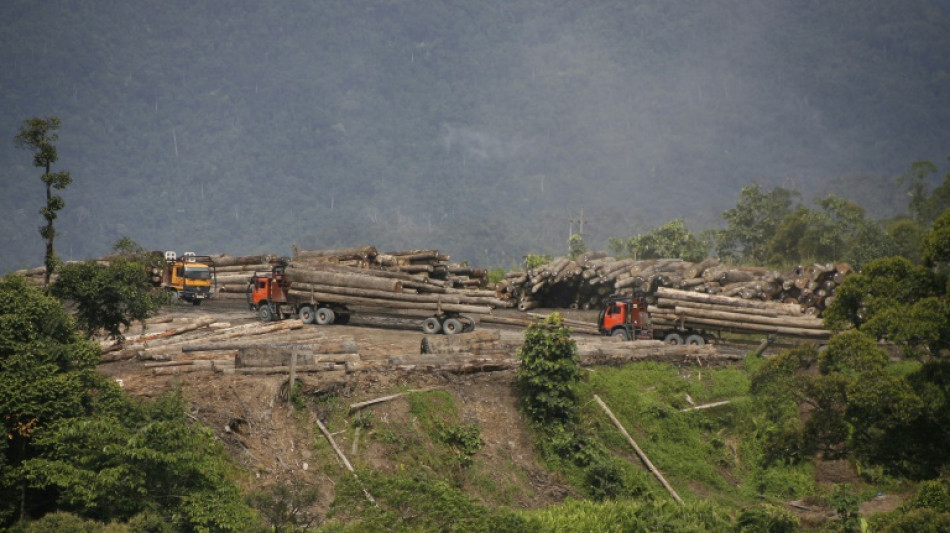
Environmental groups urge EU 'high risk' label for Sarawak / Photo: © AFP/File

Environmental groups urge EU 'high risk' label for Sarawak

Environmental and rights groups urged the European Union Tuesday to label Malaysia's Sarawak region "high risk" under controversial new anti-deforestation rules to be implemented from the end of December.

Text size:

The EU's deforestation regulation (EUDR) is due to come into force at the end of the year, although Germany and Brazil have recently joined a string of countries urging that implementation be delayed.

Environmentalists and rights groups have, however, called on the EU to move forward with the regulation.

It will bar imports of a vast range of goods -- from coffee to cocoa, soy, timber, palm oil, cattle, printing paper and rubber -- if they are produced on land that was deforested after December 2020.

It also requires exporters to assess the risk of rights violations associated with production of the commodity.

In a joint statement, a group of Malaysian and international organisations said Sarawak in Malaysian Borneo should be considered "high risk" under the new rules.

Such a designation would mean closer scrutiny of timber and palm oil imported from the region -- an unwelcome prospect for Malaysia, which is already pushing back against EUDR.

The NGOs argue Sarawak's government plans to convert hundreds of thousands of hectares of natural forest to timber plantations, and is granting companies operating leases in areas that have not been surveyed for protection purposes.

Earlier this year RimbaWatch, one of the signatory groups, warned that around 15 percent of Malaysia's natural forest is at risk because of concessions granted to companies.

Tuesday's statement also alleges routine violations of Indigenous land rights, including limits on the amount of land that can be legally recognised, and the unilateral revocation of existing land titles.

"Logging companies are still bulldozing Indigenous peoples' forests in Sarawak without consultation or consent from communities, which should translate into a 'high risk' classification," said Celine Lim, managing director of SAVE Rivers, an Indigenous organisation from Sarawak.

- Vocal opponents -

Sarawak's forestry department, and Malaysia's plantation and commodities ministry did not respond to AFP's request for comment on the claims.

Malaysia and Indonesia have been among the most vocal opponents of EUDR, arguing domestic anti-deforestation standards should be sufficient, and warning the rules will disproportionately harm smallholder producers who cannot meet onerous documentation requirements.

Environmental and rights groups have pushed back against these claims, including at talks in Brussels earlier this month between EU, Indonesian and Malaysian officials.

"Calls from EU governments to delay enforcement of the law are a deplorable abdication of leadership in the face of a climate emergency," said Luciana Tellez Chavez, senior environment and human rights researcher at Human Rights Watch.

C.Smith--ThChM