The China Mail - Report details fossil fuel threat to 'Amazon of the seas'

USD -
AED 3.673042
AFN 65.000368
ALL 81.264432
AMD 360.340403
ANG 1.789785
AOA 917.000367
ARS 1545.478604
AUD 1.456898
AWG 1.8
AZN 1.70397
BAM 1.75029
BBD 2.013844
BDT 124.537437
BGN 1.747831
BHD 0.37735
BIF 3010
BMD 1
BND 1.281347
BOB 11.99429
BRL 5.509404
BSD 0.999897
BTN 93.858629
BWP 13.774679
BYN 2.994523
BYR 19600
BZD 2.011053
CAD 1.412404
CDF 2320.000362
CHF 0.820325
CLF 0.02484
CLP 977.630396
CNY 6.676504
CNH 6.67316
COP 3251.42
CRC 453.465426
CUC 1
CUP 23.998962
CVE 99.403894
CZK 21.83804
DJF 177.720393
DKK 6.709604
DOP 60.750393
DZD 136.384359
EGP 53.819404
ERN 15
ETB 164.116992
EUR 0.89761
FJD 2.265604
FKP 0.741654
GBP 0.74895
GEL 2.60504
GGP 0.741654
GHS 11.68504
GIP 0.741654
GMD 74.503851
GNF 8857.503848
GTQ 7.64085
GYD 209.627114
HKD 7.839465
HNL 26.875436
HRK 6.76901
HTG 131.052321
HUF 326.120388
IDR 18112.25
ILS 3.18593
IMP 0.741654
INR 94.07415
IQD 1515.921743
IRR 1891353.000352
ISK 122.803814
JEP 0.741654
JMD 158.687685
JOD 0.70904
JPY 158.510385
KES 129.950385
KGS 87.447804
KHR 4080.00035
KMF 442.00035
KPW 899.999961
KRW 1363.703789
KWD 0.31098
KYD 0.833408
KZT 448.201333
LAK 22505.000349
LBP 89550.000349
LKR 332.502562
LRD 170.303772
LSL 16.560381
LTL 2.95274
LVL 0.60489
LYD 6.430381
MAD 9.757504
MDL 17.8737
MGA 4543.684976
MKD 55.266005
MMK 2099.952938
MNT 3601.972253
MOP 8.072028
MRU 40.250379
MUR 47.030378
MVR 15.403739
MWK 1737.000345
MXN 18.63815
MYR 4.059039
MZN 63.903729
NAD 16.560377
NGN 1347.250377
NIO 36.79922
NOK 9.468039
NPR 150.173627
NZD 1.804745
OMR 0.384501
PAB 0.999964
PEN 3.442504
PGK 4.556905
PHP 63.098504
PKR 276.535369
PLN 3.94255
PYG 6249.384815
QAR 3.654602
RON 4.792204
RSD 105.604038
RUB 81.998878
RWF 1475.916015
SAR 3.754695
SBD 8.051718
SCR 14.018084
SDG 601.503676
SEK 9.89954
SGD 1.283215
SHP 0.745545
SLE 22.910371
SLL 20969.504398
SOS 571.503662
SRD 37.583504
STD 20697.981008
STN 21.925605
SVC 8.748764
SYP 13001.999685
SZL 16.560369
THB 33.568038
TJS 9.224126
TMT 3.51
TND 2.985504
TOP 2.40776
TRY 50.154604
TTD 6.780829
TWD 32.807404
TZS 2642.503628
UAH 45.297
UGX 4089.81484
UYU 40.226773
UZS 11931.108854
VES 893.769038
VND 25582.5
VUV 119.513361
WST 2.778515
XAF 588.793837
XAG 0.019249
XAU 0.00024594347
XCD 2.70255
XCG 1.801976
XDR 0.707052
XOF 588.793837
XPF 106.728476
YER 236.175037
ZAR 16.55565
ZMK 9001.203584
ZMW 20.318702
ZWL 321.999592
SSP 5745.196153
MXV 2.096865
  • RYCEF

    0.4000

    19.71

    +2.03%

  • CMSC

    0.0000

    20.4

    0%

  • BTI

    0.4200

    56.05

    +0.75%

  • BP

    0.2800

    44.43

    +0.63%

  • RBGPF

    1.6000

    67

    +2.39%

  • RIO

    -0.1500

    94.41

    -0.16%

  • AZN

    -0.4300

    166.15

    -0.26%

  • GSK

    0.4600

    49.7

    +0.93%

  • BCE

    -0.4100

    20.56

    -1.99%

  • NGG

    -0.2500

    75.24

    -0.33%

  • VOD

    -0.0400

    16.58

    -0.24%

  • RELX

    -0.4500

    33.07

    -1.36%

  • BCC

    -0.5500

    76.59

    -0.72%

  • CMSD

    -0.0300

    20.27

    -0.15%

  • JRI

    -0.2500

    10.77

    -2.32%

Report details fossil fuel threat to 'Amazon of the seas'
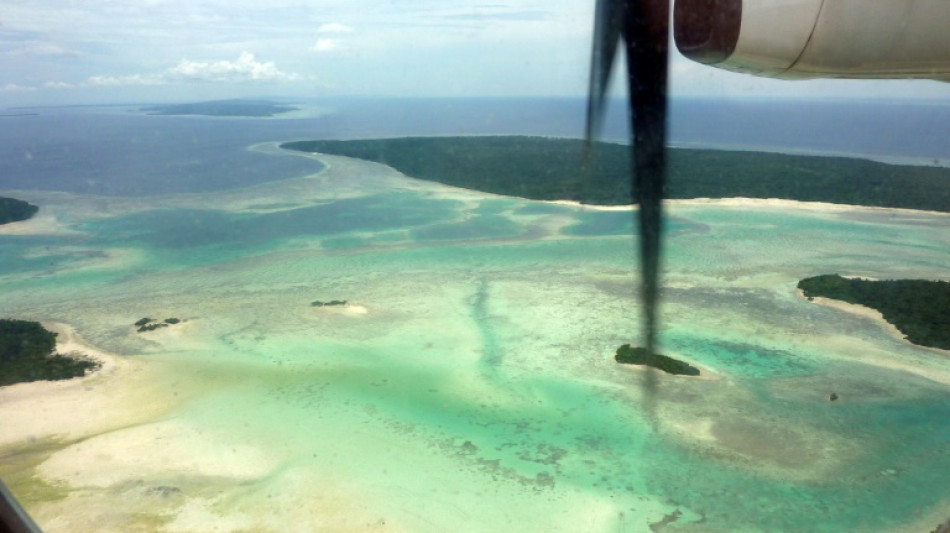
Report details fossil fuel threat to 'Amazon of the seas' / Photo: © AFP/File

Report details fossil fuel threat to 'Amazon of the seas'

Fossil fuel exploration is threatening an ever-expanding swath of the Coral Triangle, one of the most biodiverse marine areas in the world, a report said Saturday.

Text size:

Issued to coincide with the UN's COP16 summit on biodiversity in Colombia, the report warned expansion in oil, gas and liquefied natural gas (LNG) in the Indo-Pacific region was putting at risk marine species and the communities that rely on them.

Dubbed the "Amazon of the seas" for its species variety, the Coral Triangle covers over 10 million square kilometers (some four million square miles) in waters of Indonesia, Malaysia, Papua New Guinea, Singapore, the Philippines, Timor-Leste and the Solomon Islands.

It contains three-quarters of the world’s known coral species, said the report by monitoring bodies including the threat-mapping research project Earth Insight, satellite imaging watchdog SkyTruth, and the Center for Energy, Ecology, and Development, a Filipino think tank.

The triangle is a home to six of the world's seven marine turtle species, and acts as a feeding ground for whales and other marine mammals.

More than 120 million people rely on it for subsistence.

Yet, oil and gas concessions and production areas overlap with tens of thousands of square kilometers of marine protected areas, said the report.

It noted more than 100 known offshore oil and gas blocks producing in the region. Another 450 blocks are being explored for future extraction.

"If all blocks were to go into production, about 16 percent of the Coral Triangle would be directly impacted by fossil fuel development," said the report.

It warned fossil fuel expansion will increase tanker traffic and the risk of oil spills.

- Not on track -

Since July 2020, satellites have spotted 793 oil slicks in the Coral Triangle, said the report.

Almost all were created by transiting vessels, some by oil infrastructure.

"Cumulatively, all slicks covered an area over 24,000 km2 –- nearly enough oil to cover the land in the Solomon Islands," said the report.

Its authors called for a moratorium on oil, gas, mining, and other industrial activities in environmentally-sensitive areas within the Coral Triangle.

They also urged "leapfrogging the use of LNG as a transition fuel" as the world moves away from coal and gas, and moving directly to clean energy sources instead.

The report called for the triangle to be designated a "particularly sensitive sea area" in need of special protection from shipping.

The so-called Kunming-Montreal Global Biodiversity Framework approved two years ago by 196 parties to the UN's Convention on Biological Diversity set 23 targets to "halt and reverse" biodiversity loss by 2030.

It includes ensuring that 30 percent of marine and coastal areas are "effectively conserved and managed," and 30 percent are "under effective restoration."

A report by Greenpeace Monday said only 8.4 percent of the global ocean enjoys protection to date.

"At the current rate, we won't hit 30 percent protection at sea until the next century," said Greenpeace policy advisor Megan Randles.

The biodiversity summit meant to measure progress towards achieving the UN goals.

X.Gu--ThChM