Rep. Jared Huffman Outlines Reset of House Natural Resources Committee Priorities

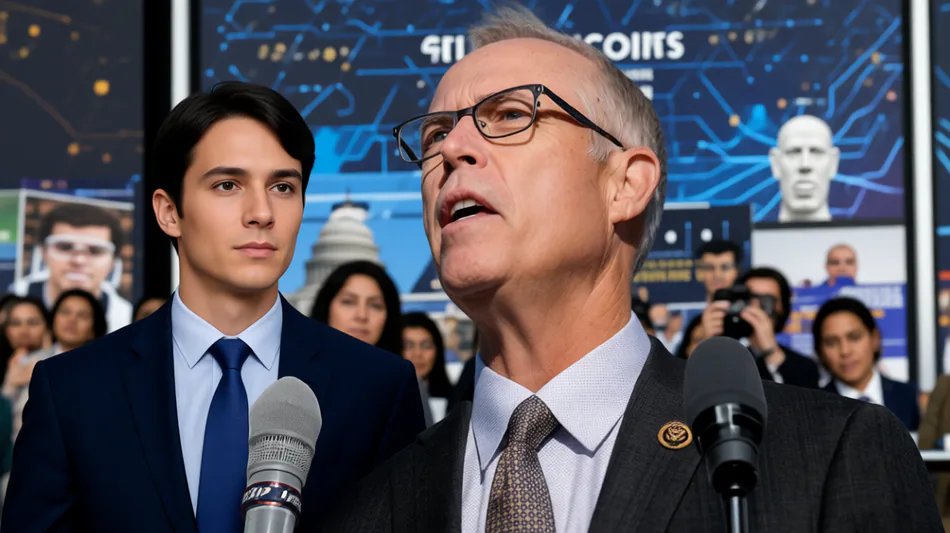
U.S. Representative Jared Huffman, set to chair the House Committee on Natural Resources, has outlined a comprehensive legislative and investigative agenda aimed at reversing recent environmental rollbacks. In an interview with Living on Earth, Huffman emphasized the committee’s intent to pursue aggressive permitting reform, protect public lands from privatization, and conduct rigorous oversight of the Trump administration’s energy policies.
U.S. Representative Jared Huffman, the incoming chair of the House Committee on Natural Resources, has declared that his primary objective is to reset the committee’s values and agenda following the Democratic Party’s recent electoral gains. Representing California’s second congressional district since 2013, Huffman, an environmental lawyer by training, outlined a two-part strategy for the new Congress: conducting aggressive oversight investigations to address the lack of checks and balances during the previous administration, and advancing an affirmative policy agenda that reflects Democratic priorities, even if it results in presidential vetoes.
Speaking with host Steve Curwood and Jenni Doering on the public radio program Living on Earth, Huffman described the upcoming legislative landscape as one defined by a stark contrast between the incoming Democratic majority and the outgoing Trump administration. He argued that Democrats must not constrain their policy ambitions to what President Donald Trump might be willing to sign into law. Instead, Huffman stated, the committee should advance an agenda that highlights fundamental differences in values, viewing the potential for veto battles as a necessary part of establishing a clear political contrast.
The conversation addressed the role of energy costs and environmental concerns in the recent midterm elections. Huffman linked the Democratic victory to an affordability backlash, noting that skyrocketing electricity and utility bills played a significant role in shaping the political outcome. He criticized the Trump administration for paying offshore wind developers to abandon projects that could have provided cheap, reliable, clean energy, arguing that these actions strangled the cheapest form of energy available to consumers. Huffman also connected these economic struggles to broader concerns about corruption, alleging that the fossil fuel industry was closely aligned with the president’s policies and profited significantly from what he described as war profiteering. He cited Trump’s boastful comments about making money from the conflict in Iran while American families struggled with fuel costs as evidence of this disconnect.
While climate change may not have been explicitly named in many campaign slogans, Huffman insisted that climate concerns were deeply embedded in the voter mandate. He pointed to tangible impacts such as the inability of homeowners to secure insurance and the rise in food costs as indicators of climate anxiety. Furthermore, he highlighted the struggle of American consumers trapped in the volatility of fossil fuel markets while other nations advanced toward electric vehicles and clean energy independence. Huffman argued that these factors collectively signaled a public desire for climate action, even if the specific terminology was absent from political rhetoric.
The immediate impact of the climate crisis on Huffman’s own district in Northern California has been stark. He described constituents as stunned by instances of coastal flooding occurring on sunny days with no storms present. These events are driven by Kelvin waves—pulses of warm water moving up the West Coast due to an intensified El Niño phenomenon, which Huffman attributes to human-caused climate change. The reality of rising sea levels and warming waters has become immediate for residents, with roads, bike paths, trails, and coastal buildings regularly submerged.
As the new committee chair, Huffman identified permitting reform as a top priority. He expressed skepticism about the Senate’s current permitting reform deal, which was negotiated behind closed doors by four individuals, including two Republicans from coal-producing states. Huffman criticized the deal for being largely written by the oil and gas industry and argued that it was negotiated with zero leverage for Democrats. He questioned why the new Democratic majority would accept a framework that undermines core environmental protections such as the Endangered Species Act, Native American tribal rights, and the Clean Water Act. Instead, Huffman advocated for a permitting reform bill crafted on Democratic terms, one that ends what he termed the war on clean energy and allows future presidents to lead on climate action rather than being constrained by restrictive legislation.
Huffman acknowledged that the outgoing Congress is attempting to push this deal through rapidly in the lame-duck session, describing the effort as a "jam job" with votes already lined up. However, he suggested that the overwhelming Democratic mandate might make it more difficult for Republicans to force such measures without significant pushback. He characterized the period until the new Congress is seated as one of potential chaos and unpredictability.
A central component of Huffman’s agenda involves the protection of public lands, which he described as an intergenerational trust. He criticized the Trump administration for treating these lands as corporate assets to be leveraged, liquidated, and monetized, comparing the approach to a private equity deal. Huffman argued that this trust has been broken by an administration that views public resources through the lens of profit rather than stewardship. The committee’s goal, he stated, is to reset this trust and restore the principle that public lands must be preserved for future generations.
Specific concerns were raised regarding proposed land swaps involving national parks. Huffman cited a proposal to swap parts of Yosemite National Park with a private developer as an example of the administration’s disregard for sacred public spaces. He described Yosemite as one of America’s most beloved and sacred places, arguing that giving away part of it to facilitate private interests, rather than to enhance public access or park integrity, exemplifies the corruption and lack of principle within the current administration. Huffman noted that the backlash against such proposals has been loud, including from some Republicans, and expressed confidence that the committee would be able to stop such deals.
With subpoena power returning in January, Huffman outlined plans for extensive investigations into ethical lapses and financial conflicts of interest within the Trump administration. He specifically mentioned examining mineral deals where the administration took equity stakes in companies with financial ties to Trump’s inner circle. The committee also intends to investigate the operations of the "Freedom 250" entity, which Huffman accused of hijacking America’s 250th-anniversary celebrations and reprogramming funds intended for national parks into other activities, including what he termed Donald Trump’s vanity projects. He explicitly referenced the construction of a replica of the Gateway Arch as one such project, stating that such expenditures would be halted.
Despite the partisan gridlock, Huffman identified potential areas for bipartisan cooperation, particularly regarding the Great American Outdoors Act 250. Introduced earlier in the year alongside Republican Chairman Bruce Westerman of Arkansas, this legislation aims to address the deferred maintenance backlog on public lands and national parks. Huffman argued that the bill should not require offsets or cuts to social programs because the funds represent a debt already incurred by the government for necessary repairs that were previously neglected. He noted that while some Republicans view such expenditures as burdensome, there is overwhelming bipartisan support for the act, and he believes it might pass during the lame-duck session if enough Republican members can be persuaded.
Reflecting on his career as an environmental lawyer and now a congressman, Huffman expressed concern over the damage inflicted on environmental protection and climate action over the past two years. He described the previous administration’s agenda as "scorched-earth," designed not only to roll back progress but to burn bridges to make future restoration more difficult. However, he remained resolute in his commitment to repairing this damage. Huffman concluded that the new Congress would work diligently to restore a forward posture on public lands protection, clean air and water, environmental justice, and climate action, ensuring that the values of stewardship and sustainability are once again central to federal policy.
The interview highlighted the tension between immediate legislative threats in the lame-duck session and the long-term strategic goals of the incoming Democratic majority. Huffman’s agenda signals a return to aggressive environmental oversight and a rejection of policies he views as prioritizing corporate interests over public trust and ecological stability. As the new Congress prepares to convene, the House Natural Resources Committee is poised to play a critical role in shaping the national debate on energy, land use, and climate resilience.
D.Peng--ThChM