The China Mail - Climate change is fuelling rise in hot nights: analysis

USD -
AED 3.672502
AFN 63.503781
ALL 82.78735
AMD 368.501999
ANG 1.790403
AOA 916.999866
ARS 1471.000053
AUD 1.44563
AWG 1.80125
AZN 1.696902
BAM 1.718856
BBD 2.018008
BDT 123.091796
BGN 1.69088
BHD 0.377005
BIF 2985
BMD 1
BND 1.297974
BOB 6.938524
BRL 5.183699
BSD 1.001973
BTN 94.864877
BWP 13.624819
BYN 2.814079
BYR 19600
BZD 2.015116
CAD 1.421615
CDF 2269.000226
CHF 0.810402
CLF 0.023222
CLP 913.970026
CNY 6.790497
CNH 6.805023
COP 3430.81
CRC 454.535468
CUC 1
CUP 26.5
CVE 97.375009
CZK 21.29365
DJF 177.719668
DKK 6.57314
DOP 58.550304
DZD 133.350047
EGP 49.7487
ERN 15
ETB 161.535521
EUR 0.879399
FJD 2.245198
FKP 0.754878
GBP 0.757465
GEL 2.644994
GGP 0.754878
GHS 11.224975
GIP 0.754878
GMD 72.493065
GNF 8774.999916
GTQ 7.644241
GYD 209.623413
HKD 7.84137
HNL 26.807458
HRK 6.627401
HTG 131.00145
HUF 312.797003
IDR 17933.15
ILS 2.98915
IMP 0.754878
INR 94.640403
IQD 1312.563167
IRR 1375050.000231
ISK 126.619757
JEP 0.754878
JMD 157.717811
JOD 0.709034
JPY 161.635502
KES 129.490111
KGS 87.450248
KHR 4009.999604
KMF 431.000471
KPW 900.00035
KRW 1539.909936
KWD 0.30901
KYD 0.834996
KZT 487.384102
LAK 22188.337654
LBP 89725.095575
LKR 335.228721
LRD 182.352683
LSL 16.522564
LTL 2.95274
LVL 0.604889
LYD 6.429642
MAD 9.377774
MDL 17.639408
MGA 4185.964758
MKD 54.219888
MMK 2099.387374
MNT 3579.000015
MOP 8.091488
MRU 39.79664
MUR 48.20961
MVR 15.459818
MWK 1737.391847
MXN 17.54115
MYR 4.141201
MZN 63.898718
NAD 16.522564
NGN 1370.85004
NIO 36.867777
NOK 9.80125
NPR 151.78296
NZD 1.766865
OMR 0.3845
PAB 1.001977
PEN 3.39166
PGK 4.394272
PHP 61.500501
PKR 278.668893
PLN 3.764551
PYG 6107.983882
QAR 3.652503
RON 4.6139
RSD 103.250224
RUB 74.500044
RWF 1469.343633
SAR 3.755291
SBD 8.065041
SCR 14.244746
SDG 600.49594
SEK 9.733403
SGD 1.29648
SHP 0.746601
SLE 24.750477
SLL 20969.503664
SOS 572.656446
SRD 37.482999
STD 20697.981008
STN 21.530796
SVC 8.767412
SYP 110.532098
SZL 16.517116
THB 33.335501
TJS 9.293141
TMT 3.51
TND 2.965857
TOP 2.40776
TRY 46.49728
TTD 6.803181
TWD 31.727978
TZS 2630.993004
UAH 44.976754
UGX 3667.442985
UYU 40.189832
UZS 12038.49365
VES 616.865275
VND 26327.5
VUV 118.758526
WST 2.756325
XAF 576.48558
XAG 0.016076
XAU 0.000245
XCD 2.70255
XCG 1.805774
XDR 0.716966
XOF 576.48558
XPF 104.811706
YER 238.650151
ZAR 16.53875
ZMK 9001.199577
ZMW 17.97425
ZWL 321.999592
  • CMSC

    -0.0500

    22.11

    -0.23%

  • RBGPF

    0.9600

    61.3

    +1.57%

  • VOD

    -0.0700

    14.05

    -0.5%

  • BCC

    -0.7400

    71.8

    -1.03%

  • RYCEF

    -0.4700

    18.16

    -2.59%

  • NGG

    0.6000

    81.57

    +0.74%

  • BCE

    0.3900

    23.04

    +1.69%

  • RELX

    0.3800

    31.21

    +1.22%

  • RIO

    -3.7800

    95.58

    -3.95%

  • JRI

    -0.0200

    12.63

    -0.16%

  • CMSD

    -0.1200

    21.96

    -0.55%

  • GSK

    1.3300

    52.07

    +2.55%

  • BP

    -0.4500

    39.33

    -1.14%

  • BTI

    1.8400

    60.74

    +3.03%

  • AZN

    4.5900

    181.02

    +2.54%

Climate change is fuelling rise in hot nights: analysis
Climate change is fuelling rise in hot nights: analysis / Photo: © AFP

Climate change is fuelling rise in hot nights: analysis

Human-induced climate change is significantly increasing the number of hot nights for nearly one in three people around the world, a global analysis said Thursday.

Text size:

High nighttime temperatures can become dangerous if they prevent the human body from cooling off and recovering from daytime heat.

The World Health Organization (WHO) recommends keeping room temperature at or below 24 degrees Celsius during the night -- a threshold above which sleep can be uncomfortable.

This is especially important for vulnerable people, such as babies, the elderly and people with chronic health conditions, according to the WHO.

But burning coal, oil and gas which releases climate-warming emissions into the atmosphere is fuelling a rise in nights above 25C, according to Climate Central, an independent group of scientists and climate communicators.

- 'Cascading impacts' -

Around 2.4 billion people experienced at least two additional weeks on average per year over the past decade when the thermometer didn't fall below 25C at night, it found.

"Warmer nighttime temperatures, particularly during hot times of the year, can harm sleep and can reduce physical recovery from hot daytime temperatures, both of which can have cascading impacts on health outcomes," Nick Obradovich, a chief scientist at the Laureate Institute for Brain Research, told AFP.

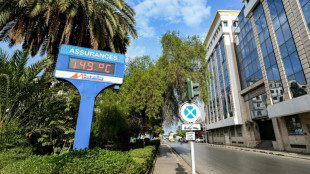
This year has seen heat records tumble, with extreme temperatures gripping vast swathes of the world from India to Saudi Arabia and Mexico, often staying high at night.

The analysis compared the annual average of hot nights between 2014 and 2023 with a counterfactual world without human-caused climate change based on a peer-reviewed methodology using models that incorporate historical data.

Long-term historical data being patchy or missing for many countries, researchers decided to compare their findings with an imaginary world where the only thing that has changed is the amount of carbon in the atmosphere.

The Caribbean nation of Trinidad and Tobago experienced the largest increase of any country, with an extra 47 nights per year above 25C. The Indian city of Mumbai endured an additional two months of hot nights.

The 25C threshold "isn't some hard-and-fast number below which health is fine and above which health is harmed," Obradovich, who was not involved in the analysis, explained.

"Hotter nighttime temperatures, on average, are worse for health," he added, but the impacts on people vary.

However, when heat is coupled with high humidity levels, the consequences can turn deadly.

Several studies have shown that nocturnal temperatures above 25C deteriorate the quality and length of sleep --- which is vital for humans to function -- and increase the risks of strokes, cardiovascular conditions and mortality.

The elderly and people on lower-income are disproportionally affected, researchers previously found.

G.Fung--ThChM