In Idaho, the next generation of US nuclear reactors nears reality / Photo: © AFP

A new generation of small nuclear reactors is up and running -- or nearly so -- in the United States, in what backers are calling a turning point for the industry.
The milestone, made possible by billions in private and government funding, was on display in the middle of the Idaho desert, where a cluster of drab hangars might otherwise go unnoticed.
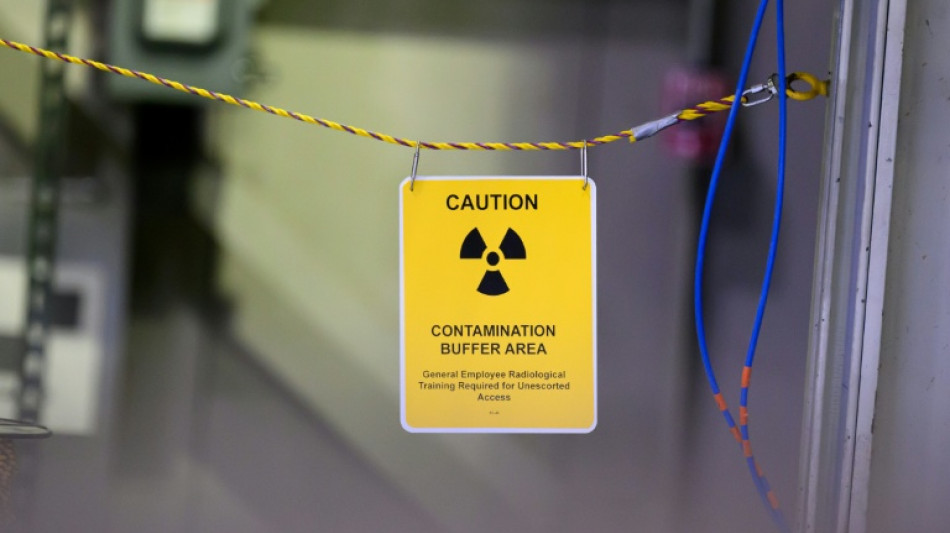
But the presence of heavily armed soldiers, security checkpoints, and signs warning of radioactivity are anything but ordinary.
It was here, at the Idaho National Laboratory (INL), that startup Antares on June 4 became the first company to run a new-design nuclear reactor in the US in nearly 50 years.
"This is the first real moment in this new nuclear renaissance," said Jordan Bramble, CEO of Antares.
Aalo Atomics, another participant in the program launched in 2025 under President Donald Trump, is set to do the same in the coming days -- also here in Idaho, just hours before a presidential target date: July 4 and the nation's 250th anniversary.
Meanwhile, on June 18, another startup, Valar Atomics, hit the same milestone in Utah, reaching what is known as criticality -- the point at which a reactor can sustain its own nuclear chain reaction.
After developing more than 50 reactor prototypes -- including the world's first to feed electricity into the grid, in 1951 -- INL had pressed pause following accidents at Three Mile Island in the US and Chernobyl in current day Ukraine.
Then came the war in Ukraine, followed by the AI boom -- putting the energy sector under severe strain and leading both Joe Biden and Donald Trump to revive civilian nuclear power.
- 'Simpler' -
Billions of dollars in both private and public funding have already been mobilized to develop these small modular reactors (SMRs) -- compact enough that one was transported to the site towed by a pickup truck.
SMRs promise cheaper, faster-to-build nuclear power that can go almost anywhere -- from remote military bases to power-hungry data centers. But they have yet to be proven at commercial scale, and some analysts doubt they can compete on cost with wind and solar.
Beyond financial support, the government has put INL's facilities and staff -- who have accumulated nearly 80 years of experience -- at the disposal of the selected companies.
The new reactors also use different technology from conventional plants, ruling out the kind of cascading disasters seen at Three Mile Island and Chernobyl, and allowing for far simpler, cheaper construction.
"The whole plant can get simpler. We don't need to have several feet thick of concrete and steel line containment," said Yasir Arafat, President and CTO of Aalo Atomics.
- 'Golden age' -
Even as the pace has sharply accelerated, Tori Shivanandan, President and COO of Radiant Nuclear, does not want regulatory shortcuts.
The team at the lab, "they hold the line, and we want them to, because ultimately, if we don't make safe products, we'll never sell reactors," she said.
Reaching criticality is not the same as being ready for commercial use.
The reactor designs -- whose prototypes operate under a special government waiver -- still need to be cleared by the US nuclear regulator, the NRC.
But Energy Secretary Chris Wright, speaking to AFP at a "celebration of the golden age of nuclear energy" in Idaho Falls, was bullish on the timeline.
"We'll have hundreds by the end of the decade. In fact, our aggressive goal is we will have some of these reactors producing electricity for beneficial use next year," he said.
If all goes according to plan, Radiant's first SMRs will go to US military sites, as will Antares's, while Aalo is targeting data centers.
Nuclear power is also positioning itself as a tool for American influence abroad, with China the only other country operating an SMR.
"Every country I go to asks about the next-generation American nuclear technology. I say...it's happening right now," Wright said.
"This will be a massive American export a decade from now," he added.
F.Brown--ThChM